

 搜索
搜索
第25页
- 第1页
- 第2页
- 第3页
- 第4页
- 第5页
- 第6页
- 第7页
- 第8页
- 第9页
- 第10页
- 第11页
- 第12页
- 第13页
- 第14页
- 第15页
- 第16页
- 第17页
- 第18页
- 第19页
- 第20页
- 第21页
- 第22页
- 第23页
- 第24页
- 第25页
- 第26页
- 第27页
- 第28页
- 第29页
- 第30页
- 第31页
- 第32页
- 第33页
- 第34页
- 第35页
- 第36页
- 第37页
- 第38页
- 第39页
- 第40页
- 第41页
- 第42页
- 第43页
- 第44页
- 第45页
- 第46页
- 第47页
- 第48页
- 第49页
- 第50页
- 第51页
- 第52页
- 第53页
- 第54页
- 第55页
- 第56页
- 第57页
- 第58页
- 第59页
- 第60页
- 第61页
- 第62页
- 第63页
- 第64页
- 第65页
- 第66页
- 第67页
- 第68页
一、完形填空
答案 1-10
In times of distress (悲伤), a friend would always suggest going for a walk. “Are you troubled by your work?” “Yes.” “Take a ____1____ around the neighborhood.” ____2____ like this were often made with nothing but the best of purposes, but they used to make me ____3____ as much as being told to drink more water. I did not understand how these things were going to help.
Three years ago, I hit a low point. I knew I was at my breaking point. So, I took the advice. I went for a walk—with the ____4____ that it would somehow change my life.
I embraced (拥 抱) the fresh air. But I was just as sad as before. I went on a walk every single day for more than a month. Some days I could hardly make it outside, but I ____5____ to push through. I took a picture every time I went. I think I was trying to make an effort.
One day, the ____6____ thing happened. I found myself smiling. I realized I had ____7____ waited all morning to go on this walk. What I once hated had become the best part of my day. I found myself ____8____ to be outside. I just danced along the trails (小路), stopped to look at the beautiful blue skies and listened to music.
I slowly started to look less tired. I don’t know why I ____9____ to go on that walk for so long. I guess I didn’t want to believe that something small and seemingly meaningless could actually ____10____ my physical and mental health.
If you’re having a bad day, a bad year or even a bad life, you should try going for a walk.
1. A. look B. walk C. talk D. rest
2. A. Orders B. Complaints C. Changes D. Suggestions
3. A. angry B. happy C. sad D. lucky
4. A. decision B. advice C. opinion D. hope
5. A. told B. managed C. ordered D. supported
6. A. unexpected B. unhelpful C. unhappy D. uncertain
7. A. secretly B. strictly C. comfortably D. patiently
8. A. serious B. upset C. nervous D. glad
9. A. refused B. wanted C. decided D. feared
10. A. take place on B. make a difference to C. do harm to D. take a chance to
答案 1-10
In times of distress (悲伤), a friend would always suggest going for a walk. “Are you troubled by your work?” “Yes.” “Take a ____1____ around the neighborhood.” ____2____ like this were often made with nothing but the best of purposes, but they used to make me ____3____ as much as being told to drink more water. I did not understand how these things were going to help.
Three years ago, I hit a low point. I knew I was at my breaking point. So, I took the advice. I went for a walk—with the ____4____ that it would somehow change my life.
I embraced (拥 抱) the fresh air. But I was just as sad as before. I went on a walk every single day for more than a month. Some days I could hardly make it outside, but I ____5____ to push through. I took a picture every time I went. I think I was trying to make an effort.
One day, the ____6____ thing happened. I found myself smiling. I realized I had ____7____ waited all morning to go on this walk. What I once hated had become the best part of my day. I found myself ____8____ to be outside. I just danced along the trails (小路), stopped to look at the beautiful blue skies and listened to music.
I slowly started to look less tired. I don’t know why I ____9____ to go on that walk for so long. I guess I didn’t want to believe that something small and seemingly meaningless could actually ____10____ my physical and mental health.
If you’re having a bad day, a bad year or even a bad life, you should try going for a walk.
1. A. look B. walk C. talk D. rest
2. A. Orders B. Complaints C. Changes D. Suggestions
3. A. angry B. happy C. sad D. lucky
4. A. decision B. advice C. opinion D. hope
5. A. told B. managed C. ordered D. supported
6. A. unexpected B. unhelpful C. unhappy D. uncertain
7. A. secretly B. strictly C. comfortably D. patiently
8. A. serious B. upset C. nervous D. glad
9. A. refused B. wanted C. decided D. feared
10. A. take place on B. make a difference to C. do harm to D. take a chance to
答案:
1. B 2. D 3. A 4. D 5. B 6. A 7. D 8. D 9. A 10. B
二、阅读理解
答案 11-15
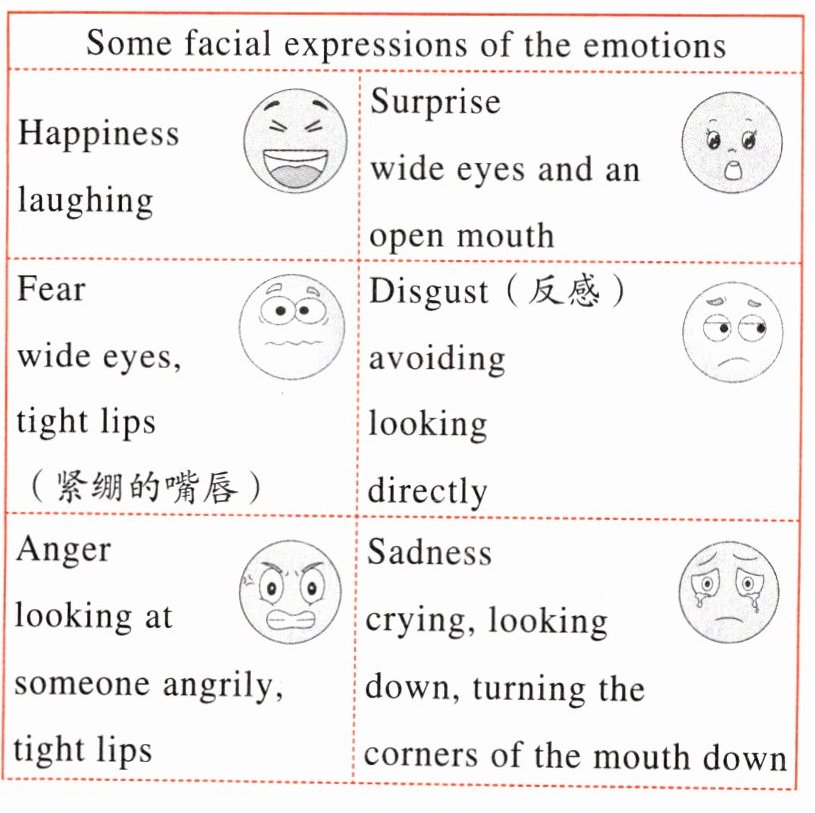
Teacher: There are many different kinds of emotions that have an influence on our life. Paul Ekman developed a widely accepted theory of basic emotions during the 1970s. It suggests that we have six basic emotions. Some certain basic emotions can mix together and then create new emotions such as hate and regret.
Some facial expressions of the emotions
11. What is the teacher mainly talking about?
A. The kinds of emotions.
B. The influence of emotions.
C. The advantages of dealing with emotions.
D. The disadvantages of bad emotions.
12. Windy looked at an object with her mouth open wide. How might she feel?
A. Angry. B. Sad.
C. Surprised. D. Fearful.
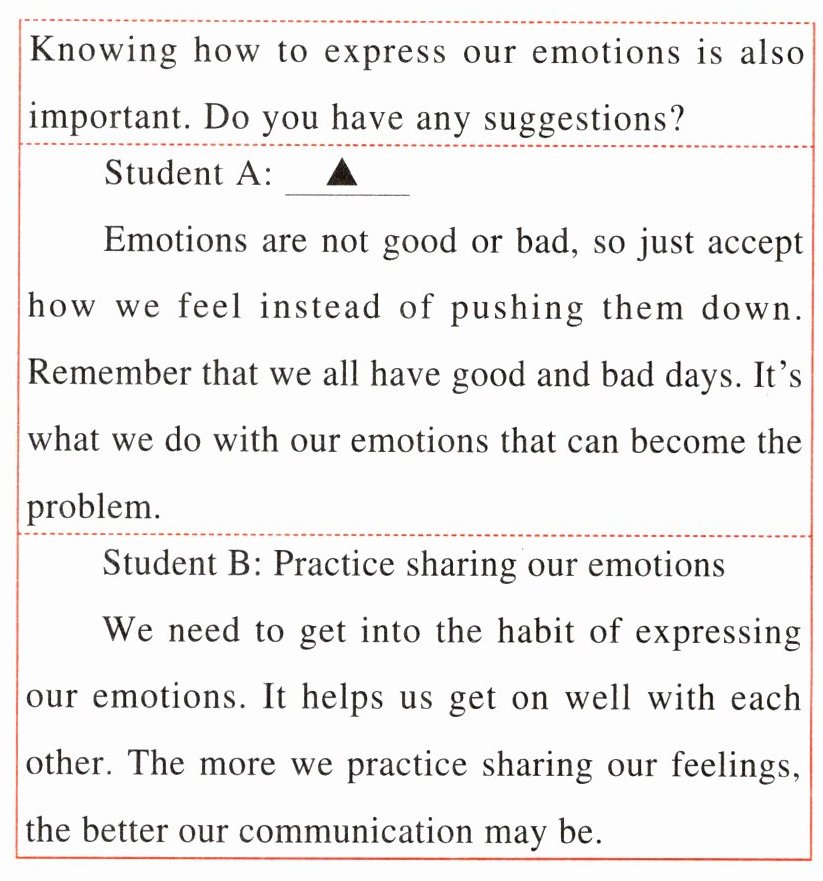
13. 新考法 句子还原 Which is the best title for ▲?
A. Accept our emotions
B. Describe our emotions
C. Control our emotions
D. Deny our emotions
14. What does Student B think sharing our emotions is good for?
A. People’s health.
B. People’s relationship.
C. People’s appearance.
D. People’s sense of responsibility.
15. Which question is answered in the reading?
A. What class are they taking?
B. Which emotion is best for people?
C. How many new emotions can people create?
D. When did Paul Ekman develop the widely accepted theory?
答案 11-15
Teacher: There are many different kinds of emotions that have an influence on our life. Paul Ekman developed a widely accepted theory of basic emotions during the 1970s. It suggests that we have six basic emotions. Some certain basic emotions can mix together and then create new emotions such as hate and regret.
Some facial expressions of the emotions
11. What is the teacher mainly talking about?
A. The kinds of emotions.
B. The influence of emotions.
C. The advantages of dealing with emotions.
D. The disadvantages of bad emotions.
12. Windy looked at an object with her mouth open wide. How might she feel?
A. Angry. B. Sad.
C. Surprised. D. Fearful.
13. 新考法 句子还原 Which is the best title for ▲?
A. Accept our emotions
B. Describe our emotions
C. Control our emotions
D. Deny our emotions
14. What does Student B think sharing our emotions is good for?
A. People’s health.
B. People’s relationship.
C. People’s appearance.
D. People’s sense of responsibility.
15. Which question is answered in the reading?
A. What class are they taking?
B. Which emotion is best for people?
C. How many new emotions can people create?
D. When did Paul Ekman develop the widely accepted theory?
答案:
11. A 12. C 13. A 14. B 15. D
查看更多完整答案,请扫码查看

