

 搜索
搜索
2025年资源与评价黑龙江教育出版社八年级英语上册人教版H
注:目前有些书本章节名称可能整理的还不是很完善,但都是按照顺序排列的,请同学们按照顺序仔细查找。练习册 2025年资源与评价黑龙江教育出版社八年级英语上册人教版H 答案主要是用来给同学们做完题方便对答案用的,请勿直接抄袭。
第188页
- 第1页
- 第2页
- 第3页
- 第4页
- 第5页
- 第6页
- 第7页
- 第8页
- 第9页
- 第10页
- 第11页
- 第12页
- 第13页
- 第14页
- 第15页
- 第16页
- 第17页
- 第18页
- 第19页
- 第20页
- 第21页
- 第22页
- 第23页
- 第24页
- 第25页
- 第26页
- 第27页
- 第28页
- 第29页
- 第30页
- 第31页
- 第32页
- 第33页
- 第34页
- 第35页
- 第36页
- 第37页
- 第38页
- 第39页
- 第40页
- 第41页
- 第42页
- 第43页
- 第44页
- 第45页
- 第46页
- 第47页
- 第48页
- 第49页
- 第50页
- 第51页
- 第52页
- 第53页
- 第54页
- 第55页
- 第56页
- 第57页
- 第58页
- 第59页
- 第60页
- 第61页
- 第62页
- 第63页
- 第64页
- 第65页
- 第66页
- 第67页
- 第68页
- 第69页
- 第70页
- 第71页
- 第72页
- 第73页
- 第74页
- 第75页
- 第76页
- 第77页
- 第78页
- 第79页
- 第80页
- 第81页
- 第82页
- 第83页
- 第84页
- 第85页
- 第86页
- 第87页
- 第88页
- 第89页
- 第90页
- 第91页
- 第92页
- 第93页
- 第94页
- 第95页
- 第96页
- 第97页
- 第98页
- 第99页
- 第100页
- 第101页
- 第102页
- 第103页
- 第104页
- 第105页
- 第106页
- 第107页
- 第108页
- 第109页
- 第110页
- 第111页
- 第112页
- 第113页
- 第114页
- 第115页
- 第116页
- 第117页
- 第118页
- 第119页
- 第120页
- 第121页
- 第122页
- 第123页
- 第124页
- 第125页
- 第126页
- 第127页
- 第128页
- 第129页
- 第130页
- 第131页
- 第132页
- 第133页
- 第134页
- 第135页
- 第136页
- 第137页
- 第138页
- 第139页
- 第140页
- 第141页
- 第142页
- 第143页
- 第144页
- 第145页
- 第146页
- 第147页
- 第148页
- 第149页
- 第150页
- 第151页
- 第152页
- 第153页
- 第154页
- 第155页
- 第156页
- 第157页
- 第158页
- 第159页
- 第160页
- 第161页
- 第162页
- 第163页
- 第164页
- 第165页
- 第166页
- 第167页
- 第168页
- 第169页
- 第170页
- 第171页
- 第172页
- 第173页
- 第174页
- 第175页
- 第176页
- 第177页
- 第178页
- 第179页
- 第180页
- 第181页
- 第182页
- 第183页
- 第184页
- 第185页
- 第186页
- 第187页
- 第188页
- 第189页
- 第190页
- 第191页
- 第192页
- 第193页
- 第194页
1. 听 2a 对话,在听到的内容旁边画“√”。
| People in cities | Free time |
| Transport system | Home |
| Education | Health care |
| Job | Length of life |
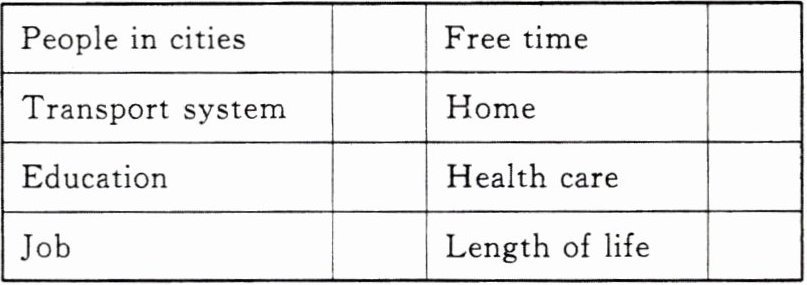
| People in cities | Free time |
| Transport system | Home |
| Education | Health care |
| Job | Length of life |
答案:
Transport system √; Education √; Health care √; Length of life √
2. 完成教材 page 63-2a 习题。
答案:
BADC
1. 完成教材 page 64-2b 活动。
答案:
1.
(1)There will be more people in cities.
(2)The transport system will be more efficient.
(3)Students probably won't go to a school in the future. They will study at home or any place they want.
(4)We will have better health care technology in our homes.
(5)More people will live to be over 100 years old.
(1)There will be more people in cities.
(2)The transport system will be more efficient.
(3)Students probably won't go to a school in the future. They will study at home or any place they want.
(4)We will have better health care technology in our homes.
(5)More people will live to be over 100 years old.
2. 根据 2b 表格内容,两人一组练习对话。
A: What will the future be like?
B: There will be more people in cities.
A: What will the transport system be like in the future?
B: It will be more efficient.
A: What will the education be like in the future?
B: Students probably won't go to a school. They will study at home or any place they want.
A: What will health care be like?
B: We will have better health care technology. Machines will tell us how to solve small health problems before they become bigger.
A: How long will people live?
B: More people will live to be over 100 years old, some may even live to be 150.
A: What will the future be like?
B: There will be more people in cities.
A: What will the transport system be like in the future?
B: It will be more efficient.
A: What will the education be like in the future?
B: Students probably won't go to a school. They will study at home or any place they want.
A: What will health care be like?
B: We will have better health care technology. Machines will tell us how to solve small health problems before they become bigger.
A: How long will people live?
B: More people will live to be over 100 years old, some may even live to be 150.
答案:
A: What will the future be like?
B: There will be more people in cities.
A: What will the transport system be like in the future?
B: It will be more efficient.
A: What will the education be like in the future?
B: Students probably won't go to a school. They will study at home or any place they want.
A: What will health care be like?
B: We will have better health care technology. Machines will tell us how to solve small health problems before they become bigger.
A: How long will people live?
B: More people will live to be over 100 years old, some may even live to be 150.
B: There will be more people in cities.
A: What will the transport system be like in the future?
B: It will be more efficient.
A: What will the education be like in the future?
B: Students probably won't go to a school. They will study at home or any place they want.
A: What will health care be like?
B: We will have better health care technology. Machines will tell us how to solve small health problems before they become bigger.
A: How long will people live?
B: More people will live to be over 100 years old, some may even live to be 150.
3. 完成教材 page 64-2c 习题。
答案:
3.
(1)A video about future predictions.
(2)Yes. We know this because she knows this because she shows interest and asks many questions like"Any other predictions?" and "Really?" "Why?" after Jennifer talks about future predictions.
(3)The video is positive about the future. Because it mentions things like a more efficient transport system, better health care technology and people living longer which are all positive developments.
(1)A video about future predictions.
(2)Yes. We know this because she knows this because she shows interest and asks many questions like"Any other predictions?" and "Really?" "Why?" after Jennifer talks about future predictions.
(3)The video is positive about the future. Because it mentions things like a more efficient transport system, better health care technology and people living longer which are all positive developments.
4. 认真思考并回答问题:
If students don't go to school, what are the advantages and disadvantages?______
If people live longer in the future, what challenges will our society may face?______
If students don't go to school, what are the advantages and disadvantages?______
If people live longer in the future, what challenges will our society may face?______
答案:
Answer Sheet:
4.
Advantages: Students can have more flexible learning schedules and explore personal interests.
Disadvantages: Lack of face-to-face interaction with teachers and peers, potential decrease in collaborative skills.
Challenges: Increased pressure on healthcare systems, pension systems, and employment opportunities; potential strain on resources and intergenerational relationships.
4.
Advantages: Students can have more flexible learning schedules and explore personal interests.
Disadvantages: Lack of face-to-face interaction with teachers and peers, potential decrease in collaborative skills.
Challenges: Increased pressure on healthcare systems, pension systems, and employment opportunities; potential strain on resources and intergenerational relationships.
1. 跟读对话,模仿语音语调。
答案:
答案略
2. 分角色表演对话。
答案:
答案略
完成教材 page 64-2c 活动,如:
A: Do you think there will be more people in the future?
B: Yes, I think there will be more people. / Well, I don't think there will be more people.
A: Do you think we will have more free time?
B: Yes, I think we will have more free time and we can do more things we like.
A:...
A: Do you think there will be more people in the future?
B: Yes, I think there will be more people. / Well, I don't think there will be more people.
A: Do you think we will have more free time?
B: Yes, I think we will have more free time and we can do more things we like.
A:...
答案:
A: Do you think there will be more pollution in the future?
B: Well, I don't think there will be more pollution. I believe people will use cleaner energy and protect the environment better.
A: Do you think we will have smarter robots?
B: Yes, I think we will have smarter robots to help with housework and other tasks.
A: Do you think kids will go to school in the future?
B: Well, I don't think all kids will go to school. Some might learn online at home.
A: Do you think there will be more trees in the city?
B: Yes, I think there will be more trees and green spaces to make the city more beautiful.
A: Do you think people will live on other planets?
B: Well, I don't think people will live on other planets soon. It might be possible in the very far future.
B: Well, I don't think there will be more pollution. I believe people will use cleaner energy and protect the environment better.
A: Do you think we will have smarter robots?
B: Yes, I think we will have smarter robots to help with housework and other tasks.
A: Do you think kids will go to school in the future?
B: Well, I don't think all kids will go to school. Some might learn online at home.
A: Do you think there will be more trees in the city?
B: Yes, I think there will be more trees and green spaces to make the city more beautiful.
A: Do you think people will live on other planets?
B: Well, I don't think people will live on other planets soon. It might be possible in the very far future.
( ) 1. — What's your ______ about the future?
— People will live longer and children don't have to go to school.
A.prediction
B.protection
C.pollution
— People will live longer and children don't have to go to school.
A.prediction
B.protection
C.pollution
答案:
A
( ) 2. — ______ will our future life ______ in ten years?
— I'm not sure, but I think our life will get better and better.
A.What; like
B.How; be like
C.What; be like
— I'm not sure, but I think our life will get better and better.
A.What; like
B.How; be like
C.What; be like
答案:
C
查看更多完整答案,请扫码查看

