

 搜索
搜索
第3页
- 第1页
- 第2页
- 第3页
- 第4页
- 第5页
- 第6页
- 第7页
- 第8页
- 第9页
- 第10页
- 第11页
- 第12页
- 第13页
- 第14页
- 第15页
- 第16页
- 第17页
- 第18页
- 第19页
- 第20页
- 第21页
- 第22页
- 第23页
- 第24页
- 第25页
- 第26页
- 第27页
- 第28页
- 第29页
- 第30页
- 第31页
- 第32页
- 第33页
- 第34页
- 第35页
- 第36页
- 第37页
- 第38页
- 第39页
- 第40页
- 第41页
- 第42页
- 第43页
- 第44页
- 第45页
- 第46页
- 第47页
- 第48页
- 第49页
- 第50页
- 第51页
- 第52页
- 第53页
- 第54页
- 第55页
- 第56页
- 第57页
- 第58页
- 第59页
- 第60页
- 第61页
- 第62页
- 第63页
- 第64页
- 第65页
- 第66页
Ⅴ. 阅读理解
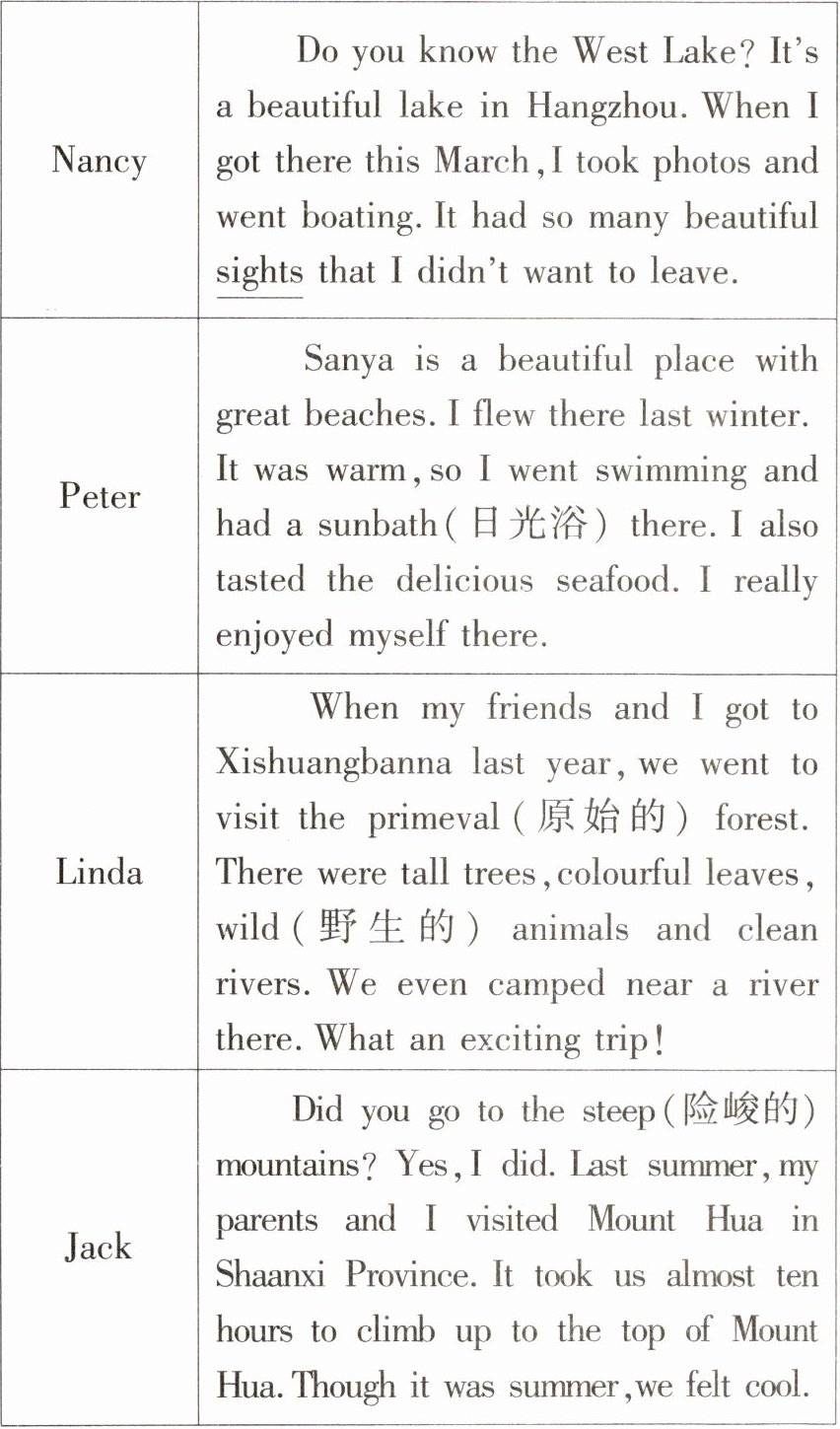
26. What does the underlined word “sights” mean in Chinese?
A. 景色
B. 习俗
C. 情绪
D. 乐曲
(
27. How did Peter like his trip to Sanya?
A. Tiring.
B. Happy.
C. Surprising.
D. Boring.
(
28. What did Linda do during her trip?
A. She took photos.
B. She went camping.
C. She had a sunbath.
D. She climbed the mountains.
(
29. Who went to Mount Hua with Jack last summer?
A. His classmates.
B. His sister.
C. His friend.
D. His parents.
(
30. What can we know from the passage?
A. Nancy ate seafood during her trip.
B. Sanya has many beautiful mountains.
C. Linda went to Xishuangbanna with her parents.
D. Jack thought that Mount Hua was steep.
(
26. What does the underlined word “sights” mean in Chinese?
A. 景色
B. 习俗
C. 情绪
D. 乐曲
(
A
)27. How did Peter like his trip to Sanya?
A. Tiring.
B. Happy.
C. Surprising.
D. Boring.
(
B
)28. What did Linda do during her trip?
A. She took photos.
B. She went camping.
C. She had a sunbath.
D. She climbed the mountains.
(
B
)29. Who went to Mount Hua with Jack last summer?
A. His classmates.
B. His sister.
C. His friend.
D. His parents.
(
D
)30. What can we know from the passage?
A. Nancy ate seafood during her trip.
B. Sanya has many beautiful mountains.
C. Linda went to Xishuangbanna with her parents.
D. Jack thought that Mount Hua was steep.
(
D
)
答案:
26.A[提示:词义猜测题。画线的词是 sights,结合上下文的描述可知,西湖有许多美丽的"景色",以至于我都不想离开了,故选 A。] 27.B[提示:推理判断题。根据 Peter 描述中的"I really enjoyed myself there."可知,Peter 在三亚玩得很开心,故选 B。] 28.B[提示:细节理解题。根据 Linda 描述中的"We even camped near a river there."可知,她在河边露营了,故选 B。] 29.D[提示:细节理解题。根据 Jack 描述中的"Last summer, my parents and I visited Mount Hua in Shaanxi Province."可知,他和父母去了华山,故选 D。] 30.D[提示:推理判断题。根据 Jack 描述中的"Did you go to the steep(险峻的) mountains?"可知,他认为华山是险峻的,故选 D。]
31. (2025·黑龙江中考) I am really tired after the basketball game.
A.Everything
B.Something
C.Nothing
Nothing
is better than a good rest.A.Everything
B.Something
C.Nothing
答案:
C[提示:句意:打完篮球后我真是累坏了。没有什么比好好休息更好的了。Everything 每件事;Something 某事; Nothing 没有什么。根据句意可知,打完篮球很累,所以没有什么比好好休息更好的了,故选 C。]
32. (2025·江西中考) Mozart
A.enjoyed
B.created
C.bought
D.heard
created
many pieces of beautiful music. That’s why he is so famous.A.enjoyed
B.created
C.bought
D.heard
答案:
B[提示:考查动词辨析。句意:莫扎特创作出许多美妙的音乐作品。那就是他如此出名的原因。enjoyed 享受;created 创作;bought 购买;heard 听到。莫扎特是因为创作音乐作品而出名,故选 B。]
33. (营口中考) Daming is happy today because he helped
A.nobody
B.anybody
C.somebody
D.everybody
somebody
look for a set of keys on his way home.A.nobody
B.anybody
C.somebody
D.everybody
答案:
C[提示:考查复合不定代词 somebody, everybody, anybody,nobody 的区别。根据题干中的"大明很开心"可推断,他帮某人寻找钥匙了,在肯定句中,表示"某人;有人"要用 somebody,故选 C。]
34. (潜江中考) —Why are you laughing, Tony?
—There is
A.anything
B.something
C.everything
D.nothing
—There is
something
funny in the magazine.A.anything
B.something
C.everything
D.nothing
答案:
B[提示:考查复合不定代词 something, anything, everything 和 nothing 的区别。根据问句中的"你为什么正在大笑"可推断,答语的含义是"杂志里有好玩的事情"。在肯定句中,表示"某事;某物"要用 something,故选 B。]
35. (新情境) (青岛中考) It was reported that visitors were
A.everywhere
B.anywhere
C.somewhere
D.nowhere
everywhere
on May Day this year.A.everywhere
B.anywhere
C.somewhere
D.nowhere
答案:
A[提示:考查复合不定副词的用法。句意:据报道,今年五一到处都是游客,表示"到处;处处"要用 everywhere,故选 A。]
查看更多完整答案,请扫码查看

