

 搜索
搜索
第27页
- 第1页
- 第2页
- 第3页
- 第4页
- 第5页
- 第6页
- 第7页
- 第8页
- 第9页
- 第10页
- 第11页
- 第12页
- 第13页
- 第14页
- 第15页
- 第16页
- 第17页
- 第18页
- 第19页
- 第20页
- 第21页
- 第22页
- 第23页
- 第24页
- 第25页
- 第26页
- 第27页
- 第28页
- 第29页
- 第30页
- 第31页
- 第32页
- 第33页
- 第34页
- 第35页
- 第36页
- 第37页
- 第38页
- 第39页
- 第40页
- 第41页
- 第42页
- 第43页
- 第44页
- 第45页
- 第46页
- 第47页
- 第48页
- 第49页
- 第50页
- 第51页
- 第52页
- 第53页
- 第54页
- 第55页
- 第56页
- 第57页
- 第58页
- 第59页
- 第60页
- 第61页
- 第62页
- 第63页
- 第64页
- 第65页
- 第66页
- 第67页
- 第68页
- 第69页
- 第70页
- 第71页
- 第72页
- 第73页
- 第74页
- 第75页
- 第76页
- 第77页
- 第78页
- 第79页
- 第80页
- 第81页
- 第82页
- 第83页
- 第84页
- 第85页
- 第86页
- 第87页
- 第88页
- 第89页
- 第90页
- 第91页
- 第92页
- 第93页
- 第94页
- 第95页
- 第96页
- 第97页
- 第98页
- 第99页
- 第100页
- 第101页
- 第102页
- 第103页
- 第104页
- 第105页
- 第106页
- 第107页
- 第108页
- 第109页
- 第110页
- 第111页
- 第112页
- 第113页
- 第114页
- 第115页
- 第116页
- 第117页
- 第118页
- 第119页
- 第120页
- 第121页
- 第122页
- 第123页
- 第124页
- 第125页
- 第126页
- 第127页
- 第128页
- 第129页
- 第130页
- 第131页
- 第132页
- 第133页
- 第134页
- 第135页
- 第136页
- 第137页
- 第138页
- 第139页
- 第140页
- 第141页
- 第142页
- 第143页
- 第144页
- 第145页
- 第146页
- 第147页
- 第148页
- 第149页
- 第150页
- 第151页
- 第152页
- 第153页
- 第154页
- 第155页
- 第156页
一、完形填空。
阅读下面一篇短文,从短文前的选项中选出能填入空白处的最佳选项。选项中有一个为多余选项。
传统文化(2023-2024·贵阳市期中改编)
A. around B. as C. when D. for
E. to F. A G. The
China's National Tourism Day falls on May 19th every year, starting the year of 2011. The date was chosen to commemorate(纪念) the day 1.____ China's ancient travel book writer Xu Xiake(1587 - 1641) began writing his master piece *Travel Notes of Xu Xiake*.
About 400 years ago, Xu Xiake, a famous traveler and geographer in the Ming Dynasty, wrote *Travel Notes of Xu Xiake* to document every step of his travels 2.____ the country.
Xu traveled around China 3.____ more than 30 years and he started writing his travel book in Ninghai County, Zhejiang Province on May 19th, 1613. Since 2000, Ninghai has proposed(提议) time and again to the central government to set this day 4.____ National Tourism Day.
As recorded in the book, the first place Xu traveled to was Tiantai Mountain in Zhejiang Province, where he wrote about the mountain's scenery.
5.____ decision to establish the National Tourism Day on May 19th was made after nearly one million Internet users took part in a survey to determine(确定) the exact date.
The establishment of the National Tourism Day was not only due 6.____ China's booming tourist market, but also a reflection of Chinese people's respect for their history and traditional culture.
阅读下面一篇短文,从短文前的选项中选出能填入空白处的最佳选项。选项中有一个为多余选项。
传统文化(2023-2024·贵阳市期中改编)
A. around B. as C. when D. for
E. to F. A G. The
China's National Tourism Day falls on May 19th every year, starting the year of 2011. The date was chosen to commemorate(纪念) the day 1.____ China's ancient travel book writer Xu Xiake(1587 - 1641) began writing his master piece *Travel Notes of Xu Xiake*.
About 400 years ago, Xu Xiake, a famous traveler and geographer in the Ming Dynasty, wrote *Travel Notes of Xu Xiake* to document every step of his travels 2.____ the country.
Xu traveled around China 3.____ more than 30 years and he started writing his travel book in Ninghai County, Zhejiang Province on May 19th, 1613. Since 2000, Ninghai has proposed(提议) time and again to the central government to set this day 4.____ National Tourism Day.
As recorded in the book, the first place Xu traveled to was Tiantai Mountain in Zhejiang Province, where he wrote about the mountain's scenery.
5.____ decision to establish the National Tourism Day on May 19th was made after nearly one million Internet users took part in a survey to determine(确定) the exact date.
The establishment of the National Tourism Day was not only due 6.____ China's booming tourist market, but also a reflection of Chinese people's respect for their history and traditional culture.
答案:
1-6 CABGE
二、阅读理解。
第一节 阅读短文内容,从短文后的选项中选出能填入空白处的最佳选项。选项中有一项为多余选项。
传统文化
The Dragon Head-Raising Festival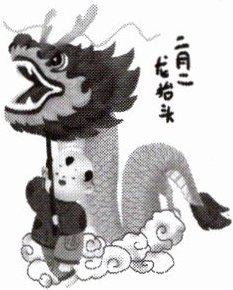
China is a country with a long and rich history. 7.____ The Dragon Head-Raising Festival or the Longtaitou Festival is one of them. This special day is on the second day of the second month of the Chinese lunar calendar. It stands for the start of spring and farming.
The dragon plays an important role in Chinese culture. Dragon culture is one of the most popular cultures in China. 8.____ People celebrated the Dragon Head-Raising Festival with many customs about the dragon in ancient times.
On the special day, people put ashes in the kitchen. 9.____ People believed that if the dragon went into their houses, they could have good luck all year round and have a good harvest in autumn. On the special day, people ate special food. 10.____ For example, people ate noodles called “dragon whisker noodles” and dumplings called “dragon ears”. On the special day, people sent gifts to each other, picked vegetables, welcomed wealth and went on a spring outing.
11.____ Today people rush to have their hair cut, especially have their children's hair cut on the Dragon Head-Raising Festival. They want to make themselves have new looks and have a good year.
A. It has many colorful holidays and festivals.
B. The food was usually named after the dragon.
C. People fly a kite and have a picnic on this day.
D. Chinese people call themselves the “descendants(传人) of the dragon”.
E. They thought the dragon could be led into their houses with the help of the ashes.
F. Even though many of the customs have faded away(消退), the tradition of cutting hair is reaching new heights.
第一节 阅读短文内容,从短文后的选项中选出能填入空白处的最佳选项。选项中有一项为多余选项。
传统文化
The Dragon Head-Raising Festival
China is a country with a long and rich history. 7.____ The Dragon Head-Raising Festival or the Longtaitou Festival is one of them. This special day is on the second day of the second month of the Chinese lunar calendar. It stands for the start of spring and farming.
The dragon plays an important role in Chinese culture. Dragon culture is one of the most popular cultures in China. 8.____ People celebrated the Dragon Head-Raising Festival with many customs about the dragon in ancient times.
On the special day, people put ashes in the kitchen. 9.____ People believed that if the dragon went into their houses, they could have good luck all year round and have a good harvest in autumn. On the special day, people ate special food. 10.____ For example, people ate noodles called “dragon whisker noodles” and dumplings called “dragon ears”. On the special day, people sent gifts to each other, picked vegetables, welcomed wealth and went on a spring outing.
11.____ Today people rush to have their hair cut, especially have their children's hair cut on the Dragon Head-Raising Festival. They want to make themselves have new looks and have a good year.
A. It has many colorful holidays and festivals.
B. The food was usually named after the dragon.
C. People fly a kite and have a picnic on this day.
D. Chinese people call themselves the “descendants(传人) of the dragon”.
E. They thought the dragon could be led into their houses with the help of the ashes.
F. Even though many of the customs have faded away(消退), the tradition of cutting hair is reaching new heights.
答案:
第一节 7-11 ADEBF
第二节 阅读下面短文,根据其内容填空或回答问题。(12至15每题答案不超过3个词,16题需用完整句子回答。)
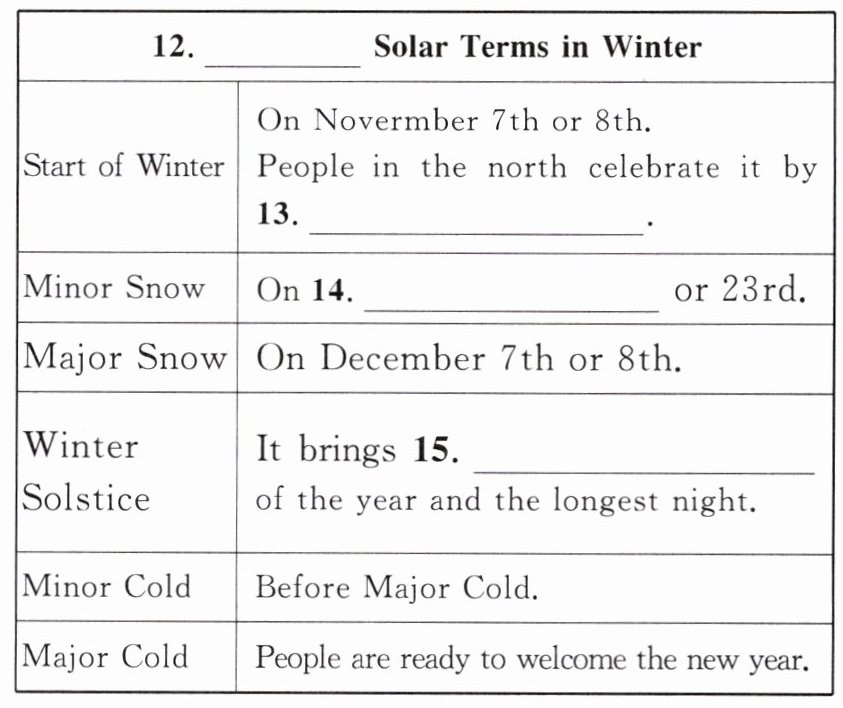
According to the traditional Chinese calendar, there are 24 solar terms(节气) in a year. The 24 solar terms were created thousands of years ago to guide agriculture production(农业生产). But solar term culture is still useful today to guide people's lives through cultural activities and special foods that go with each term.
There are six solar terms in winter. They are Start of Winter, Minor Snow(小雪), Major Snow, Winter Solstice(冬至), Minor Cold(小寒) and Major Cold.
Start of Winter usually falls on November 7th or 8th. After Start of Winter, most parts of the country can start to expect cold weather. On this day, after a year of hard work, people are happy to have a rest and spend time with family. The northern China celebrates Start of Winter as the “Small Spring Festival”. People usually have dumplings on the day.
Minor Snow usually falls on November 22nd or 23rd and Major Snow is on December 7th or 8th. When Winter Solstice comes, it brings the shortest day of the year and the longest night. Many places around the country can expect the coldest weather. People often start counting “nine cold periods” starting from Winter Solstice. Every cold period has nine days. People believe that after 81 cold days, spring will come.
Major Cold comes after Minor Cold. The field is covered with snow. All Chinese are ready to welcome the Spring Festival after it. Of course, a new round of solar terms will start.
According to the traditional Chinese calendar, there are 24 solar terms(节气) in a year. The 24 solar terms were created thousands of years ago to guide agriculture production(农业生产). But solar term culture is still useful today to guide people's lives through cultural activities and special foods that go with each term.
There are six solar terms in winter. They are Start of Winter, Minor Snow(小雪), Major Snow, Winter Solstice(冬至), Minor Cold(小寒) and Major Cold.
Start of Winter usually falls on November 7th or 8th. After Start of Winter, most parts of the country can start to expect cold weather. On this day, after a year of hard work, people are happy to have a rest and spend time with family. The northern China celebrates Start of Winter as the “Small Spring Festival”. People usually have dumplings on the day.
Minor Snow usually falls on November 22nd or 23rd and Major Snow is on December 7th or 8th. When Winter Solstice comes, it brings the shortest day of the year and the longest night. Many places around the country can expect the coldest weather. People often start counting “nine cold periods” starting from Winter Solstice. Every cold period has nine days. People believe that after 81 cold days, spring will come.
Major Cold comes after Minor Cold. The field is covered with snow. All Chinese are ready to welcome the Spring Festival after it. Of course, a new round of solar terms will start.
答案:
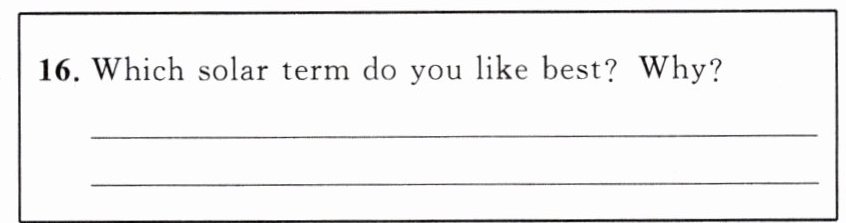
第二节 12. Six/6 13. having dumplings 14. November 22nd 15. the shortest day 16. I like Start of Autumn best. Because it's not hot any longer. / ...
查看更多完整答案,请扫码查看

