

 搜索
搜索
第23页
- 第1页
- 第2页
- 第3页
- 第4页
- 第5页
- 第6页
- 第7页
- 第8页
- 第9页
- 第10页
- 第11页
- 第12页
- 第13页
- 第14页
- 第15页
- 第16页
- 第17页
- 第18页
- 第19页
- 第20页
- 第21页
- 第22页
- 第23页
- 第24页
- 第25页
- 第26页
- 第27页
- 第28页
- 第29页
- 第30页
- 第31页
- 第32页
- 第33页
- 第34页
- 第35页
- 第36页
- 第37页
- 第38页
- 第39页
- 第40页
- 第41页
- 第42页
- 第43页
- 第44页
- 第45页
- 第46页
- 第47页
- 第48页
- 第49页
- 第50页
- 第51页
- 第52页
- 第53页
- 第54页
- 第55页
- 第56页
- 第57页
- 第58页
- 第59页
- 第60页
- 第61页
- 第62页
- 第63页
- 第64页
- 第65页
- 第66页
- 第67页
- 第68页
- 第69页
- 第70页
- 第71页
- 第72页
- 第73页
- 第74页
- 第75页
- 第76页
- 第77页
- 第78页
- 第79页
- 第80页
- 第81页
- 第82页
- 第83页
- 第84页
- 第85页
- 第86页
- 第87页
- 第88页
- 第89页
- 第90页
- 第91页
- 第92页
- 第93页
- 第94页
- 第95页
- 第96页
- 第97页
- 第98页
- 第99页
- 第100页
- 第101页
- 第102页
- 第103页
- 第104页
- 第105页
- 第106页
- 第107页
- 第108页
- 第109页
- 第110页
- 第111页
- 第112页
- 第113页
- 第114页
- 第115页
- 第116页
- 第117页
- 第118页
- 第119页
- 第120页
- 第121页
- 第122页
- 第123页
- 第124页
- 第125页
- 第126页
- 第127页
- 第128页
- 第129页
- 第130页
- 第131页
- 第132页
- 第133页
- 第134页
- 第135页
- 第136页
- 第137页
- 第138页
- 第139页
- 第140页
- 第141页
- 第142页
- 第143页
- 第144页
- 第145页
- 第146页
- 第147页
- 第148页
- 第149页
- 第150页
- 第151页
- 第152页
- 第153页
- 第154页
- 第155页
- 第156页
四、根据中文意思,补全英语译文。(每空限填一词,缩写算一词)
21. 随着时间的推移,春节的庆祝方式也有了许多变化。
As time goes by, many changes have ____ ____ in the ways of celebrating the Spring Festival.
22. 在新年的钟声敲响前,所有人都在倒计时。
Before the New Year's bell rings, everyone is ____ ____.
23. 大年初一的夜晚,人们喜欢放烟花来表达喜悦。
On the night of the first day of the lunar New Year, people like to ____ ____ ____ to show their joy.
24. 不管是城市还是乡村,庆祝春节的人们都有一个共同点——对新年的美好期许。
Whether in cities or villages, people celebrating the Spring Festival ____ ____ ____ ____ ____ the good wishes for the New Year.
25. 春节期间,人们通过电话、视频等方式与许久未见的亲友联系。
During the Spring Festival, people ____ ____ their relatives and friends whom they haven't seen for a long time through phone calls, videos and other means.
21. 随着时间的推移,春节的庆祝方式也有了许多变化。
As time goes by, many changes have ____ ____ in the ways of celebrating the Spring Festival.
22. 在新年的钟声敲响前,所有人都在倒计时。
Before the New Year's bell rings, everyone is ____ ____.
23. 大年初一的夜晚,人们喜欢放烟花来表达喜悦。
On the night of the first day of the lunar New Year, people like to ____ ____ ____ to show their joy.
24. 不管是城市还是乡村,庆祝春节的人们都有一个共同点——对新年的美好期许。
Whether in cities or villages, people celebrating the Spring Festival ____ ____ ____ ____ ____ the good wishes for the New Year.
25. 春节期间,人们通过电话、视频等方式与许久未见的亲友联系。
During the Spring Festival, people ____ ____ their relatives and friends whom they haven't seen for a long time through phone calls, videos and other means.
答案:
21. taken place 22. counting down 23. set off fireworks 24. have one thing in common 25. connect with
五、阅读理解。
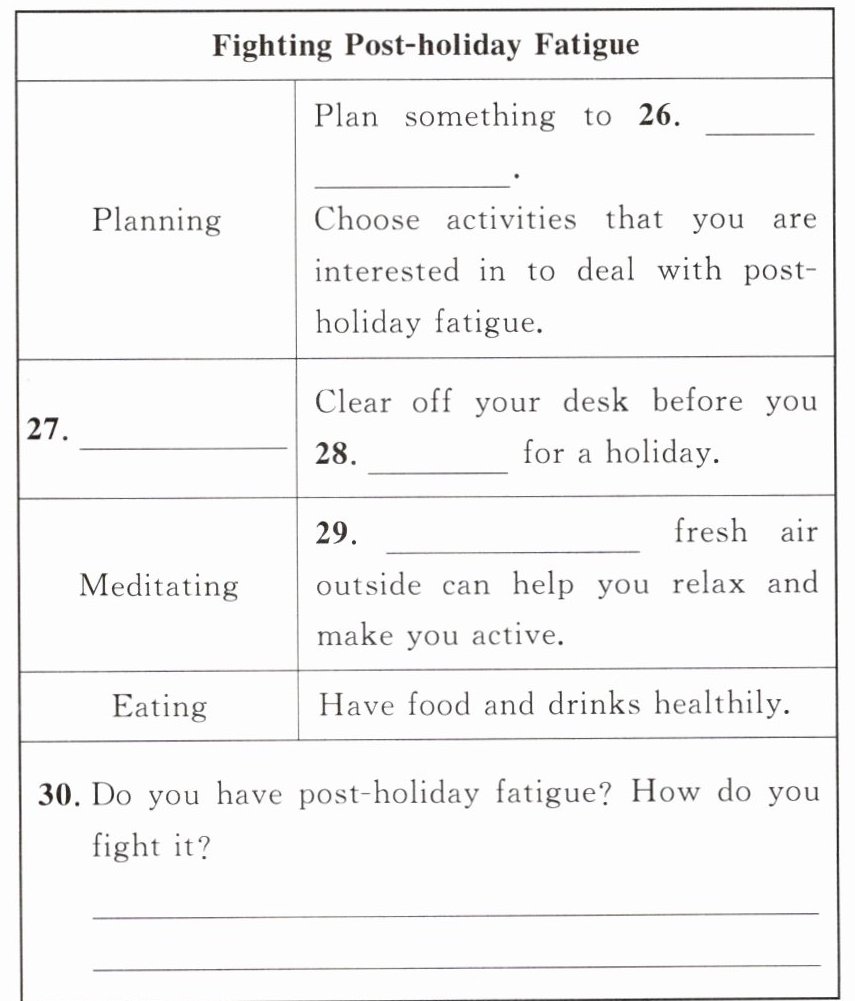
阅读下面短文,根据其内容填空和回答问题。(26 至 29 每题答案不超过 3 个词,30 题需用完整句子回答。)
After spending a wonderful festival, some people feel blue and find that it's difficult to work normally in their daily life. Linda Smith says, “After any big event—a vacation, a festival or a competition, there can be holiday blues. ” Here, she shares her suggestions on fighting post - holiday fatigue (疲劳).
Plan something to look forward to. Make a plan for fun activities, such as having dinner with friends, starting a new class for a hobby or interest, going to the movies, etc. Choose activities that meet your interests, and that will give your brain something interesting to focus on (专注) and can help deal with post - holiday fatigue.
Organize your desk. How do you feel when you turn to the office facing a mountain of paperwork? So it's best to take a few minutes to clear off your desk before leaving for a holiday. Starting with a clean desk can help your mind focus on the tasks you have planned.
Meditate (冥想). Taking a break to simply listen to your breath go in and out can help you a lot. If you feel blue, take a five - minute break to breathe deeply or take a walk outdoors. Many studies have shown breathing fresh air outside can help you relax and make you active.
Eat away your blues. After the holidays, you may become heavier. Now return to eating healthy food and drinking healthy drinks. They include bananas, fish, chicken and soup. Warm salads are also an excellent choice during winter.
阅读下面短文,根据其内容填空和回答问题。(26 至 29 每题答案不超过 3 个词,30 题需用完整句子回答。)
After spending a wonderful festival, some people feel blue and find that it's difficult to work normally in their daily life. Linda Smith says, “After any big event—a vacation, a festival or a competition, there can be holiday blues. ” Here, she shares her suggestions on fighting post - holiday fatigue (疲劳).
Plan something to look forward to. Make a plan for fun activities, such as having dinner with friends, starting a new class for a hobby or interest, going to the movies, etc. Choose activities that meet your interests, and that will give your brain something interesting to focus on (专注) and can help deal with post - holiday fatigue.
Organize your desk. How do you feel when you turn to the office facing a mountain of paperwork? So it's best to take a few minutes to clear off your desk before leaving for a holiday. Starting with a clean desk can help your mind focus on the tasks you have planned.
Meditate (冥想). Taking a break to simply listen to your breath go in and out can help you a lot. If you feel blue, take a five - minute break to breathe deeply or take a walk outdoors. Many studies have shown breathing fresh air outside can help you relax and make you active.
Eat away your blues. After the holidays, you may become heavier. Now return to eating healthy food and drinking healthy drinks. They include bananas, fish, chicken and soup. Warm salads are also an excellent choice during winter.
答案:
26. look forward to 27. Organizing 28. leave 29. Breathing 30. Yes, I do. I fight it by getting enough sleep, exercising, and starting with easy tasks. / ...
查看更多完整答案,请扫码查看

