

 搜索
搜索
第14页
- 第1页
- 第2页
- 第3页
- 第4页
- 第5页
- 第6页
- 第7页
- 第8页
- 第9页
- 第10页
- 第11页
- 第12页
- 第13页
- 第14页
- 第15页
- 第16页
- 第17页
- 第18页
- 第19页
- 第20页
- 第21页
- 第22页
- 第23页
- 第24页
- 第25页
- 第26页
- 第27页
- 第28页
- 第29页
- 第30页
- 第31页
- 第32页
- 第33页
- 第34页
- 第35页
- 第36页
- 第37页
- 第38页
- 第39页
- 第40页
- 第41页
- 第42页
- 第43页
- 第44页
- 第45页
- 第46页
- 第47页
- 第48页
- 第49页
- 第50页
- 第51页
- 第52页
- 第53页
- 第54页
- 第55页
- 第56页
- 第57页
- 第58页
- 第59页
- 第60页
- 第61页
- 第62页
- 第63页
- 第64页
- 第65页
- 第66页
- 第67页
- 第68页
- 第69页
- 第70页
- 第71页
- 第72页
- 第73页
- 第74页
- 第75页
- 第76页
- 第77页
- 第78页
- 第79页
- 第80页
- 第81页
- 第82页
- 第83页
- 第84页
- 第85页
- 第86页
- 第87页
- 第88页
- 第89页
- 第90页
- 第91页
- 第92页
- 第93页
- 第94页
- 第95页
- 第96页
- 第97页
- 第98页
- 第99页
- 第100页
- 第101页
- 第102页
- 第103页
- 第104页
- 第105页
- 第106页
- 第107页
- 第108页
一、听力理解。
不同国家迎接新年的活动各具特色。
请听下面一段独白,根据独白内容完成表格,每个空格不超过 3 个单词。独白读两遍。
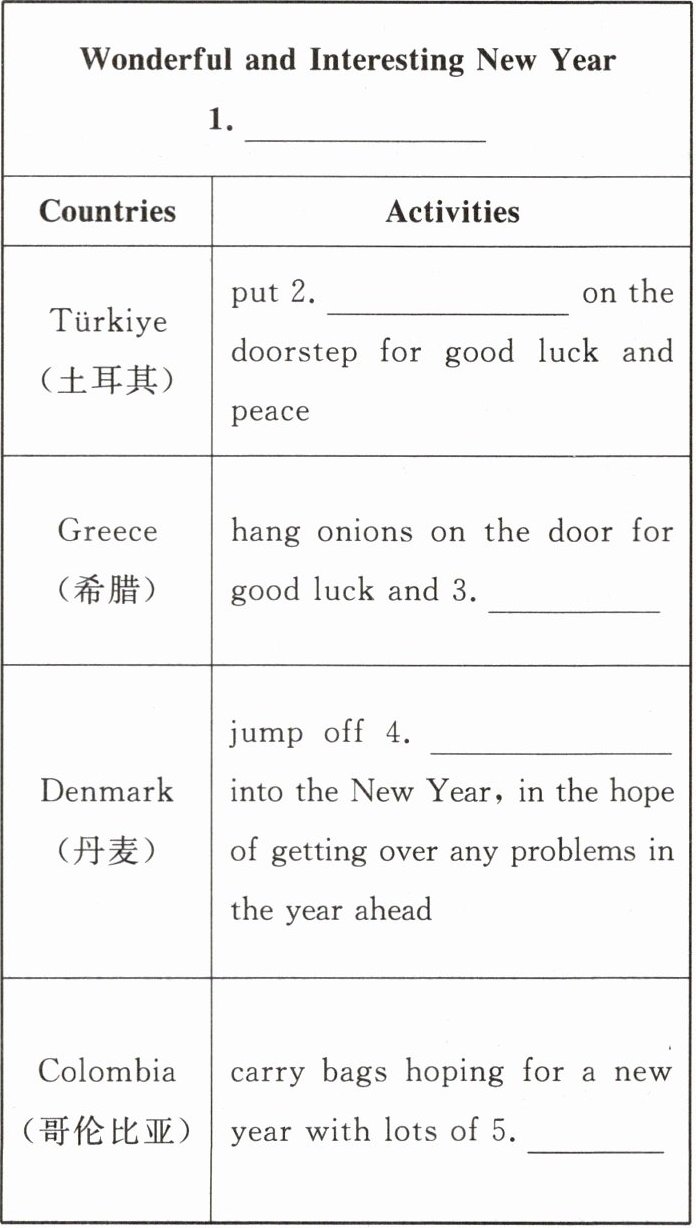
不同国家迎接新年的活动各具特色。
请听下面一段独白,根据独白内容完成表格,每个空格不超过 3 个单词。独白读两遍。
答案:
1. Traditions
2. salt
3. health
4. their chairs
5. travel
2. salt
3. health
4. their chairs
5. travel
二、任务型阅读。
了解了世界这么多地方的新年风俗,再来看看看印度的排灯节吧。
任务一:请先阅读下面短文,掌握其大意,然后用方框中所给词的适当形式填空。每个词限用一次。
it main especially custom but bring fourth change pretty waste name
Diwali,the Festival of Lights,is one of the biggest and most important celebrations in India. 1.
Diwali is a five-day festival. Each day has its own special 4.
Diwali is a happy time,9.
任务二:将每个段落与其大意匹配。
A. The introduction of Diwali.
B. Problems caused by Diwali.
C. The activities during Diwali.
Paragraph 1
Paragraph 2
Paragraph 3
了解了世界这么多地方的新年风俗,再来看看看印度的排灯节吧。
任务一:请先阅读下面短文,掌握其大意,然后用方框中所给词的适当形式填空。每个词限用一次。
it main especially custom but bring fourth change pretty waste name
Diwali,the Festival of Lights,is one of the biggest and most important celebrations in India. 1.
It
marks the victory(胜利) of light over darkness. It gets its 2. name
from the row(avali)(排)of clay lamps(deepa)(陶灯)that Indian people light outside their homes. The festival is between October and November,but the date 3. changes
each year because the Hindu calendar follows both the moon and the sun.Diwali is a five-day festival. Each day has its own special 4.
customs
. On the first day,people clean their homes and buy gold or kitchen tools 5. to bring
good luck. On the second day,people use clay lamps and colorful designs to make their home 6. pretty/prettier
. The third day is the 7. main
day. Families wish for wealth(财富),enjoy meals and light fireworks. On the 8. fourth
day,people visit friends and family with gifts and best wishes for the season. On the fifth day,adult brothers visit their married sisters,and the family shares a big meal.Diwali is a happy time,9.
but
it also causes big environmental problems. Fireworks create a lot of air pollution,10. especially
in northern India. This can lead to health problems like breathing difficulties and heart problems. Fireworks also create a lot of 11. waste
. Many fireworks can't be recycled(回收利用),so they end up in landfills(填埋场).任务二:将每个段落与其大意匹配。
A. The introduction of Diwali.
B. Problems caused by Diwali.
C. The activities during Diwali.
Paragraph 1
A
Paragraph 2
C
Paragraph 3
B
答案:
1. It
2. name
3. changes
4. customs
5. to bring
6. pretty/prettier
7. main
8. fourth
9. but
10. especially
11. waste
2. name
3. changes
4. customs
5. to bring
6. pretty/prettier
7. main
8. fourth
9. but
10. especially
11. waste
查看更多完整答案,请扫码查看

