

 搜索
搜索
第116页
- 第1页
- 第2页
- 第3页
- 第4页
- 第5页
- 第6页
- 第7页
- 第8页
- 第9页
- 第10页
- 第11页
- 第12页
- 第13页
- 第14页
- 第15页
- 第16页
- 第17页
- 第18页
- 第19页
- 第20页
- 第21页
- 第22页
- 第23页
- 第24页
- 第25页
- 第26页
- 第27页
- 第28页
- 第29页
- 第30页
- 第31页
- 第32页
- 第33页
- 第34页
- 第35页
- 第36页
- 第37页
- 第38页
- 第39页
- 第40页
- 第41页
- 第42页
- 第43页
- 第44页
- 第45页
- 第46页
- 第47页
- 第48页
- 第49页
- 第50页
- 第51页
- 第52页
- 第53页
- 第54页
- 第55页
- 第56页
- 第57页
- 第58页
- 第59页
- 第60页
- 第61页
- 第62页
- 第63页
- 第64页
- 第65页
- 第66页
- 第67页
- 第68页
- 第69页
- 第70页
- 第71页
- 第72页
- 第73页
- 第74页
- 第75页
- 第76页
- 第77页
- 第78页
- 第79页
- 第80页
- 第81页
- 第82页
- 第83页
- 第84页
- 第85页
- 第86页
- 第87页
- 第88页
- 第89页
- 第90页
- 第91页
- 第92页
- 第93页
- 第94页
- 第95页
- 第96页
- 第97页
- 第98页
- 第99页
- 第100页
- 第101页
- 第102页
- 第103页
- 第104页
- 第105页
- 第106页
- 第107页
- 第108页
- 第109页
- 第110页
- 第111页
- 第112页
- 第113页
- 第114页
- 第115页
- 第116页
- 第117页
- 第118页
- 第119页
- 第120页
- 第121页
- 第122页
- 第123页
- 第124页
- 第125页
- 第126页
- 第127页
- 第128页
- 第129页
- 第130页
- 第131页
- 第132页
- 第133页
- 第134页
- 第135页
- 第136页
- 第137页
- 第138页
- 第139页
- 第140页
- 第141页
- 第142页
- 第143页
- 第144页
- 第145页
- 第146页
- 第147页
- 第148页
- 第149页
- 第150页
- 第151页
- 第152页
- 第153页
- 第154页
- 第155页
- 第156页
- 第157页
- 第158页
- 第159页
- 第160页
- 第161页
- 第162页
- 第163页
- 第164页
- 第165页
- 第166页
- 第167页
- 第168页
- 第169页
- 第170页
假如你是李梅。你的美国笔友 Tom 在昨天的 E-mail 中告诉你,最近他对中国文化产生了浓厚的兴趣,希望你能给他介绍一些经典故事。请你给 Tom 回复一封 90 词左右的 E-mail,向他讲述司马光砸缸的故事。
Dear Tom,
I'm very happy that you are interested in traditional Chinese stories. Well, let me tell you a famous one with the name Sima Guang Hit the Tank.
______________________________
Do you like the story? What do you think of Sima Guang? I am looking forward to hearing from you.
Yours,
Li Mei
Dear Tom,
I'm very happy that you are interested in traditional Chinese stories. Well, let me tell you a famous one with the name Sima Guang Hit the Tank.
______________________________
Do you like the story? What do you think of Sima Guang? I am looking forward to hearing from you.
Yours,
Li Mei
答案:
Once Sima Guang was playing hide - and - seek with several children in the backyard. There was a large water tank in the yard. It was full of water. When the kids were playing, one child accidentally fell into the tank. Other children were so frightened that they started to run, crying for help. However, Sima Guang was different. He thought carefully and then had an idea. He picked up a big stone and threw it at the tank. "Bang!" The tank broke and the water ran out. The kid was saved. From the story, we know Sima Guang was brave and clever. When meeting danger, we should calm down and try to find ways.
Ⅰ.听对话回答问题
听下面10段对话。每段对话后有1个小题,从题中所给的A、B、C三个选项中选出最佳选项。每段对话读两遍。
1. Which of the following is Mr. Lee good at?

2. What did the boy buy for his sister in Hong Kong?

3. What's on the top of the hill?
A. A stone monkey. B. An ancient tower. C. A magic stick.
4. How does Grace like the story of Yu Gong?
A. It's a little bit silly. B. It's possible. C. It's interesting.
5. When did the cartoon The Monkey King come out in Western countries?
A. In October,1969. B. In November,1979. C. In December,1989.
6. What does Anna think of the book Little Women?
A. It's difficult. B. It's boring. C. It's educational.
7. How does Mark find Tom Sawyer?
A. Tiring. B. Exciting. C. Boring.
8. What will Mario do tomorrow afternoon?
A. He will go to the movies. B. He will relax himself. C. He will have after-school classes.
9. Who helped Molly find the volunteer job?
A. Her mother. B. Her friend. C. The boy.
10. How does the club help poor children?
A. By raising money. B. By collecting clothes. C. By teaching them skills.
Ⅱ.听长对话回答问题
听2段长对话。每段对话后有几个小题,从题中所给的A、B、C三个选项中选出最佳选项。每段对话读两遍。
听第一段对话,回答第11-12小题。
11. What role did Sam get?
A. A king. B. A prince. C. A queen.
12. What is the name of the play?
A. The King and the Prince. B. Little Red Riding Hood. C. The King's New Clothes,
听第二段对话,回答第13-15小题。
13. What are the speakers talking about?
A. Hou Yi Shoots the Suns. B. Journey to the West. C. Nu Wa Repairs the Sky.
14. Who is brave in the story?
A. Nu Wa. B. Sun Wukong. C. Hou Yi.
15. What's the relationship between the two speakers?
A. Teacher and student. B. Mother and son. C. Friends.
Ⅲ.听短文回答问题
听一篇短文。短文后有5个小题,从题中所给的A、B、C三个选项中选出最佳选项。短文读两遍。
16. Where does the name of the book come from?
A. A girl. B. A boy. C. A woman.
17. Whom did Heidi live with before she went to the Alps?
A. Her parents. B. Her aunt. C. Her grandfather.
18. Why did Heidi leave the Alps?
A. Because her aunt took her to a rich man's family.
B. Because she went to visit her friend Clara.
C. Because she didn't like her grandfather.
19. How did Heidi feel in Clara's home?
A. Bored and ill. B. Unhappy and ill. C. Happy and healthy.
20. What was Heidi in everyone's eyes?
A. An adult. B. A fairy. C. An angel.
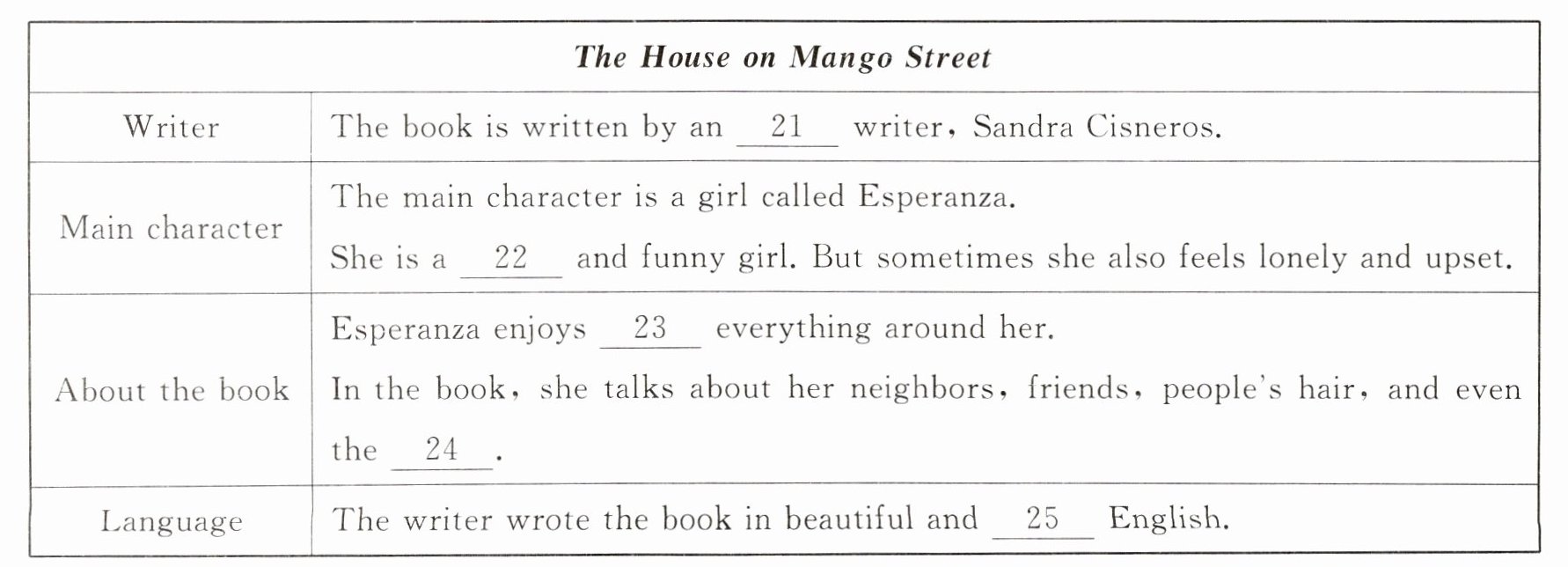
Ⅳ.听短文填写表格
听一篇短文。根据短文内容,写出下面表格中所缺的单词,每空仅填一词。短文读两遍。
答案:
1~5 AABAB 6~10 CCCAB 11~15 ACACB 16~20 ABABC 21. American 22. smart 23. watching 24. clouds 25. simple
查看更多完整答案,请扫码查看

