

 搜索
搜索
2025年全程测评试卷八年级英语上册人教版
注:目前有些书本章节名称可能整理的还不是很完善,但都是按照顺序排列的,请同学们按照顺序仔细查找。练习册 2025年全程测评试卷八年级英语上册人教版 答案主要是用来给同学们做完题方便对答案用的,请勿直接抄袭。
第39页
- 第1页
- 第2页
- 第3页
- 第4页
- 第5页
- 第6页
- 第7页
- 第8页
- 第9页
- 第10页
- 第11页
- 第12页
- 第13页
- 第14页
- 第15页
- 第16页
- 第17页
- 第18页
- 第19页
- 第20页
- 第21页
- 第22页
- 第23页
- 第24页
- 第25页
- 第26页
- 第27页
- 第28页
- 第29页
- 第30页
- 第31页
- 第32页
- 第33页
- 第34页
- 第35页
- 第36页
- 第37页
- 第38页
- 第39页
- 第40页
- 第41页
- 第42页
- 第43页
- 第44页
- 第45页
- 第46页
- 第47页
- 第48页
- 第49页
- 第50页
- 第51页
- 第52页
- 第53页
- 第54页
- 第55页
- 第56页
- 第57页
- 第58页
- 第59页
- 第60页
- 第61页
- 第62页
- 第63页
- 第64页
- 第65页
- 第66页
- 第67页
- 第68页
- 第69页
- 第70页
- 第71页
- 第72页
- 第73页
- 第74页
- 第75页
- 第76页
- 第77页
- 第78页
- 第79页
- 第80页
- 第81页
- 第82页
C
Fotiaoqiang means “Buddha Jumps over the Wall” in Chinese. It is one of the most famous Fujian-style dishes.
It is famous for its unique flavour and cooking techniques( 独特的风味和烹饪技术). The main ingredients are seafood and meat,but we always add more than 10 ingredients to make this dish,such as eggs and vegetables. Most of the ingredients are unusual and expensive. It is hard to cook the dish for many cooks. Now many restaurants have their own ways to make this dish.
How did the dish get its name? There was a cook called Zheng Chunfa who worked for an officer in the Qing Dynasty. He created the dish. Later he stopped working for the officer and opened a restaurant,which is now Juchunyuan Restaurant in Fuzhou City. The restaurant soon became famous and many people came to the restaurant. They were surprised at the special smell of the dish. One poet wrote a poem about this dish. One line of the poem could be translated( 翻译) as “The pleasant smell spread among neighbourhoods. It smelt so good that even a Buddha would jump over the wall to try it. ” After that, people began to call this dish “Fotiaoqiang”.
Fotiaoqiang is a symbol of Fujian Province. Also,this dish is often served at many formal banquets( 正式的宴会) to some guests.
【】11. Why is Fotiaoqiang famous?
A. Because of its special name.
B. Because of the cook’s name.
C. Because of its flavour and cooking techniques.
D. Because of a poet.
【】12. How many ingredients are used to make Fotiaoqiang?
A. Only 2.
B. More than 10.
C. More than 20.
D. More than 25.
【】13. How did the people feel when they smelled the dish?
A. Worried.
B. Surprised.
C. Terrible.
D. Happy.
【】14. What is Paragraph 3 mainly about?
A. What Fotiaoqiang is.
B. How people make Fotiaoqiang.
C. Where Fotiaoqiang was famous.
D. How Fotiaoqiang got its name.
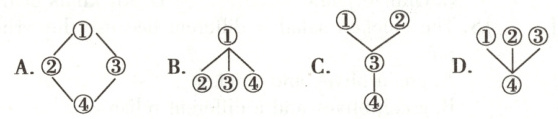
【】15. What’s the structure of the text?
Fotiaoqiang means “Buddha Jumps over the Wall” in Chinese. It is one of the most famous Fujian-style dishes.
It is famous for its unique flavour and cooking techniques( 独特的风味和烹饪技术). The main ingredients are seafood and meat,but we always add more than 10 ingredients to make this dish,such as eggs and vegetables. Most of the ingredients are unusual and expensive. It is hard to cook the dish for many cooks. Now many restaurants have their own ways to make this dish.
How did the dish get its name? There was a cook called Zheng Chunfa who worked for an officer in the Qing Dynasty. He created the dish. Later he stopped working for the officer and opened a restaurant,which is now Juchunyuan Restaurant in Fuzhou City. The restaurant soon became famous and many people came to the restaurant. They were surprised at the special smell of the dish. One poet wrote a poem about this dish. One line of the poem could be translated( 翻译) as “The pleasant smell spread among neighbourhoods. It smelt so good that even a Buddha would jump over the wall to try it. ” After that, people began to call this dish “Fotiaoqiang”.
Fotiaoqiang is a symbol of Fujian Province. Also,this dish is often served at many formal banquets( 正式的宴会) to some guests.
【】11. Why is Fotiaoqiang famous?
A. Because of its special name.
B. Because of the cook’s name.
C. Because of its flavour and cooking techniques.
D. Because of a poet.
【】12. How many ingredients are used to make Fotiaoqiang?
A. Only 2.
B. More than 10.
C. More than 20.
D. More than 25.
【】13. How did the people feel when they smelled the dish?
A. Worried.
B. Surprised.
C. Terrible.
D. Happy.
【】14. What is Paragraph 3 mainly about?
A. What Fotiaoqiang is.
B. How people make Fotiaoqiang.
C. Where Fotiaoqiang was famous.
D. How Fotiaoqiang got its name.
【】15. What’s the structure of the text?
答案:
11.C【解析】根据短文第二段中的“It is famous for its unique flavour and cooking techniques(独特的风味和烹饪技术)”可知,佛跳墙以其独特的风味和烹饪技术而闻名。故选C。
12.B【解析】根据短文第二段中的“but we always add more than 10 ingredients to make this dish,such as eggs and vegetables”可知,佛跳墙的制作需要超过10种原料。故选B。
13.B【解析】根据短文第三段中的“The restaurant soon became famous and many people came to the restaurant.They were surprised at the special smell of the dish”可知,人们闻到这道菜时的感觉很吃惊。故选B。
14.D【解析】根据短文第三段中的“How did the dish get its name”以及整段内容可知,第三段主要讲述了佛跳墙的名字是怎么来的。故选D。
15.A【解析】通读全文内容可知,第一段介绍了佛跳墙是福建最有名的菜肴之一;第二段详细介绍了佛跳墙的主要食材、独特风味和烹饪难度;第三段介绍佛跳墙名字的由来及其历史背景;第四段强调佛跳墙在福建文化中的象征意义及其在正式宴会上的重要地位。因此本文是总—分—总结构。故选A。
12.B【解析】根据短文第二段中的“but we always add more than 10 ingredients to make this dish,such as eggs and vegetables”可知,佛跳墙的制作需要超过10种原料。故选B。
13.B【解析】根据短文第三段中的“The restaurant soon became famous and many people came to the restaurant.They were surprised at the special smell of the dish”可知,人们闻到这道菜时的感觉很吃惊。故选B。
14.D【解析】根据短文第三段中的“How did the dish get its name”以及整段内容可知,第三段主要讲述了佛跳墙的名字是怎么来的。故选D。
15.A【解析】通读全文内容可知,第一段介绍了佛跳墙是福建最有名的菜肴之一;第二段详细介绍了佛跳墙的主要食材、独特风味和烹饪难度;第三段介绍佛跳墙名字的由来及其历史背景;第四段强调佛跳墙在福建文化中的象征意义及其在正式宴会上的重要地位。因此本文是总—分—总结构。故选A。
查看更多完整答案,请扫码查看

