

 搜索
搜索
第45页
- 第1页
- 第2页
- 第3页
- 第4页
- 第5页
- 第6页
- 第7页
- 第8页
- 第9页
- 第10页
- 第11页
- 第12页
- 第13页
- 第14页
- 第15页
- 第16页
- 第17页
- 第18页
- 第19页
- 第20页
- 第21页
- 第22页
- 第23页
- 第24页
- 第25页
- 第26页
- 第27页
- 第28页
- 第29页
- 第30页
- 第31页
- 第32页
- 第33页
- 第34页
- 第35页
- 第36页
- 第37页
- 第38页
- 第39页
- 第40页
- 第41页
- 第42页
- 第43页
- 第44页
- 第45页
- 第46页
- 第47页
- 第48页
- 第49页
- 第50页
- 第51页
- 第52页
- 第53页
- 第54页
- 第55页
- 第56页
- 第57页
- 第58页
- 第59页
- 第60页
- 第61页
- 第62页
- 第63页
- 第64页
- 第65页
- 第66页
- 第67页
- 第68页
- 第69页
- 第70页
- 第71页
- 第72页
- 第73页
- 第74页
- 第75页
- 第76页
- 第77页
- 第78页
- 第79页
- 第80页
- 第81页
- 第82页
- 第83页
- 第84页
- 第85页
- 第86页
- 第87页
- 第88页
- 第89页
- 第90页
- 第91页
- 第92页
- 第93页
- 第94页
- 第95页
- 第96页
- 第97页
- 第98页
- 第99页
- 第100页
- 第101页
- 第102页
- 第103页
- 第104页
- 第105页
- 第106页
- 第107页
- 第108页
- 第109页
- 第110页
- 第111页
- 第112页
- 第113页
- 第114页
- 第115页
- 第116页
- 第117页
- 第118页
- 第119页
- 第120页
- 第121页
- 第122页
- 第123页
- 第124页
- 第125页
- 第126页
- 第127页
- 第128页
- 第129页
- 第130页
Point 2 surprise 的用法
surprise
n. 惊奇;惊讶之事
in surprise 惊讶地
to one's surprise 令某人惊讶的是
v. 使(某人)吃惊
surprise sb. 使某人诧异
It surprises sb.+that 从句 使某人惊讶的是……
例
1. To my surprise, Jenny won first prize in the singing competition. 令我惊讶的是,珍妮在歌唱比赛中获得了一等奖。
2. —Why don't you talk to your friend? 你为什么不和你的朋友谈谈? —Because I don't want to surprise him. 因为我不想让他感到诧异。
【拓展】
surprised 意为“感到惊奇的”,修饰对象通常是人。surprising 意为“令人惊讶的”,修饰对象通常是物。
【考点即练】
1. I have a ______ (惊喜) for you: We are taking a trip to Switzerland!
2. I was really ______ (surprise) to find I had been wrong all my life — business people are a lot cooler than I thought. [2025·山西改编]
3. 用适当的介词填空。
(1)Tina looked at the boy ______ surprise. She couldn't believe that he could draw such a beautiful picture.
(2)______ everyone's surprise, the plan succeeded.

surprise
n. 惊奇;惊讶之事
in surprise 惊讶地
to one's surprise 令某人惊讶的是
v. 使(某人)吃惊
surprise sb. 使某人诧异
It surprises sb.+that 从句 使某人惊讶的是……
例
1. To my surprise, Jenny won first prize in the singing competition. 令我惊讶的是,珍妮在歌唱比赛中获得了一等奖。
2. —Why don't you talk to your friend? 你为什么不和你的朋友谈谈? —Because I don't want to surprise him. 因为我不想让他感到诧异。
【拓展】
surprised 意为“感到惊奇的”,修饰对象通常是人。surprising 意为“令人惊讶的”,修饰对象通常是物。
【考点即练】
1. I have a ______ (惊喜) for you: We are taking a trip to Switzerland!
2. I was really ______ (surprise) to find I had been wrong all my life — business people are a lot cooler than I thought. [2025·山西改编]
3. 用适当的介词填空。
(1)Tina looked at the boy ______ surprise. She couldn't believe that he could draw such a beautiful picture.
(2)______ everyone's surprise, the plan succeeded.
答案:
1.surprise 2.surprised 3.
(1)in
(2)To
(1)in
(2)To
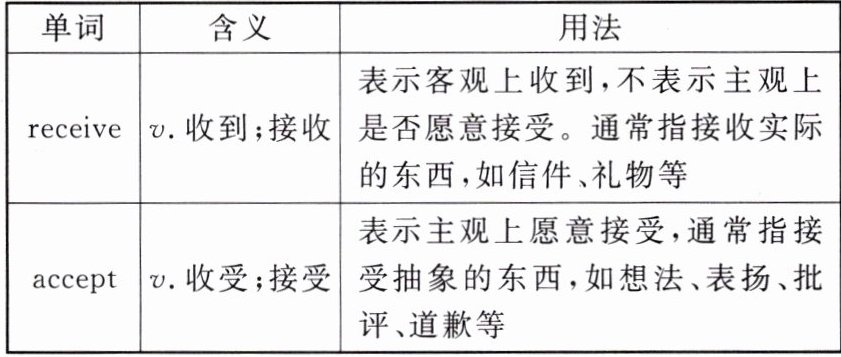
Point 3 辨析 receive 与 accept
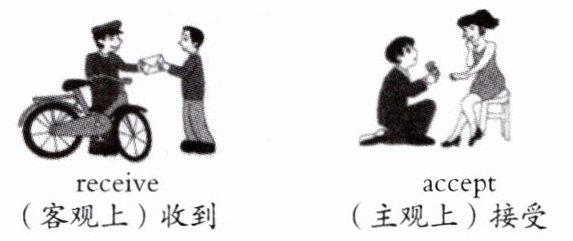
图示:
例
1. Anna told me I would receive an extra £100 a year! 安娜告诉我说我将获得每年一百英镑的额外收入!
2. Alex asked my aunt to marry him and she accepted. 亚里克斯向我的姑姑求婚,她答应了。
【注意】
表示“接见,接待”时,要用 receive 而不用 accept。如: Sarah was warmly received. 萨拉受到了热情接待。
【考点即练】
1. He ______ (收到) a present from his friend yesterday, and he ______ (接受) it gladly.
2.
图示:
例
1. Anna told me I would receive an extra £100 a year! 安娜告诉我说我将获得每年一百英镑的额外收入!
2. Alex asked my aunt to marry him and she accepted. 亚里克斯向我的姑姑求婚,她答应了。
【注意】
表示“接见,接待”时,要用 receive 而不用 accept。如: Sarah was warmly received. 萨拉受到了热情接待。
【考点即练】
1. He ______ (收到) a present from his friend yesterday, and he ______ (接受) it gladly.
2.
答案:
1.received; accepted 2.
(1)accept
(2)receive
(1)accept
(2)receive
查看更多完整答案,请扫码查看

