

 搜索
搜索
第14页
- 第1页
- 第2页
- 第3页
- 第4页
- 第5页
- 第6页
- 第7页
- 第8页
- 第9页
- 第10页
- 第11页
- 第12页
- 第13页
- 第14页
- 第15页
- 第16页
- 第17页
- 第18页
- 第19页
- 第20页
- 第21页
- 第22页
- 第23页
- 第24页
- 第25页
- 第26页
- 第27页
- 第28页
- 第29页
- 第30页
- 第31页
- 第32页
- 第33页
- 第34页
- 第35页
- 第36页
- 第37页
- 第38页
- 第39页
- 第40页
- 第41页
- 第42页
- 第43页
- 第44页
- 第45页
- 第46页
- 第47页
- 第48页
- 第49页
- 第50页
- 第51页
- 第52页
- 第53页
- 第54页
- 第55页
- 第56页
- 第57页
- 第58页
- 第59页
- 第60页
- 第61页
- 第62页
- 第63页
- 第64页
- 第65页
- 第66页
- 第67页
- 第68页
- 第69页
- 第70页
- 第71页
- 第72页
- 第73页
- 第74页
- 第75页
- 第76页
- 第77页
- 第78页
- 第79页
- 第80页
- 第81页
- 第82页
- 第83页
- 第84页
- 第85页
- 第86页
- 第87页
- 第88页
- 第89页
- 第90页
- 第91页
- 第92页
- 第93页
- 第94页
- 第95页
- 第96页
- 第97页
- 第98页
- 第99页
- 第100页
- 第101页
- 第102页
- 第103页
- 第104页
- 第105页
- 第106页
- 第107页
- 第108页
- 第109页
- 第110页
- 第111页
- 第112页
- 第113页
- 第114页
- 第115页
- 第116页
- 第117页
- 第118页
- 第119页
- 第120页
- 第121页
- 第122页
- 第123页
- 第124页
- 第125页
- 第126页
- 第127页
- 第128页
- 第129页
- 第130页
Point 2 play 的用法
play 常用作动词,意为“参加(体育运动或球赛);玩耍;演奏;弹奏;扮演”;也可用作名词,意为“剧本,戏剧”。
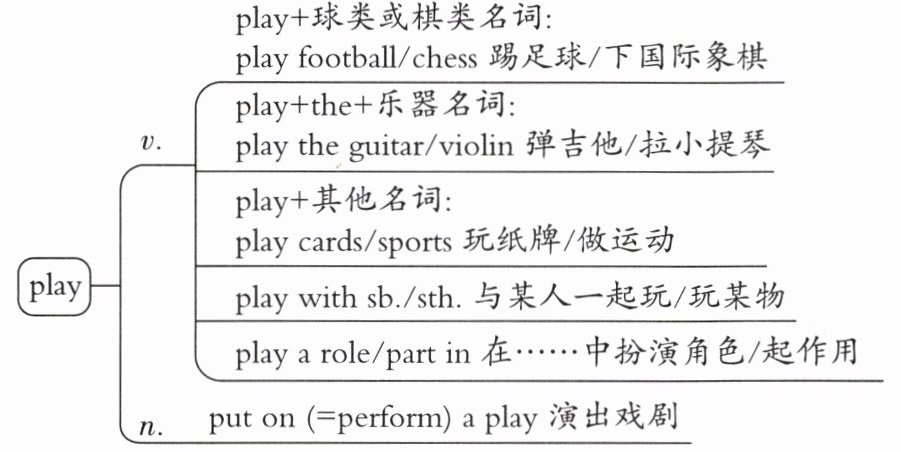
例 1. It is dangerous to play with fire.
玩火是很危险的。
2. Henry played a role in the school musical.
亨利在学校的音乐剧中扮演了一个角色。
【考点即练】
1. Little Women has been changed into ____ (戏剧), films and television programmes many times since it came out in 1868.
2. They shared stories and ____ (play) games happily at the party.
3. 用适当的介词填空。
(1)At weekends we went on picnics and I loved playing ____ my cousins in the park.
(2)The Yellow River is expected to play a more important role ____ our country's development.
play 常用作动词,意为“参加(体育运动或球赛);玩耍;演奏;弹奏;扮演”;也可用作名词,意为“剧本,戏剧”。
例 1. It is dangerous to play with fire.
玩火是很危险的。
2. Henry played a role in the school musical.
亨利在学校的音乐剧中扮演了一个角色。
【考点即练】
1. Little Women has been changed into ____ (戏剧), films and television programmes many times since it came out in 1868.
2. They shared stories and ____ (play) games happily at the party.
3. 用适当的介词填空。
(1)At weekends we went on picnics and I loved playing ____ my cousins in the park.
(2)The Yellow River is expected to play a more important role ____ our country's development.
答案:
1. plays 2. played 3.
(1)with
(2)in
(1)with
(2)in
Point 3 would like 的用法
would like 意为“想要”,相当于 want,后跟名词或动词不定式作宾语。在陈述句中,would like 可与前面的主语缩写为 I'd like/we'd like 等。
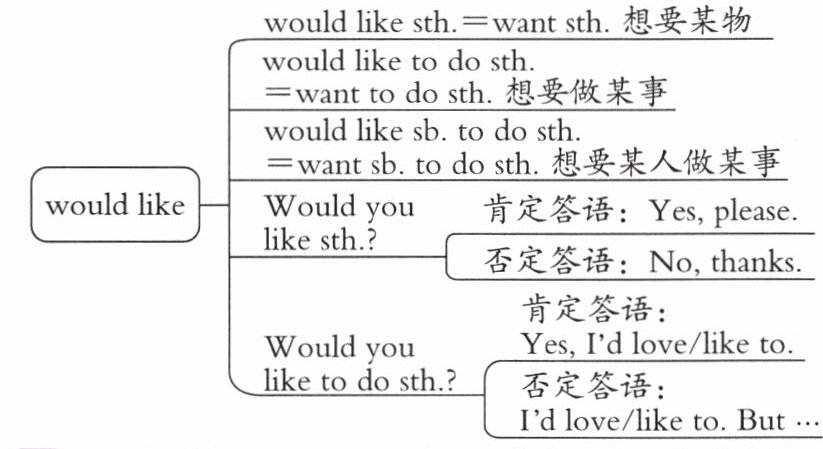
例 1. I'd like some apples. 我想要一些苹果。
2. We'd like to go to the zoo. 我们想去动物园。
3. I would like my mum to buy me a computer.
我想让妈妈给我买一台电脑。
【考点即练】
1. They are not certain whether their kids would like ____ (eat) the healthy foods.
2. We would like Grandpa Li ____ (come) and stay with us this weekend.
3. My family would like ____ special trip to Wenzhou. (填入适当的冠词)
would like 意为“想要”,相当于 want,后跟名词或动词不定式作宾语。在陈述句中,would like 可与前面的主语缩写为 I'd like/we'd like 等。
例 1. I'd like some apples. 我想要一些苹果。
2. We'd like to go to the zoo. 我们想去动物园。
3. I would like my mum to buy me a computer.
我想让妈妈给我买一台电脑。
【考点即练】
1. They are not certain whether their kids would like ____ (eat) the healthy foods.
2. We would like Grandpa Li ____ (come) and stay with us this weekend.
3. My family would like ____ special trip to Wenzhou. (填入适当的冠词)
答案:
1. to eat 2. to come 3. a
Point 4 worry 的用法
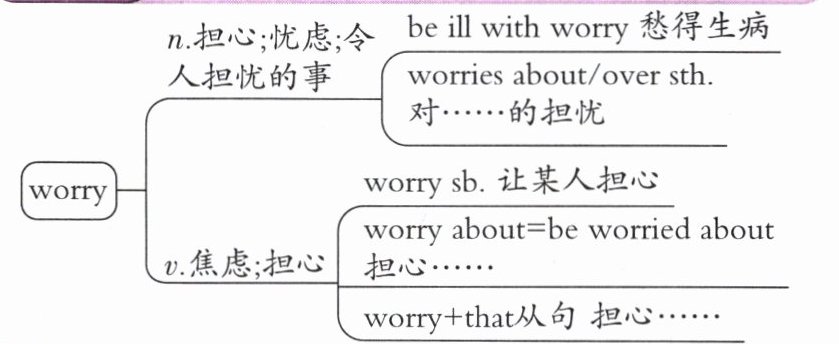
例 1. Don't worry about John. He'll be back soon. 不要担心约翰。他马上就会回来。
2. The teacher worried that the exam might be too difficult for her students.
这位老师担心这次考试对她的学生来说可能太难了。
【考点即练】
1. My main ____ (忧虑) right now is whether I can finish the work on time.
2. She wasn't ____ (worry) about her body shape.
3. The old woman ____ (worry) that people were friendly with her only to get her money.
例 1. Don't worry about John. He'll be back soon. 不要担心约翰。他马上就会回来。
2. The teacher worried that the exam might be too difficult for her students.
这位老师担心这次考试对她的学生来说可能太难了。
【考点即练】
1. My main ____ (忧虑) right now is whether I can finish the work on time.
2. She wasn't ____ (worry) about her body shape.
3. The old woman ____ (worry) that people were friendly with her only to get her money.
答案:
1. worry 2. worried 3. worried
Point 5 ready 的用法
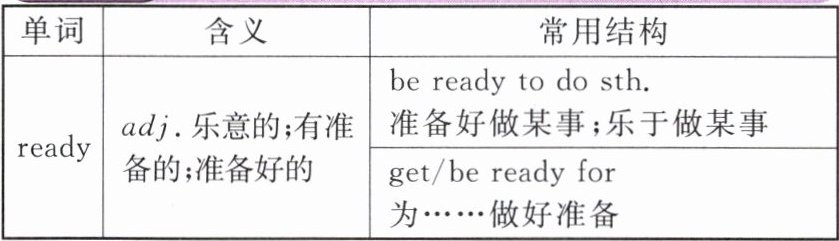
例 1. They are ready to face any challenge.
他们准备好了面对任何挑战。
2. I don't feel that I'm ready for my driving test yet. 我觉得我还没有准备好参加驾驶考试。
【考点即练】
1. Lingling is one of the most helpful students in my class. She is always ready ____ (offer) help.
2. Now we are ready ____ the coming dragon boat race. (填入适当的介词)
例 1. They are ready to face any challenge.
他们准备好了面对任何挑战。
2. I don't feel that I'm ready for my driving test yet. 我觉得我还没有准备好参加驾驶考试。
【考点即练】
1. Lingling is one of the most helpful students in my class. She is always ready ____ (offer) help.
2. Now we are ready ____ the coming dragon boat race. (填入适当的介词)
答案:
1. to offer 2. for
Point 6 promise 的用法
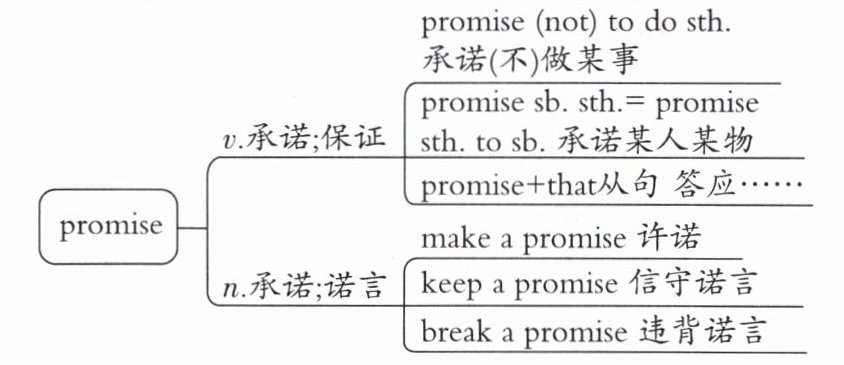
【考点即练】
1. —Will you be able to finish the work in time?
—I can't ____ (保证;承诺) anything, but I'll do my best.
2. You must promise ____ this will be our secret and you'll never tell anyone else about it. (填入适当的引导词)
3. Some students have to make ____ promise before they go online at home. (填入适当的冠词)
4. I've promised this book ____ Lucy, so you can't take it. (填入适当的介词)
【考点即练】
1. —Will you be able to finish the work in time?
—I can't ____ (保证;承诺) anything, but I'll do my best.
2. You must promise ____ this will be our secret and you'll never tell anyone else about it. (填入适当的引导词)
3. Some students have to make ____ promise before they go online at home. (填入适当的冠词)
4. I've promised this book ____ Lucy, so you can't take it. (填入适当的介词)
答案:
1. promise 2. that 3. a 4. to
查看更多完整答案,请扫码查看

