

 搜索
搜索
第2页
- 第1页
- 第2页
- 第3页
- 第4页
- 第5页
- 第6页
- 第7页
- 第8页
- 第9页
- 第10页
- 第11页
- 第12页
- 第13页
- 第14页
- 第15页
- 第16页
- 第17页
- 第18页
- 第19页
- 第20页
- 第21页
- 第22页
- 第23页
- 第24页
- 第25页
- 第26页
- 第27页
- 第28页
- 第29页
- 第30页
- 第31页
- 第32页
- 第33页
- 第34页
- 第35页
- 第36页
- 第37页
- 第38页
- 第39页
- 第40页
- 第41页
- 第42页
- 第43页
- 第44页
- 第45页
- 第46页
- 第47页
- 第48页
- 第49页
- 第50页
- 第51页
- 第52页
- 第53页
- 第54页
- 第55页
- 第56页
- 第57页
- 第58页
- 第59页
- 第60页
- 第61页
- 第62页
- 第63页
- 第64页
- 第65页
- 第66页
- 第67页
- 第68页
- 第69页
- 第70页
- 第71页
- 第72页
- 第73页
- 第74页
- 第75页
- 第76页
- 第77页
- 第78页
- 第79页
- 第80页
- 第81页
- 第82页
- 第83页
- 第84页
- 第85页
- 第86页
- 第87页
- 第88页
- 第89页
- 第90页
- 第91页
- 第92页
- 第93页
- 第94页
- 第95页
- 第96页
- 第97页
- 第98页
- 第99页
- 第100页
- 第101页
- 第102页
- 第103页
- 第104页
- 第105页
- 第106页
- 第107页
- 第108页
- 第109页
- 第110页
- 第111页
- 第112页
- 第113页
- 第114页
- 第115页
- 第116页
- 第117页
- 第118页
- 第119页
- 第120页
- 第121页
- 第122页
- 第123页
- 第124页
- 第125页
- 第126页
- 第127页
- 第128页
- 第129页
- 第130页
Point 1 辨析 speak, say, tell 与 talk
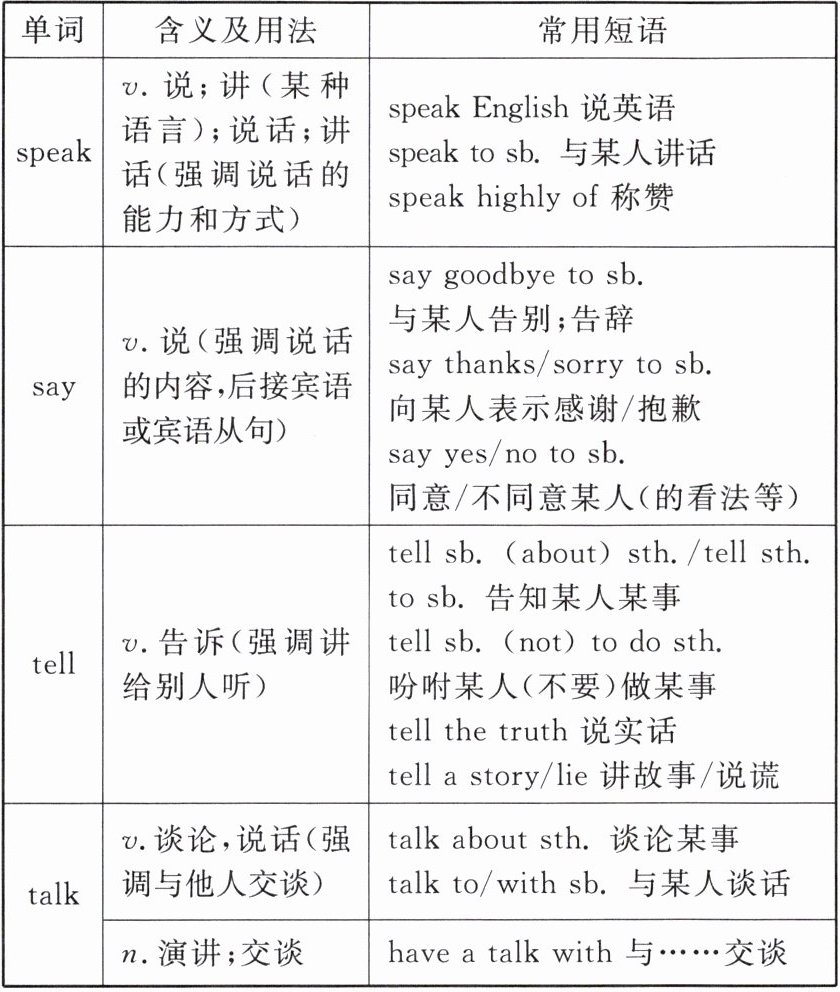
【考点即练】
1. At bedtime, while his mother ______ (tell) him a story, Martin couldn't help asking, “Who can see the sun now?” [2024·浙江]
2. speak say tell talk
(1)Chinese ______ by more and more people from foreign countries today. [2025·天津改编]
(2)A group of students often ran behind Emma, laughing and ______ about how she ran.
(3)Don't cry any more. We're going to ______ goodbye to the old Jessica.
(4)Afterwards, some players called their coach ______ him how happy they were.
【考点即练】
1. At bedtime, while his mother ______ (tell) him a story, Martin couldn't help asking, “Who can see the sun now?” [2024·浙江]
2. speak say tell talk
(1)Chinese ______ by more and more people from foreign countries today. [2025·天津改编]
(2)A group of students often ran behind Emma, laughing and ______ about how she ran.
(3)Don't cry any more. We're going to ______ goodbye to the old Jessica.
(4)Afterwards, some players called their coach ______ him how happy they were.
答案:
1.was telling 2.
(1)is spoken
(2)talking
(3)say
(4)to tell
(1)is spoken
(2)talking
(3)say
(4)to tell
Point 2 help 的用法
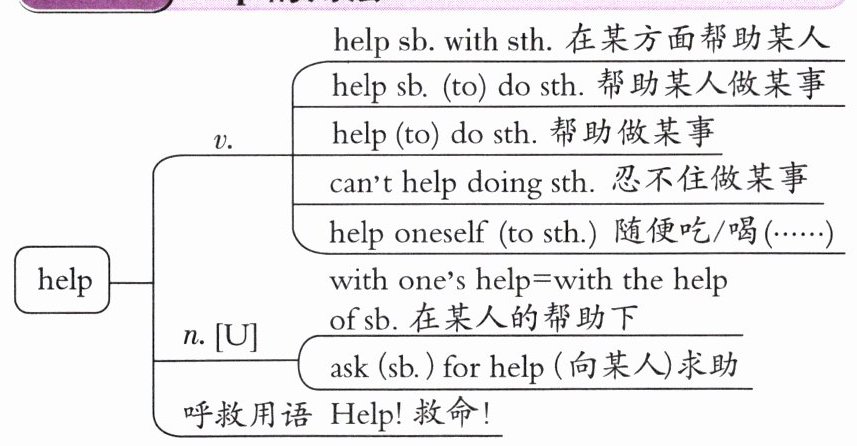
例
1. Tom often helps his parents (to) do housework at home.
汤姆常常在家里帮助他的父母做家务。
2. Amy couldn't help laughing when she heard the funny story.
埃米听到这个滑稽的故事时,忍不住笑了。
3. With the help of my sister, I know the meaning of the poem.
在我姐姐的帮助下,我理解了这首诗的意思。
4. You can ask the teachers for help when meeting problems in study.
你在学习上遇到困难时,可以向老师求助。
【考点即练】
1. Gleaning helps ______ (解决) the problems of farm waste and food shortages (短缺). [2023·金华]
2. The little boy was so sad that he couldn't help ______ (cry).
3. —I do morning exercises every day.
—It's a good habit. It helps you ______ (keep) healthy.
4. 用适当的介词填空。
(1)Help yourself ______ more fish, Tom. It's delicious.
(2)Since over 400 million adults are too heavy, China has made a plan to help its people ______ weight control. [2025·江苏连云港改编]
(3)The farmer asked his neighbour ______ help, “I am worried about my rice. It seems to stop growing!” [2025·江西改编]
例
1. Tom often helps his parents (to) do housework at home.
汤姆常常在家里帮助他的父母做家务。
2. Amy couldn't help laughing when she heard the funny story.
埃米听到这个滑稽的故事时,忍不住笑了。
3. With the help of my sister, I know the meaning of the poem.
在我姐姐的帮助下,我理解了这首诗的意思。
4. You can ask the teachers for help when meeting problems in study.
你在学习上遇到困难时,可以向老师求助。
【考点即练】
1. Gleaning helps ______ (解决) the problems of farm waste and food shortages (短缺). [2023·金华]
2. The little boy was so sad that he couldn't help ______ (cry).
3. —I do morning exercises every day.
—It's a good habit. It helps you ______ (keep) healthy.
4. 用适当的介词填空。
(1)Help yourself ______ more fish, Tom. It's delicious.
(2)Since over 400 million adults are too heavy, China has made a plan to help its people ______ weight control. [2025·江苏连云港改编]
(3)The farmer asked his neighbour ______ help, “I am worried about my rice. It seems to stop growing!” [2025·江西改编]
答案:
1.(to) solve 2.crying 3.(to) keep 4.
(1)to
(2)with
(3)for
(1)to
(2)with
(3)for
Point 3 询问天气的句型
◆How's the weather? /What's the weather like? 意为“天气怎么样?”,可在句末加上“介词+地点/时间名词”或“地点/时间副词”。
◆答语常由“It's+表示天气状况的形容词.”构成。常用的表示天气状况的形容词有:
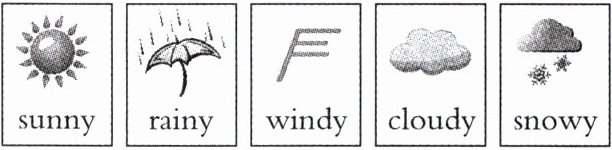
也可以用 hot, warm, cool, cold, wet, dry 等形容词来表示天气状况。
例
1. —What will the weather be like tomorrow? 明天天气怎么样?
—It will be sunny. 将是晴天。
2. —How is the weather in Kunming?
=What is the weather like in Kunming?
昆明天气怎么样?
—It's warm. 很温暖。
【考点即练】
1. —______ will the weather be like these days?
—It will be cloudy. Cloudy days are pleasant for travelling. (补全问句)
2. It's a good choice to read books in the library on ______ (rain) days. [2025·舟山定海区模拟]
3. The Kalahari is one of southern Africa's ______ (hot) places and there is often no water.
◆How's the weather? /What's the weather like? 意为“天气怎么样?”,可在句末加上“介词+地点/时间名词”或“地点/时间副词”。
◆答语常由“It's+表示天气状况的形容词.”构成。常用的表示天气状况的形容词有:
也可以用 hot, warm, cool, cold, wet, dry 等形容词来表示天气状况。
例
1. —What will the weather be like tomorrow? 明天天气怎么样?
—It will be sunny. 将是晴天。
2. —How is the weather in Kunming?
=What is the weather like in Kunming?
昆明天气怎么样?
—It's warm. 很温暖。
【考点即练】
1. —______ will the weather be like these days?
—It will be cloudy. Cloudy days are pleasant for travelling. (补全问句)
2. It's a good choice to read books in the library on ______ (rain) days. [2025·舟山定海区模拟]
3. The Kalahari is one of southern Africa's ______ (hot) places and there is often no water.
答案:
1.What 2.rainy 3.hottest
查看更多完整答案,请扫码查看

