

 搜索
搜索
第19页
- 第1页
- 第2页
- 第3页
- 第4页
- 第5页
- 第6页
- 第7页
- 第8页
- 第9页
- 第10页
- 第11页
- 第12页
- 第13页
- 第14页
- 第15页
- 第16页
- 第17页
- 第18页
- 第19页
- 第20页
- 第21页
- 第22页
- 第23页
- 第24页
- 第25页
- 第26页
- 第27页
- 第28页
- 第29页
- 第30页
- 第31页
- 第32页
- 第33页
- 第34页
- 第35页
- 第36页
- 第37页
- 第38页
- 第39页
- 第40页
- 第41页
- 第42页
- 第43页
- 第44页
- 第45页
- 第46页
- 第47页
- 第48页
- 第49页
- 第50页
- 第51页
- 第52页
- 第53页
- 第54页
- 第55页
- 第56页
- 第57页
- 第58页
- 第59页
- 第60页
- 第61页
- 第62页
- 第63页
- 第64页
- 第65页
- 第66页
- 第67页
- 第68页
- 第69页
- 第70页
- 第71页
- 第72页
- 第73页
- 第74页
- 第75页
- 第76页
- 第77页
- 第78页
- 第79页
- 第80页
- 第81页
- 第82页
- 第83页
- 第84页
- 第85页
- 第86页
- 第87页
- 第88页
- 第89页
- 第90页
- 第91页
- 第92页
- 第93页
- 第94页
- 第95页
- 第96页
- 第97页
- 第98页
- 第99页
- 第100页
- 第101页
- 第102页
- 第103页
- 第104页
- 第105页
- 第106页
- 第107页
- 第108页
- 第109页
- 第110页
- 第111页
- 第112页
- 第113页
- 第114页
- 第115页
- 第116页
- 第117页
- 第118页
- 第119页
- 第120页
- 第121页
- 第122页
- 第123页
- 第124页
- 第125页
- 第126页
- 第127页
- 第128页
- 第129页
- 第130页
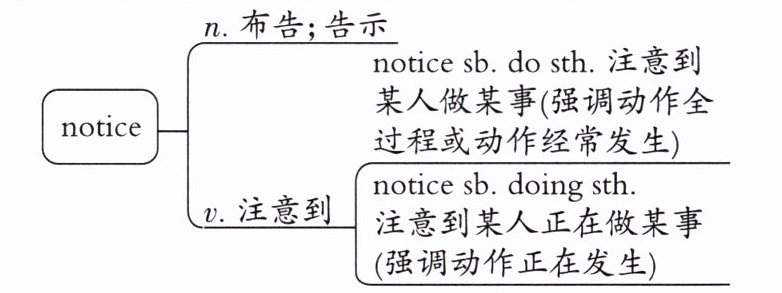
Point 5 notice 的用法
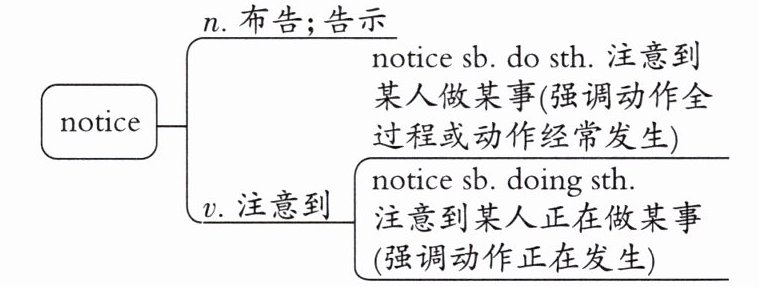
例 1. There is a notice on the gate, saying “No parking”. 大门口贴着一张“禁止停车”的告示。
2. I noticed Lucy cry in the room. 我注意到露西在房间里哭。(不一定正在哭)
3. I noticed Lucy crying in the room. 我注意到露西正在房间里哭。(表示正在哭)
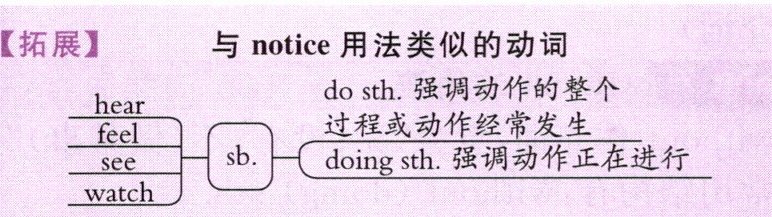
【考点即练】
1. The volunteers gave out ____ (告示) and taught the public to protect animals.
2. One day, Jenny noticed Sarah ____ (sit) quietly and decided to invite her to join her group of friends.
3. She used to spend evenings watching her son ____ (play) in the park. [2025·四川德阳改编]
例 1. There is a notice on the gate, saying “No parking”. 大门口贴着一张“禁止停车”的告示。
2. I noticed Lucy cry in the room. 我注意到露西在房间里哭。(不一定正在哭)
3. I noticed Lucy crying in the room. 我注意到露西正在房间里哭。(表示正在哭)
【考点即练】
1. The volunteers gave out ____ (告示) and taught the public to protect animals.
2. One day, Jenny noticed Sarah ____ (sit) quietly and decided to invite her to join her group of friends.
3. She used to spend evenings watching her son ____ (play) in the park. [2025·四川德阳改编]
答案:
1. notices 2. sitting 3. play
Point 6 辨析 answer 与 reply
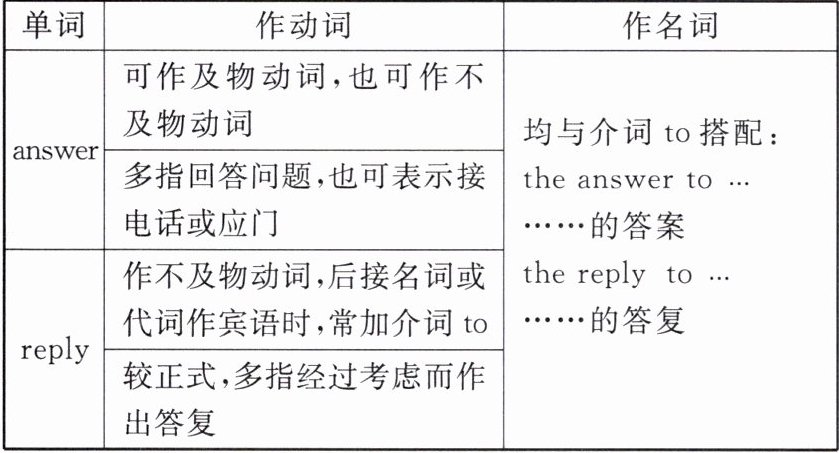
例 1. Can you answer my questions? 你能回答我的问题吗?
2. The head teacher replied to our questions. 校长回答了我们的问题。
3. Give Robert more time, and he will find the answer to the question on his own. 多给罗伯特些时间,他会自己找到问题的答案的。
【拓展】 其他接介词 to 的名词
the key to... ……的钥匙/关键
the way to... 通向……的路
the ticket to... ……的票
【考点即练】
1. It's dangerous for people to ____ (接) the phone while crossing the street.
2. Children are known for wanting ____ (答案) to many questions because curiosity (好奇心) is part of human nature.
3. He decided to ____ (回复) to the text message after thinking twice.
4. Excuse me, sir. Can you tell me the way ____ the Children's Park? (填入适当的介词)
例 1. Can you answer my questions? 你能回答我的问题吗?
2. The head teacher replied to our questions. 校长回答了我们的问题。
3. Give Robert more time, and he will find the answer to the question on his own. 多给罗伯特些时间,他会自己找到问题的答案的。
【拓展】 其他接介词 to 的名词
the key to... ……的钥匙/关键
the way to... 通向……的路
the ticket to... ……的票
【考点即练】
1. It's dangerous for people to ____ (接) the phone while crossing the street.
2. Children are known for wanting ____ (答案) to many questions because curiosity (好奇心) is part of human nature.
3. He decided to ____ (回复) to the text message after thinking twice.
4. Excuse me, sir. Can you tell me the way ____ the Children's Park? (填入适当的介词)
答案:
1. answer 2. answers 3. reply 4. to
Point 7 without 的用法
◆without 作介词,意为“无;没有;不(做某事)”,常用结构有:without (doing) sth. 。
◆without 的反义词是 with,意为“带着;具有”。
例 1. You will get wet if you go out in the rain without an umbrella. 雨天外出不带伞是会被淋湿的。
2. Mr Green left without saying goodbye. 格林先生不辞而别。
【拓展】
with 还可意为“用某种手段;穿着;戴着;留……发型;和;同;跟”。如:
1. His uncle is an old man with a red nose. 他的叔叔是位红鼻子的老人。
2. Don't stand with your hands in your pockets. 站着的时候别把双手插在口袋里。
【考点即练】
1. Please bring Ms Steen to the welcome party without ____ (tell) her so that she can be surprised.
2. 用 with 或 without 填空。
(1)It's bad manners to talk ____ your mouth full during a meal.
(2)____ the help of the firemen, we learned some fire safety skills.
(3)Music is part of my life. In my opinion, life ____ music would be empty and meaningless. [2025·黑龙江齐齐哈尔改编]
(4)The soft part cannot be protected ____ a shell. So the crab will find an empty shell and climb inside to stay safe.
◆without 作介词,意为“无;没有;不(做某事)”,常用结构有:without (doing) sth. 。
◆without 的反义词是 with,意为“带着;具有”。
例 1. You will get wet if you go out in the rain without an umbrella. 雨天外出不带伞是会被淋湿的。
2. Mr Green left without saying goodbye. 格林先生不辞而别。
【拓展】
with 还可意为“用某种手段;穿着;戴着;留……发型;和;同;跟”。如:
1. His uncle is an old man with a red nose. 他的叔叔是位红鼻子的老人。
2. Don't stand with your hands in your pockets. 站着的时候别把双手插在口袋里。
【考点即练】
1. Please bring Ms Steen to the welcome party without ____ (tell) her so that she can be surprised.
2. 用 with 或 without 填空。
(1)It's bad manners to talk ____ your mouth full during a meal.
(2)____ the help of the firemen, we learned some fire safety skills.
(3)Music is part of my life. In my opinion, life ____ music would be empty and meaningless. [2025·黑龙江齐齐哈尔改编]
(4)The soft part cannot be protected ____ a shell. So the crab will find an empty shell and climb inside to stay safe.
答案:
1. telling 2.
(1)with
(2)With
(3)without
(4)without
(1)with
(2)With
(3)without
(4)without
查看更多完整答案,请扫码查看

