

 搜索
搜索
第31页
- 第1页
- 第2页
- 第3页
- 第4页
- 第5页
- 第6页
- 第7页
- 第8页
- 第9页
- 第10页
- 第11页
- 第12页
- 第13页
- 第14页
- 第15页
- 第16页
- 第17页
- 第18页
- 第19页
- 第20页
- 第21页
- 第22页
- 第23页
- 第24页
- 第25页
- 第26页
- 第27页
- 第28页
- 第29页
- 第30页
- 第31页
- 第32页
- 第33页
- 第34页
- 第35页
- 第36页
- 第37页
- 第38页
- 第39页
- 第40页
- 第41页
- 第42页
- 第43页
- 第44页
- 第45页
- 第46页
- 第47页
- 第48页
- 第49页
- 第50页
- 第51页
- 第52页
- 第53页
- 第54页
- 第55页
- 第56页
- 第57页
- 第58页
- 第59页
- 第60页
- 第61页
- 第62页
- 第63页
- 第64页
- 第65页
- 第66页
- 第67页
- 第68页
- 第69页
- 第70页
- 第71页
- 第72页
- 第73页
- 第74页
- 第75页
- 第76页
- 第77页
- 第78页
- 第79页
- 第80页
- 第81页
- 第82页
- 第83页
- 第84页
- 第85页
- 第86页
- 第87页
- 第88页
- 第89页
- 第90页
- 第91页
- 第92页
- 第93页
- 第94页
- 第95页
- 第96页
- 第97页
- 第98页
- 第99页
- 第100页
- 第101页
- 第102页
- 第103页
- 第104页
- 第105页
- 第106页
- 第107页
- 第108页
- 第109页
- 第110页
- 第111页
- 第112页
- 第113页
- 第114页
- 第115页
- 第116页
- 第117页
- 第118页
- 第119页
- 第120页
- 第121页
- 第122页
- 第123页
- 第124页
- 第125页
- 第126页
- 第127页
- 第128页
- 第129页
- 第130页
Point 8 How about …?句型
How about …?=What about …?用于询问消息或提出建议,意为“……怎么样?”,其后常跟代词、名词或动名词。
常用的肯定答语为“OK!/All right./Good idea./I think so.”等;常用的否定答语为“Sorry,I …/I’m afraid not.”等。
例 —What about playing football this afternoon? 下午去踢足球怎么样?
—Good idea. 好主意。
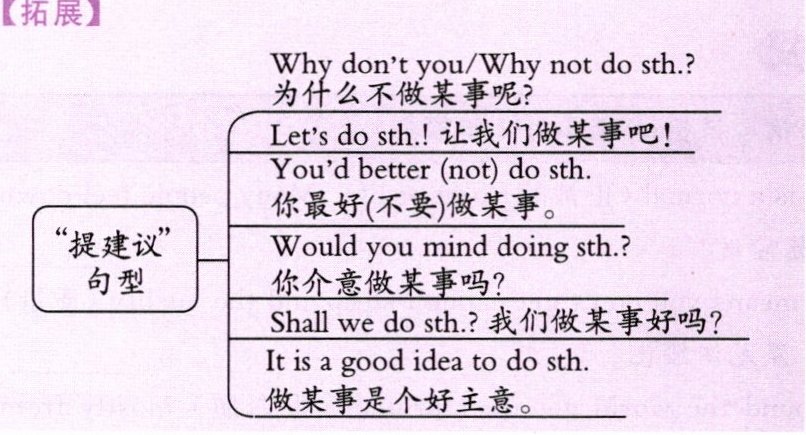
【拓展】
mermaid
graph TD
"提建议"句型 --> Why don't you/Why not do sth.? 为什么不做某事呢?
"提建议"句型 --> Let's do sth.! 让我们做某事吧!
"提建议"句型 --> You'd better (not) do sth. 你最好(不要)做某事。
"提建议"句型 --> Would you mind doing sth.? 你介意做某事吗?
"提建议"句型 --> Shall we do sth.? 我们做某事好吗?
"提建议"句型 --> It is a good idea to do sth. 做某事是个好主意。
【考点即练】
1. —Dad,how about ______(plant)some trees in our yard?
—Good idea! Trees can prevent the water from washing the earth away.
2. It’s not healthy to stay up late. You’d better ______(go)to bed early. [2025·四川泸州改编]
3. —Would you mind ______(close)the door? It’s too cold outside.
—Of course not.
4. Why not ______(finish)the task today instead of waiting until tomorrow? [2025·江苏苏州改编]
5. —Mum,let’s ______(go)to the park.
—Good idea.
How about …?=What about …?用于询问消息或提出建议,意为“……怎么样?”,其后常跟代词、名词或动名词。
常用的肯定答语为“OK!/All right./Good idea./I think so.”等;常用的否定答语为“Sorry,I …/I’m afraid not.”等。
例 —What about playing football this afternoon? 下午去踢足球怎么样?
—Good idea. 好主意。
【拓展】
mermaid
graph TD
"提建议"句型 --> Why don't you/Why not do sth.? 为什么不做某事呢?
"提建议"句型 --> Let's do sth.! 让我们做某事吧!
"提建议"句型 --> You'd better (not) do sth. 你最好(不要)做某事。
"提建议"句型 --> Would you mind doing sth.? 你介意做某事吗?
"提建议"句型 --> Shall we do sth.? 我们做某事好吗?
"提建议"句型 --> It is a good idea to do sth. 做某事是个好主意。
【考点即练】
1. —Dad,how about ______(plant)some trees in our yard?
—Good idea! Trees can prevent the water from washing the earth away.
2. It’s not healthy to stay up late. You’d better ______(go)to bed early. [2025·四川泸州改编]
3. —Would you mind ______(close)the door? It’s too cold outside.
—Of course not.
4. Why not ______(finish)the task today instead of waiting until tomorrow? [2025·江苏苏州改编]
5. —Mum,let’s ______(go)to the park.
—Good idea.
答案:
1. planting 2. go 3. closing 4. finish 5. go
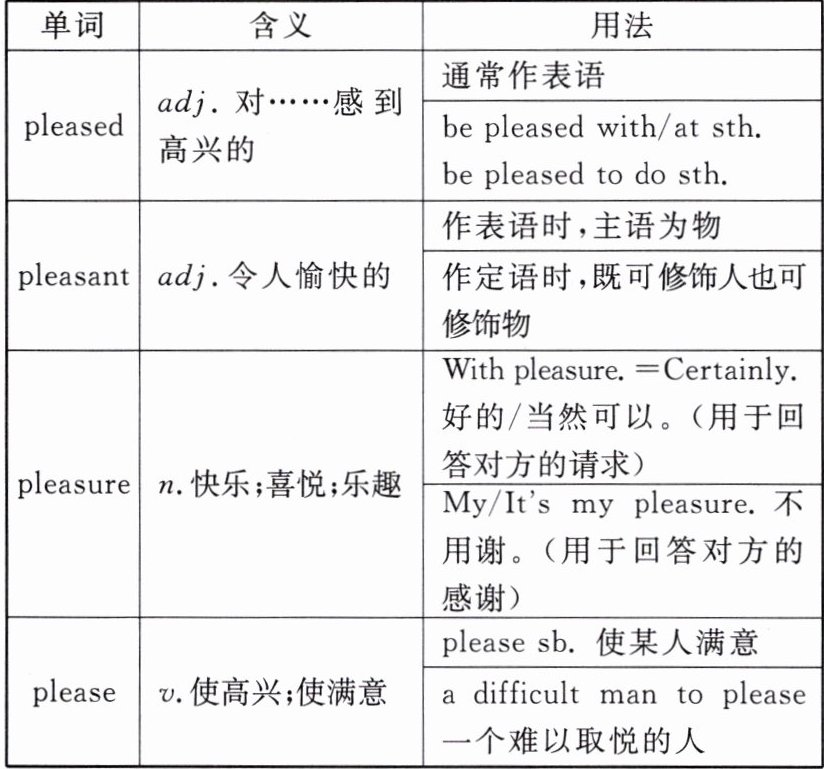
Point 9 辨析 pleased,pleasant,pleasure 与 please
be pleased with/at sth.
【考点即练】
1. Thinking for ______(快乐)can be a powerful tool to shape our feelings.
2. When Mrs Jone returned home,she was pleased ______(find)the three sleeping boys.
3. 用 please 的适当形式填空。
(1)—Thanks a lot for yesterday. I had a good time visiting the ancient town.
—It was my great ______ to hang out with you. [2025·安徽改编]
(2)Mr Smith was ______ to see some of the boys taking leadership roles and having their own one - on - one talks with their teammates.
(3)In our free time,we had ______ conversations. It was the best chance for us foreign students to learn more about the Chinese New Year celebrations.
(4)I watched a play,and the performance of the actors ______ all the audience.
be pleased with/at sth.
【考点即练】
1. Thinking for ______(快乐)can be a powerful tool to shape our feelings.
2. When Mrs Jone returned home,she was pleased ______(find)the three sleeping boys.
3. 用 please 的适当形式填空。
(1)—Thanks a lot for yesterday. I had a good time visiting the ancient town.
—It was my great ______ to hang out with you. [2025·安徽改编]
(2)Mr Smith was ______ to see some of the boys taking leadership roles and having their own one - on - one talks with their teammates.
(3)In our free time,we had ______ conversations. It was the best chance for us foreign students to learn more about the Chinese New Year celebrations.
(4)I watched a play,and the performance of the actors ______ all the audience.
答案:
1. pleasure 2. to find 3.
(1)pleasure
(2)pleased
(3)pleasant
(4)pleased
(1)pleasure
(2)pleased
(3)pleasant
(4)pleased
查看更多完整答案,请扫码查看

