

 搜索
搜索
第28页
- 第1页
- 第2页
- 第3页
- 第4页
- 第5页
- 第6页
- 第7页
- 第8页
- 第9页
- 第10页
- 第11页
- 第12页
- 第13页
- 第14页
- 第15页
- 第16页
- 第17页
- 第18页
- 第19页
- 第20页
- 第21页
- 第22页
- 第23页
- 第24页
- 第25页
- 第26页
- 第27页
- 第28页
- 第29页
- 第30页
- 第31页
- 第32页
- 第33页
- 第34页
- 第35页
- 第36页
- 第37页
- 第38页
- 第39页
- 第40页
- 第41页
- 第42页
- 第43页
- 第44页
- 第45页
- 第46页
- 第47页
- 第48页
- 第49页
- 第50页
- 第51页
- 第52页
- 第53页
- 第54页
- 第55页
- 第56页
- 第57页
- 第58页
- 第59页
- 第60页
- 第61页
- 第62页
- 第63页
- 第64页
- 第65页
- 第66页
- 第67页
- 第68页
- 第69页
- 第70页
- 第71页
- 第72页
- 第73页
- 第74页
- 第75页
- 第76页
- 第77页
- 第78页
- 第79页
- 第80页
- 第81页
- 第82页
- 第83页
- 第84页
- 第85页
- 第86页
- 第87页
- 第88页
- 第89页
- 第90页
- 第91页
- 第92页
- 第93页
- 第94页
- 第95页
- 第96页
- 第97页
- 第98页
- 第99页
- 第100页
- 第101页
- 第102页
- 第103页
- 第104页
- 第105页
- 第106页
- 第107页
- 第108页
- 第109页
- 第110页
- 第111页
- 第112页
- 第113页
- 第114页
- 第115页
- 第116页
- 第117页
- 第118页
- 第119页
- 第120页
- 第121页
- 第122页
- 第123页
- 第124页
- 第125页
- 第126页
- 第127页
- 第128页
- 第129页
- 第130页
核心句型1. ______ ______ ______ ______ our ______ in our notebooks?
为什么不把错误记在我们的笔记本上呢?
2. ______ ______ ______ to the radio? 听收音机怎么样?
3. Its streets are much ______ ______ ______ too.
它的街道也更宽阔、更干净。
4. It's ______ ______ ______ ______ buildings in Shenzhen.
它比深圳的其他许多建筑物都高。
5. This ______ match is already ______ ______. 这周的比赛已经更激动人心了。
6. We are training ______ ______ ______. 我们比平时训练得更刻苦。
为什么不把错误记在我们的笔记本上呢?
2. ______ ______ ______ to the radio? 听收音机怎么样?
3. Its streets are much ______ ______ ______ too.
它的街道也更宽阔、更干净。
4. It's ______ ______ ______ ______ buildings in Shenzhen.
它比深圳的其他许多建筑物都高。
5. This ______ match is already ______ ______. 这周的比赛已经更激动人心了。
6. We are training ______ ______ ______. 我们比平时训练得更刻苦。
答案:
1. Why not write down; mistakes 2. How about listening 3. wider and cleaner 4. taller than many other 5. week’s; more exciting 6. harder than usual
(A)
I come from Cambridge,a beautiful city in the east of England. It is on the River Cam and has a 1. ______(人口)of about 120,000. My home town is especially famous for its 2. ______(大学). Many famous people studied and worked here. There are lots of old buildings and 3. ______(教堂)to visit. Cambridge is 80 kilometres from London,which is in the south of England on the River Thames. England itself is part of a(n)4. ______(岛屿). The small villages and beaches on the coast are popular for holidays. Tourists like the areas of low 5. ______(山)and beautiful lakes in the north,and the hills and pretty villages in the south.
(B)
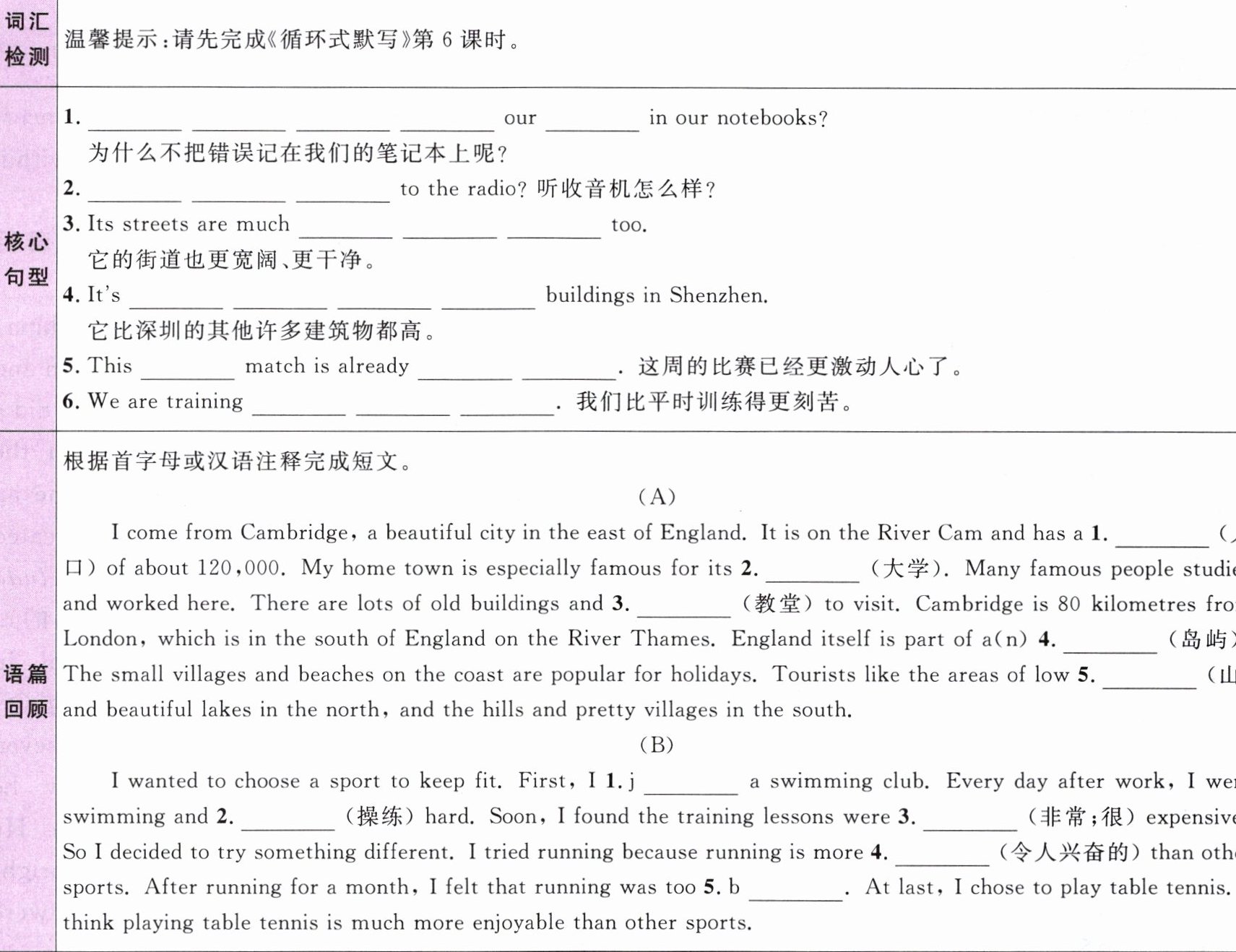
I come from Cambridge,a beautiful city in the east of England. It is on the River Cam and has a 1. ______(人口)of about 120,000. My home town is especially famous for its 2. ______(大学). Many famous people studied and worked here. There are lots of old buildings and 3. ______(教堂)to visit. Cambridge is 80 kilometres from London,which is in the south of England on the River Thames. England itself is part of a(n)4. ______(岛屿). The small villages and beaches on the coast are popular for holidays. Tourists like the areas of low 5. ______(山)and beautiful lakes in the north,and the hills and pretty villages in the south.
(B)
答案:
(A)1. population 2. university 3. churches 4. island 5. mountains (B)1. joined 2. trained 3. pretty/really/very 4. exciting 5. boring
Point 1 population 的用法
population 是集合名词,在句中作主语时,谓语动词常用单数形式;但其前若有分数或百分数修饰表示具体人数时,谓语动词用单数或复数形式均可。
问某地有多少人口时,用“What’s the population of …?”,此时特殊疑问词不能用 how many 或 how much。表达某地有多少人口时,用“the population of+sp.+be+数词”或“sp.+has a population of+数词”。
表示人口数量的多少时,用 large,big 或 small 修饰,而不用 many,more 或 few 修饰。
例 1. The population of Antarctica is small.
南极洲人口稀少。
2. About two thirds of the population here are/is farmers. 这里大约三分之二的人是农民。
3. The country has a large population.
这个国家人口众多。
【考点即练】
1. —Which city has a ______(更少的)population,Beijing or New York?
—New York,I think.
2. The 5,464 - kilometre - long river feeds about 12% of China’s ______(人口)and provides water for about 15% of fields and more than 60 cities. [2025·四川遂宁改编]
3. It is said that ten percent of the population here ______(live)in poverty(贫困).
population 是集合名词,在句中作主语时,谓语动词常用单数形式;但其前若有分数或百分数修饰表示具体人数时,谓语动词用单数或复数形式均可。
问某地有多少人口时,用“What’s the population of …?”,此时特殊疑问词不能用 how many 或 how much。表达某地有多少人口时,用“the population of+sp.+be+数词”或“sp.+has a population of+数词”。
表示人口数量的多少时,用 large,big 或 small 修饰,而不用 many,more 或 few 修饰。
例 1. The population of Antarctica is small.
南极洲人口稀少。
2. About two thirds of the population here are/is farmers. 这里大约三分之二的人是农民。
3. The country has a large population.
这个国家人口众多。
【考点即练】
1. —Which city has a ______(更少的)population,Beijing or New York?
—New York,I think.
2. The 5,464 - kilometre - long river feeds about 12% of China’s ______(人口)and provides water for about 15% of fields and more than 60 cities. [2025·四川遂宁改编]
3. It is said that ten percent of the population here ______(live)in poverty(贫困).
答案:
1. smaller 2. population 3. live(s)/is/are living
查看更多完整答案,请扫码查看

