

 搜索
搜索
第11页
- 第1页
- 第2页
- 第3页
- 第4页
- 第5页
- 第6页
- 第7页
- 第8页
- 第9页
- 第10页
- 第11页
- 第12页
- 第13页
- 第14页
- 第15页
- 第16页
- 第17页
- 第18页
- 第19页
- 第20页
- 第21页
- 第22页
- 第23页
- 第24页
- 第25页
- 第26页
- 第27页
- 第28页
- 第29页
- 第30页
- 第31页
- 第32页
- 第33页
- 第34页
- 第35页
- 第36页
- 第37页
- 第38页
- 第39页
- 第40页
- 第41页
- 第42页
- 第43页
- 第44页
- 第45页
- 第46页
- 第47页
- 第48页
- 第49页
- 第50页
- 第51页
- 第52页
- 第53页
- 第54页
- 第55页
- 第56页
- 第57页
- 第58页
- 第59页
- 第60页
- 第61页
- 第62页
- 第63页
- 第64页
- 第65页
- 第66页
- 第67页
- 第68页
- 第69页
- 第70页
- 第71页
- 第72页
- 第73页
- 第74页
- 第75页
- 第76页
- 第77页
- 第78页
- 第79页
- 第80页
- 第81页
- 第82页
- 第83页
- 第84页
- 第85页
- 第86页
- 第87页
- 第88页
- 第89页
- 第90页
- 第91页
- 第92页
- 第93页
- 第94页
- 第95页
- 第96页
- 第97页
- 第98页
- 第99页
- 第100页
1. —Jack knows the answers to many difficult questions.
—He is quite ______.
A.polite
B.friendly
C.smart
D.kind
—He is quite ______.
C
A.polite
B.friendly
C.smart
D.kind
答案:
C. smart。polite 有礼貌的;friendly 友好的;smart 聪明的;kind 仁慈的。根据“Jack knows the answers to many difficult questions.”可知,杰克知道许多难题的答案,这说明他很聪明。故选 C。
2. My friend Eric is from America. He also
A.goes by
B.goes in
C.goes away
D.goes on
goes by
the name of Xiao Wei. That is his Chinese name.A.goes by
B.goes in
C.goes away
D.goes on
答案:
A. goes by。根据“That is his Chinese name.”可知,此处指埃里克也被称为肖伟,“go by the name of...”意为“叫作……(的名字)”。故选 A。
3. —______ your name Michele?
—______.
A.Is; Yes, I am
B.Is; Yes, it is
C.Are; Yes, I am
D.Are; Yes, it is
—______.
B
A.Is; Yes, I am
B.Is; Yes, it is
C.Are; Yes, I am
D.Are; Yes, it is
答案:
B. Is; Yes, it is。问句主语为 your name,是单数,be 动词用 is;主语是物,回答时用 it 来代替。故选 B。
—My parents will take me to Beijing for a holiday in a month.
—Wow!
A.Have fun
B.Cheer up
C.My pleasure
D.All right
—Wow!
A
!A.Have fun
B.Cheer up
C.My pleasure
D.All right
答案:
A. Have fun。have fun 玩得开心;cheer up 振作起来;my pleasure 不客气;all right 好的。根据“My parents will take me to Beijing for a holiday in a month.”可知,答语应表示祝愿对方玩得开心。故选 A。
5. —Where is Tom?
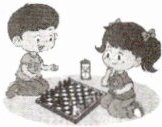
—Look! He is ______ with his classmate over there. It is really fun.
A.playing games
B.playing cards
C.playing chess
D.playing the piano
—Look! He is ______ with his classmate over there. It is really fun.
C
A.playing games
B.playing cards
C.playing chess
D.playing the piano
答案:
C. playing chess。根据图片可知,汤姆正在和他的同学下象棋。play chess 下国际象棋。故选 C。
Ⅱ. 完形填空(每小题 1 分,共 10 分)
「2025 江苏连云港东海十二校联考」
This is Tom. He is from Hongzhuang Village. He is twelve ____6____ old. He is tall and strong. He has short curly(卷的) ____7____. His eyes are big and his face is round. He ____8____ like his father. He likes to wear blue clothes.
Tom has a happy ____9____. Tom’s dad is a policeman. His mum is a ____10____. She works in a hospital. Tom has a sister. Her name is Sally. Tom and Sally are in ____11____ same school. They go to school together every morning.
Tom’s favourite subjects ____12____ Maths and Computer Science. He is good at them and ready to help his classmates ____13____ their problems. After school, he enjoys doing sport with his classmates. They are very ____14____. Tom is happy to make friends with them.
At ____15____, he often plays chess with his dad. They both think it is fun.
6. A. year
B. years
C. months
D. month
7. A. eyes
B. mouth
C. hair
D. face
8. A. says
B. sees
C. meets
D. looks
9. A. school
B. house
C. family
D. friend
10. A. teacher
B. doctor
C. singer
D. worker
11. A. a
B. an
C. the
D. /
12. A. are
B. is
C. am
D. be
13. A. of
B. with
C. on
D. for
14. A. slim
B. pretty
C. friendly
D. shy
15. A. the weekend
B. weekday
C. weekend
D. the weekday
「2025 江苏连云港东海十二校联考」
This is Tom. He is from Hongzhuang Village. He is twelve ____6____ old. He is tall and strong. He has short curly(卷的) ____7____. His eyes are big and his face is round. He ____8____ like his father. He likes to wear blue clothes.
Tom has a happy ____9____. Tom’s dad is a policeman. His mum is a ____10____. She works in a hospital. Tom has a sister. Her name is Sally. Tom and Sally are in ____11____ same school. They go to school together every morning.
Tom’s favourite subjects ____12____ Maths and Computer Science. He is good at them and ready to help his classmates ____13____ their problems. After school, he enjoys doing sport with his classmates. They are very ____14____. Tom is happy to make friends with them.
At ____15____, he often plays chess with his dad. They both think it is fun.
6. A. year
B. years
C. months
D. month
7. A. eyes
B. mouth
C. hair
D. face
8. A. says
B. sees
C. meets
D. looks
9. A. school
B. house
C. family
D. friend
10. A. teacher
B. doctor
C. singer
D. worker
11. A. a
B. an
C. the
D. /
12. A. are
B. is
C. am
D. be
13. A. of
B. with
C. on
D. for
14. A. slim
B. pretty
C. friendly
D. shy
15. A. the weekend
B. weekday
C. weekend
D. the weekday
答案:
6.B 考查名词辨析。根据“He is twelve...old.”可知,此处是说他 12 岁。故选 B。7.C 考查名词辨析。根据 short curly 可知是短卷发。故选 C。8.D 考查动词辨析。固定短语 look like 意为“长得像”。故选 D。9.C 考查名词辨析。根据下文介绍汤姆的家人的情况可知,此处是说他有一个幸福的家庭。故选 C。10.B 考查名词辨析。根据下文“She works in a hospital.”可知,他妈妈在医院工作,是一名医生。故选 B。11.C 考查冠词辨析。in the same school 意为“在同一所学校”,same 常与 the 连用。故选 C。12.A 考查 be 动词。主语是复数名词 subjects,be 动词用 are。故选 A。13.B 考查固定短语。固定短语 help sb. with sth.意为“帮助某人做某事”。故选 B。14.C 考查形容词辨析。根据下文“Tom is happy to make friends with them.”可知,他喜欢和他们交朋友,因此可判断他们是友好的。故选 C。15.A 考查固定短语。固定短语 at the weekend 意为“在周末”。故选 A。
Ⅲ. 阅读理解(每小题 2 分,共 10 分)
「2025 江苏徐州期中」
“How are you?” is a nice question. It’s a friendly way that people in the USA greet each other. When a person(人) says “How are you?”, he hopes to hear the answer “Fine.” even if(即使) the person’s friend isn’t fine. The reason is that “How are you?” isn’t really a question, and “Fine.” isn’t really an answer. They are common(常见的) ways of saying “Hello” and “Hi”.
Sometimes people also don’t say exactly(确切地) what they mean. For example, when someone asks “Do you agree(同意)?”, the other person may be thinking, “No, I don’t agree. I think you are wrong.” But it isn’t very polite, so they may say, “I’m not so sure.” It’s a nice way to say that you don’t agree with someone.
It’s interesting when people want to finish talking. For example, when a person wants to finish talking with the other person on the phone, he may say “I have to go now”. Sometimes he gives an excuse(借口), for example, “Someone is knocking at the door”. The excuse may be real, or it may not be. It’s a polite way to finish talking and it doesn’t hurt the other person’s feelings. People don’t always say exactly what they are thinking. And it’s a part of the game of language(语言).
16. What can we learn from Paragraph 1?
A. Saying “Hello” or “Hi” isn’t a friendly way.
B. “How are you?” means saying “Hello” or “Hi”.
C. “Fine” is the only answer to “How are you?”.
D. Only Americans greet with “How are you?”.
17. When someone says “I’m not so sure”, what may they really be thinking?
A. They really agree.
B. They disagree(不同意).
C. They have no idea.
D. They need time to think.
18. Why do people find excuses when they want to finish talking?
A. It is a polite way.
B. The excuse may be real.
C. It will hurt others.
D. They don’t like talking.
19. What is this passage probably from?
A. A storybook.
B. A sports magazine.
C. An English magazine.
D. A history book.
20. What’s the best title for the passage?
A. A Style of Making Excuses
B. Different Ways of Greeting
C. A Polite Way to Finish Talking
D. A Kind of Language Game
「2025 江苏徐州期中」
“How are you?” is a nice question. It’s a friendly way that people in the USA greet each other. When a person(人) says “How are you?”, he hopes to hear the answer “Fine.” even if(即使) the person’s friend isn’t fine. The reason is that “How are you?” isn’t really a question, and “Fine.” isn’t really an answer. They are common(常见的) ways of saying “Hello” and “Hi”.
Sometimes people also don’t say exactly(确切地) what they mean. For example, when someone asks “Do you agree(同意)?”, the other person may be thinking, “No, I don’t agree. I think you are wrong.” But it isn’t very polite, so they may say, “I’m not so sure.” It’s a nice way to say that you don’t agree with someone.
It’s interesting when people want to finish talking. For example, when a person wants to finish talking with the other person on the phone, he may say “I have to go now”. Sometimes he gives an excuse(借口), for example, “Someone is knocking at the door”. The excuse may be real, or it may not be. It’s a polite way to finish talking and it doesn’t hurt the other person’s feelings. People don’t always say exactly what they are thinking. And it’s a part of the game of language(语言).
16. What can we learn from Paragraph 1?
A. Saying “Hello” or “Hi” isn’t a friendly way.
B. “How are you?” means saying “Hello” or “Hi”.
C. “Fine” is the only answer to “How are you?”.
D. Only Americans greet with “How are you?”.
17. When someone says “I’m not so sure”, what may they really be thinking?
A. They really agree.
B. They disagree(不同意).
C. They have no idea.
D. They need time to think.
18. Why do people find excuses when they want to finish talking?
A. It is a polite way.
B. The excuse may be real.
C. It will hurt others.
D. They don’t like talking.
19. What is this passage probably from?
A. A storybook.
B. A sports magazine.
C. An English magazine.
D. A history book.
20. What’s the best title for the passage?
A. A Style of Making Excuses
B. Different Ways of Greeting
C. A Polite Way to Finish Talking
D. A Kind of Language Game
答案:
16.B 细节理解题。根据第一段中“...‘How are you?’ isn't...and ‘Fine.’ isn't really...They are common ways of saying ‘Hello’ and ‘Hi’.”可知,“How are you?”是“Hello”和“Hi”的另一种表达方式。故选 B。17.B 推理判断题。根据第二段中“But it isn't very polite, so they may say, ‘I'm not so sure.’ It's a nice way to say that you don't agree with someone.”可知,当他们说“我不确定”时,实际上是他们礼貌地表示不同意。故选 B。18.A 细节理解题。根据最后一段中“It's a polite way to finish talking and it doesn't hurt the other person's feelings.”可知,找借口结束对话是一种礼貌的做法。故选 A。19.C 文章出处题。通读全文可知,本文主要讲述了语言表达中的委婉表达方式,为英语学习内容,很可能出自英文杂志。故选 C。20.D 标题归纳题。根据最后一段中“People don't always say exactly what they are thinking. And it's a part of the game of language.”并结合全文其他内容可知,本文主要介绍了美国人在语言交流中并不总是直言不讳,而是运用语言游戏来委婉地表达自己。因此选项 D(一种语言游戏)为最佳标题。故选 D。
查看更多完整答案,请扫码查看

