

 搜索
搜索
第112页
- 第1页
- 第2页
- 第3页
- 第4页
- 第5页
- 第6页
- 第7页
- 第8页
- 第9页
- 第10页
- 第11页
- 第12页
- 第13页
- 第14页
- 第15页
- 第16页
- 第17页
- 第18页
- 第19页
- 第20页
- 第21页
- 第22页
- 第23页
- 第24页
- 第25页
- 第26页
- 第27页
- 第28页
- 第29页
- 第30页
- 第31页
- 第32页
- 第33页
- 第34页
- 第35页
- 第36页
- 第37页
- 第38页
- 第39页
- 第40页
- 第41页
- 第42页
- 第43页
- 第44页
- 第45页
- 第46页
- 第47页
- 第48页
- 第49页
- 第50页
- 第51页
- 第52页
- 第53页
- 第54页
- 第55页
- 第56页
- 第57页
- 第58页
- 第59页
- 第60页
- 第61页
- 第62页
- 第63页
- 第64页
- 第65页
- 第66页
- 第67页
- 第68页
- 第69页
- 第70页
- 第71页
- 第72页
- 第73页
- 第74页
- 第75页
- 第76页
- 第77页
- 第78页
- 第79页
- 第80页
- 第81页
- 第82页
- 第83页
- 第84页
- 第85页
- 第86页
- 第87页
- 第88页
- 第89页
- 第90页
- 第91页
- 第92页
- 第93页
- 第94页
- 第95页
- 第96页
- 第97页
- 第98页
- 第99页
- 第100页
- 第101页
- 第102页
- 第103页
- 第104页
- 第105页
- 第106页
- 第107页
- 第108页
- 第109页
- 第110页
- 第111页
- 第112页
- 第113页
- 第114页
- 第115页
- 第116页
- 第117页
- 第118页
- 第119页
- 第120页
Ⅲ.核心短语——互译
1. _________ 盖满,被……覆盖
2. _________ 是……的家园
3. _________ 许多
4. _________ 防止……免受……
5. _________ 与……协调一致;与……和谐相处
6. as far as _________
7. from the bottom to the very top _________
8. go to the trouble to do sth. _________
9. turn...into... _________
10. wash away _________
1. _________ 盖满,被……覆盖
2. _________ 是……的家园
3. _________ 许多
4. _________ 防止……免受……
5. _________ 与……协调一致;与……和谐相处
6. as far as _________
7. from the bottom to the very top _________
8. go to the trouble to do sth. _________
9. turn...into... _________
10. wash away _________
答案:
be covered in
@@be home to
@@plenty of
@@prevent... from
@@in harmony with
@@远到……
@@从下到上
@@不辞劳苦去做某事; 费力去做某事
@@把……变成……
@@冲掉; 冲走
@@be home to
@@plenty of
@@prevent... from
@@in harmony with
@@远到……
@@从下到上
@@不辞劳苦去做某事; 费力去做某事
@@把……变成……
@@冲掉; 冲走
Ⅳ.经典句式——悟通
1. Imagine mountains _________ _________,shining in the spring sun.(动词-ed形式短语作后置定语)
2. _________ _________ _________, these terraces cover tall mountains, often from the bottom to the very top.(动词-ing形式短语作方式状语)
3. _________ _________ _________ therefore _________ _________ they could increase the areas in which they could grow rice.(that引导宾语从句)
4. But perhaps what is most significant is _________ _________ _________ _________ _________ _________ .(in which引导定语从句)
5. During the rainy season, _________ _________ _________ rainwater moves down the mountains and into the terraces.(强调句)
1. Imagine mountains _________ _________,shining in the spring sun.(动词-ed形式短语作后置定语)
2. _________ _________ _________, these terraces cover tall mountains, often from the bottom to the very top.(动词-ing形式短语作方式状语)
3. _________ _________ _________ therefore _________ _________ they could increase the areas in which they could grow rice.(that引导宾语从句)
4. But perhaps what is most significant is _________ _________ _________ _________ _________ _________ .(in which引导定语从句)
5. During the rainy season, _________ _________ _________ rainwater moves down the mountains and into the terraces.(强调句)
答案:
wrapped in silver water
@@Reaching as far as the eye can see
@@Building the terraces; meant that
@@the way in which people have worked in harmony with nature to make these terraces and grow rice
@@it is along these waterways that
@@Reaching as far as the eye can see
@@Building the terraces; meant that
@@the way in which people have worked in harmony with nature to make these terraces and grow rice
@@it is along these waterways that
Task 1 宏观建构·把握文脉
Ⅰ. Skim the text and fill in the blanks.

Ⅱ. What’s the main idea of the text?
_________
Ⅰ. Skim the text and fill in the blanks.
Ⅱ. What’s the main idea of the text?
_________
答案:
history
@@reasons
@@significant
@@value
@@The text mainly tells about the Longji Rice Terraces in which people work in harmony with nature.
@@reasons
@@significant
@@value
@@The text mainly tells about the Longji Rice Terraces in which people work in harmony with nature.
Ⅰ. Read Para. 1 carefully and do the following exercise.
How does the author develop Paragraph 1?
A. By listing the facts.
B. By comparing the facts.
C. By vividly describing the scene.
D. By painting the beautiful colours.
How does the author develop Paragraph 1?
A. By listing the facts.
B. By comparing the facts.
C. By vividly describing the scene.
D. By painting the beautiful colours.
答案:
C
Ⅱ. Read Para. 2 carefully and fill in the blanks.
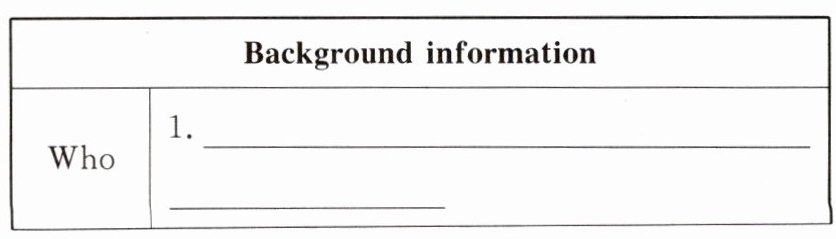
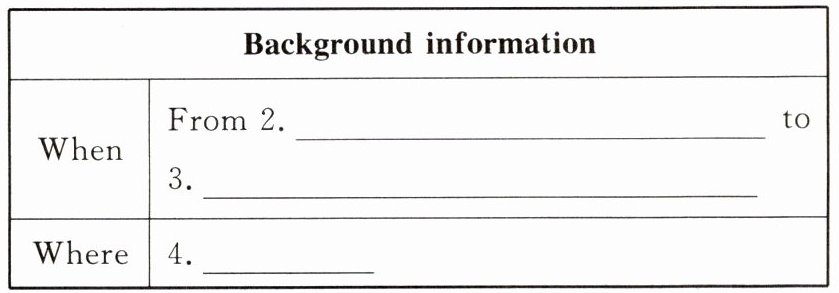
答案:
The local Zhuang and Yao people
@@the Yuan Dynasty; the early Qing Dynasty
@@Guangxi
@@the Yuan Dynasty; the early Qing Dynasty
@@Guangxi
Ⅲ. Read Para. 3 carefully and do the following exercise.
What problems did the local people meet with at first?
They _________ large and flat areas of land to grow rice, the mountains there are _________ and the soil is _________.
What problems did the local people meet with at first?
They _________ large and flat areas of land to grow rice, the mountains there are _________ and the soil is _________.
答案:
lacked; steep; shallow
Ⅳ. Read Para. 4 carefully and do the following exercise.
What’s the right order of the working principle of the Longji Rice Terraces?
①Rain falls down onto the mountain terraces once again.
②The water is turned into vapour.
③Along the waterways rainwater moves down the mountains and into the terraces.
④The sun heats the water.
⑤Clouds form.
A. ③①②⑤④
B. ③④②⑤①
C. ③⑤②①④
D. ③②④①⑤
What’s the right order of the working principle of the Longji Rice Terraces?
①Rain falls down onto the mountain terraces once again.
②The water is turned into vapour.
③Along the waterways rainwater moves down the mountains and into the terraces.
④The sun heats the water.
⑤Clouds form.
A. ③①②⑤④
B. ③④②⑤①
C. ③⑤②①④
D. ③②④①⑤
答案:
B
Ⅴ. Read Para. 5 carefully and do the following exercise.
What is the local people’s attitude to the terraces?
1. Terraces still _________ to the local people;
2. _________ hold much value;
3. New generations continue to use _________ methods to maintain the terraces.
What is the local people’s attitude to the terraces?
1. Terraces still _________ to the local people;
2. _________ hold much value;
3. New generations continue to use _________ methods to maintain the terraces.
答案:
mean a lot
@@Traditions
@@ancient
@@Traditions
@@ancient
查看更多完整答案,请扫码查看

