

 搜索
搜索
第26页
- 第1页
- 第2页
- 第3页
- 第4页
- 第5页
- 第6页
- 第7页
- 第8页
- 第9页
- 第10页
- 第11页
- 第12页
- 第13页
- 第14页
- 第15页
- 第16页
- 第17页
- 第18页
- 第19页
- 第20页
- 第21页
- 第22页
- 第23页
- 第24页
- 第25页
- 第26页
- 第27页
- 第28页
- 第29页
- 第30页
- 第31页
- 第32页
- 第33页
- 第34页
- 第35页
- 第36页
- 第37页
- 第38页
- 第39页
- 第40页
- 第41页
- 第42页
- 第43页
- 第44页
- 第45页
- 第46页
- 第47页
- 第48页
- 第49页
- 第50页
- 第51页
- 第52页
- 第53页
- 第54页
- 第55页
- 第56页
- 第57页
- 第58页
- 第59页
- 第60页
- 第61页
- 第62页
- 第63页
- 第64页
- 第65页
- 第66页
- 第67页
- 第68页
- 第69页
- 第70页
- 第71页
- 第72页
- 第73页
- 第74页
- 第75页
- 第76页
- 第77页
- 第78页
- 第79页
- 第80页
- 第81页
- 第82页
- 第83页
- 第84页
- 第85页
- 第86页
- 第87页
- 第88页
- 第89页
- 第90页
- 第91页
- 第92页
- 第93页
一、按要求完成下列句子
1. The woman asked, “Where is the bank?” (改为复合句)
The woman asked
2. When did the 22nd FIFA World Cup take place? Do you know? (合并为一句)
Do you know
3. Could you tell me how I can get to the post office? (改为简单句)
Could you tell me
4. I wonder where to go next. (改为复合句)
I wonder
5. How does this machine work? (用 Could you please tell me 开头提问)
Could you please tell me
6. 我想知道你们什么时候会回北京。(完成译句)
I want to know
1. The woman asked, “Where is the bank?” (改为复合句)
The woman asked
where
the
bank
was
.2. When did the 22nd FIFA World Cup take place? Do you know? (合并为一句)
Do you know
when
the 22nd FIFA World Cup took
place
?3. Could you tell me how I can get to the post office? (改为简单句)
Could you tell me
how
to
get
to
the
post
office
?4. I wonder where to go next. (改为复合句)
I wonder
where
I
should
go
next
.5. How does this machine work? (用 Could you please tell me 开头提问)
Could you please tell me
how
this
machine
works
?6. 我想知道你们什么时候会回北京。(完成译句)
I want to know
when
you
will
go back to Beijing.
答案:
1. where the bank was 2. when; took place
3. how to get to the post office 4. where I should go next
5. how this machine works 6. when you will/when you'll
3. how to get to the post office 4. where I should go next
5. how this machine works 6. when you will/when you'll
二、短文填空:用方框中所给单词的适当形式填空(每个单词限用一次,每空限填一个单词)
| polite | hour | be | use | surprise | ask | play | progress | arrive | show |
When you walk on the road and meet people asking for directions, what will you do?
Aesop, an ancient Greek fable writer (古希腊寓言作家), was a very wise and serious man. One afternoon, Aesop 7.
“Excuse me!” the man asked 9.
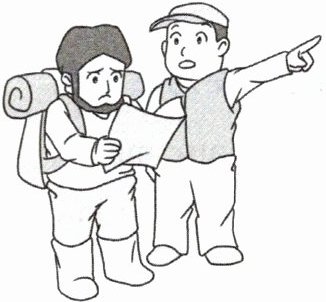
Aesop pointed out (指出) the direction by 11.
“Thank you,” the man said, “I know I have to walk. And I want to know how long it will take me to 12.
Aesop nodded and said again, “You have to walk!”
“Are you 13.
But Aesop was not angry at all. He followed the man and later shouted, “It will take you two 14.
“Why didn’t you tell me just now?” the man asked angrily.
Aesop said slowly, “Because I didn’t know how fast you could walk, how could I know how long you needed?” The man was 15.
If we are as serious as Aesop about our study, we will make great 16.
| polite | hour | be | use | surprise | ask | play | progress | arrive | show |
When you walk on the road and meet people asking for directions, what will you do?
Aesop, an ancient Greek fable writer (古希腊寓言作家), was a very wise and serious man. One afternoon, Aesop 7.
was
walking on a road. Suddenly, a man came to him and 8. asked
for the direction in a hurry.“Excuse me!” the man asked 9.
politely
, “Could you please 10. show
me the way to the city? And how long does it take to get there on foot?”Aesop pointed out (指出) the direction by 11.
using
his finger and said, “You have to walk.”“Thank you,” the man said, “I know I have to walk. And I want to know how long it will take me to 12.
arrive
in the city on foot.”Aesop nodded and said again, “You have to walk!”
“Are you 13.
playing
a joke on me?” The man was very angry and walked away quickly.But Aesop was not angry at all. He followed the man and later shouted, “It will take you two 14.
hours
to walk to the city.”“Why didn’t you tell me just now?” the man asked angrily.
Aesop said slowly, “Because I didn’t know how fast you could walk, how could I know how long you needed?” The man was 15.
surprised
at his answer.If we are as serious as Aesop about our study, we will make great 16.
progress
.
答案:
7. was【点拨】根据"... walking on a road"可知,空处需填be动词,构成进行时;再根据"came"可知,时态为一般过去时,主语为Aesop,be动词用was。故填was。
8. asked【点拨】根据"When you walk on the road and meet people asking for directions"可知,空处指"问路",ask for"询问",固定搭配。再根据"came"可知时态为一般过去时,谓语动词需用过去式。故填asked。
9. politely【点拨】根据"Could you please..."可知,那个男士是有礼貌地问。polite"礼貌的"为形容词,asked为动词,需用副词修饰。故填politely。
10. show【点拨】根据"... me the way to the city?"可知,此处指"出示"路线。show"出示"为动词,Could后跟动词原形。故填show。
11. using【点拨】根据"Aesop pointed out (指出) the direction by... his finger"可知,use"使用"符合语境,介词by后跟动名词。故填using。
12. arrive【点拨】根据"... in the city on foot."可知,空处指步行"到达"城市,arrive in"到达",It takes sb. some time to do sth. 为固定句型,表示"做某事花费某人多长时间",故填arrive。
13. playing【点拨】根据"Are you ... a joke on me?"以及上文可知,伊索一直说"你要走路",而没有回答这个人的问题,所以他认为伊索在捉弄他,play a joke on sb. "捉弄某人"。根据句首"Are"可知,空处需填playing。故填playing。
14. hours【点拨】"It takes sb. some time to do sth."为固定句型,表示"做某事花费某人多长时间",故空处需填表示"时间"的词,hour"小时"符合。数词two后接名词复数。故填hours。
15. surprised【点拨】根据"Because I didn't know how fast you could walk, how could I know how long you needed?"可知,伊索的这个理由,让这个男士感到很吃惊。be surprised at... 表示"对……感到吃惊"。故填surprised。
16. progress【点拨】根据"If we are as serious as Aesop about our study"可知,如果像伊索那样认真学习,我们就会取得很大的进步。make progress"取得进步",其中progress"进步"为不可数名词。故填progress。
8. asked【点拨】根据"When you walk on the road and meet people asking for directions"可知,空处指"问路",ask for"询问",固定搭配。再根据"came"可知时态为一般过去时,谓语动词需用过去式。故填asked。
9. politely【点拨】根据"Could you please..."可知,那个男士是有礼貌地问。polite"礼貌的"为形容词,asked为动词,需用副词修饰。故填politely。
10. show【点拨】根据"... me the way to the city?"可知,此处指"出示"路线。show"出示"为动词,Could后跟动词原形。故填show。
11. using【点拨】根据"Aesop pointed out (指出) the direction by... his finger"可知,use"使用"符合语境,介词by后跟动名词。故填using。
12. arrive【点拨】根据"... in the city on foot."可知,空处指步行"到达"城市,arrive in"到达",It takes sb. some time to do sth. 为固定句型,表示"做某事花费某人多长时间",故填arrive。
13. playing【点拨】根据"Are you ... a joke on me?"以及上文可知,伊索一直说"你要走路",而没有回答这个人的问题,所以他认为伊索在捉弄他,play a joke on sb. "捉弄某人"。根据句首"Are"可知,空处需填playing。故填playing。
14. hours【点拨】"It takes sb. some time to do sth."为固定句型,表示"做某事花费某人多长时间",故空处需填表示"时间"的词,hour"小时"符合。数词two后接名词复数。故填hours。
15. surprised【点拨】根据"Because I didn't know how fast you could walk, how could I know how long you needed?"可知,伊索的这个理由,让这个男士感到很吃惊。be surprised at... 表示"对……感到吃惊"。故填surprised。
16. progress【点拨】根据"If we are as serious as Aesop about our study"可知,如果像伊索那样认真学习,我们就会取得很大的进步。make progress"取得进步",其中progress"进步"为不可数名词。故填progress。
查看更多完整答案,请扫码查看

