

 搜索
搜索
第51页
- 第1页
- 第2页
- 第3页
- 第4页
- 第5页
- 第6页
- 第7页
- 第8页
- 第9页
- 第10页
- 第11页
- 第12页
- 第13页
- 第14页
- 第15页
- 第16页
- 第17页
- 第18页
- 第19页
- 第20页
- 第21页
- 第22页
- 第23页
- 第24页
- 第25页
- 第26页
- 第27页
- 第28页
- 第29页
- 第30页
- 第31页
- 第32页
- 第33页
- 第34页
- 第35页
- 第36页
- 第37页
- 第38页
- 第39页
- 第40页
- 第41页
- 第42页
- 第43页
- 第44页
- 第45页
- 第46页
- 第47页
- 第48页
- 第49页
- 第50页
- 第51页
- 第52页
- 第53页
- 第54页
- 第55页
- 第56页
- 第57页
- 第58页
- 第59页
- 第60页
- 第61页
- 第62页
- 第63页
- 第64页
- 第65页
- 第66页
- 第67页
- 第68页
- 第69页
- 第70页
- 第71页
- 第72页
- 第73页
- 第74页
一 选词填空。
1. How are you ________ (feel/feeling) today?
2. Jim is ________ (worry/worried) about his lessons.
3. Mengmeng ____________ (have/has) some ____________ (flower/flowers) for you.
4. I want ____ (buy/to buy) some chocolates.
5. Her classmates come to see ____ (she/her).
1. How are you ________ (feel/feeling) today?
2. Jim is ________ (worry/worried) about his lessons.
3. Mengmeng ____________ (have/has) some ____________ (flower/flowers) for you.
4. I want ____ (buy/to buy) some chocolates.
5. Her classmates come to see ____ (she/her).
答案:
1. feeling 【点拨】How are you feeling today?(你今天感觉怎么样?)
2. worried 【点拨】be worried about 为固定搭配,意为“担心……”。
3. has;flowers 【点拨】主语“Mengmeng”为第三人称单数,谓语动词也要用第三人称单数形式;some 后跟可数名词复数形式。
4. to buy 【点拨】want to do sth.表示“想要做某事”。
5. her 【点拨】动词 see 后跟人称代词宾格形式。
2. worried 【点拨】be worried about 为固定搭配,意为“担心……”。
3. has;flowers 【点拨】主语“Mengmeng”为第三人称单数,谓语动词也要用第三人称单数形式;some 后跟可数名词复数形式。
4. to buy 【点拨】want to do sth.表示“想要做某事”。
5. her 【点拨】动词 see 后跟人称代词宾格形式。
二 看图,仿照例子写句子或对话。
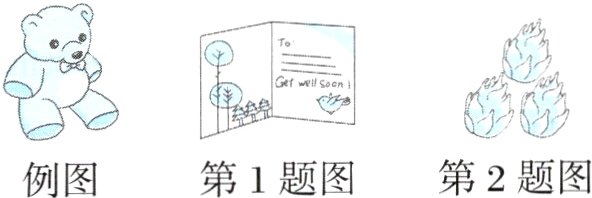
例:Here is a teddy bear for you.
1. ______________________________
2. ______________________________
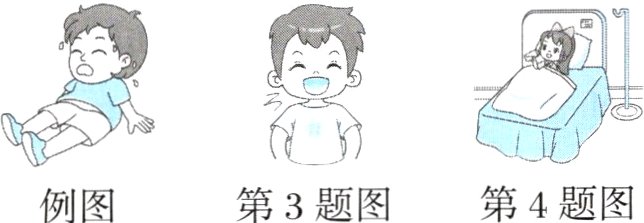
例:—How are you feeling today?
—I feel very tired.
3. —How are you feeling today?
—________________
4. —________________
—________________
例:Here is a teddy bear for you.
1. ______________________________
2. ______________________________
例:—How are you feeling today?
—I feel very tired.
3. —How are you feeling today?
—________________
4. —________________
—________________
答案:
1. Here’s a get - well card for you.
2. Here are some dragon fruit for you.
3. I feel happy.
4. How are you feeling today?
I feel much better.
2. Here are some dragon fruit for you.
3. I feel happy.
4. How are you feeling today?
I feel much better.
三 按要求完成句子。
1. Li Yan feels much better. (改为一般疑问句)
________ Li Yan ________ much better?
2. I bring a teddy bear for you. (改为复数句)
We ________ ________ ________ for you.
3. I have some kiwi fruit for you. (改为同义句)
________ ________ some kiwi fruit for you.
4. What’s wrong with Gao Wei? (用 a toothache 作答)
________ ________ ________ ________.
5. They bring her some chocolates. (对画线部分提问)
________ ________ bring her?
1. Li Yan feels much better. (改为一般疑问句)
________ Li Yan ________ much better?
2. I bring a teddy bear for you. (改为复数句)
We ________ ________ ________ for you.
3. I have some kiwi fruit for you. (改为同义句)
________ ________ some kiwi fruit for you.
4. What’s wrong with Gao Wei? (用 a toothache 作答)
________ ________ ________ ________.
5. They bring her some chocolates. (对画线部分提问)
________ ________ bring her?
答案:
1. Does;feel 【点拨】含有实义动词的陈述句变成一般疑问句时,需借助助动词 Do/Does,“Li Yan”为第三人称单数,故用 Does;助动词后的动词用原形。
@@2. bring some teddy bears
@@3. Here are
@@4. He has a toothache
@@5. What do they 【点拨】对物品提问用特殊疑问词 What,bring 为实义动词,变疑问句时需借助助动词 do/does,主语为 they,故用 do。
@@2. bring some teddy bears
@@3. Here are
@@4. He has a toothache
@@5. What do they 【点拨】对物品提问用特殊疑问词 What,bring 为实义动词,变疑问句时需借助助动词 do/does,主语为 they,故用 do。
四 主题情境:健康的生活方式 阅读短文,补全句子。
Today I want to tell you something about my new friend Diandian. He has a healthy lifestyle (生活方式). He often gets up early for morning exercises (晨练). He likes running, swimming and playing basketball. He also has a healthy diet. He eats a lot of vegetables and fruit. He likes apples best. He says, “An apple a day keeps the doctor away.” We both like drinking cola but he doesn’t drink too much. He thinks it’s bad for his health. A healthy diet and doing exercise make him strong and clever. As for me, I like eating junk food (垃圾食品). It is really bad for my health. How about you? Tell me more about your lifestyle.
1. For sports, Diandian can run, swim and ________ ________.
2. Diandian’s favourite fruit is ________.
3. Diandian has good eating habits but he also drinks ________.
4. Diandian becomes strong by having a healthy diet and ________ ________.
Today I want to tell you something about my new friend Diandian. He has a healthy lifestyle (生活方式). He often gets up early for morning exercises (晨练). He likes running, swimming and playing basketball. He also has a healthy diet. He eats a lot of vegetables and fruit. He likes apples best. He says, “An apple a day keeps the doctor away.” We both like drinking cola but he doesn’t drink too much. He thinks it’s bad for his health. A healthy diet and doing exercise make him strong and clever. As for me, I like eating junk food (垃圾食品). It is really bad for my health. How about you? Tell me more about your lifestyle.
1. For sports, Diandian can run, swim and ________ ________.
2. Diandian’s favourite fruit is ________.
3. Diandian has good eating habits but he also drinks ________.
4. Diandian becomes strong by having a healthy diet and ________ ________.
答案:
1. play basketball 【点拨】由“He likes running,swimming and playing basketball.”可知典典能跑步、游泳和打篮球。
2. apples 【点拨】由“He likes apples best.”可知典典最喜欢的水果是苹果。
3. cola 【点拨】由“We both like drinking cola but he doesn’t drink too much.”可知典典虽然有健康的饮食习惯但他也喝可乐。
4. doing exercise 【点拨】由“A healthy diet and doing exercise make him strong and clever.”可知健康的饮食和锻炼使典典变得强壮。
2. apples 【点拨】由“He likes apples best.”可知典典最喜欢的水果是苹果。
3. cola 【点拨】由“We both like drinking cola but he doesn’t drink too much.”可知典典虽然有健康的饮食习惯但他也喝可乐。
4. doing exercise 【点拨】由“A healthy diet and doing exercise make him strong and clever.”可知健康的饮食和锻炼使典典变得强壮。
查看更多完整答案,请扫码查看

