

 搜索
搜索
第99页
- 第1页
- 第2页
- 第3页
- 第4页
- 第5页
- 第6页
- 第7页
- 第8页
- 第9页
- 第10页
- 第11页
- 第12页
- 第13页
- 第14页
- 第15页
- 第16页
- 第17页
- 第18页
- 第19页
- 第20页
- 第21页
- 第22页
- 第23页
- 第24页
- 第25页
- 第26页
- 第27页
- 第28页
- 第29页
- 第30页
- 第31页
- 第32页
- 第33页
- 第34页
- 第35页
- 第36页
- 第37页
- 第38页
- 第39页
- 第40页
- 第41页
- 第42页
- 第43页
- 第44页
- 第45页
- 第46页
- 第47页
- 第48页
- 第49页
- 第50页
- 第51页
- 第52页
- 第53页
- 第54页
- 第55页
- 第56页
- 第57页
- 第58页
- 第59页
- 第60页
- 第61页
- 第62页
- 第63页
- 第64页
- 第65页
- 第66页
- 第67页
- 第68页
- 第69页
- 第70页
- 第71页
- 第72页
- 第73页
- 第74页
- 第75页
- 第76页
- 第77页
- 第78页
- 第79页
- 第80页
- 第81页
- 第82页
- 第83页
- 第84页
- 第85页
- 第86页
- 第87页
- 第88页
- 第89页
- 第90页
- 第91页
- 第92页
- 第93页
- 第94页
- 第95页
- 第96页
- 第97页
- 第98页
- 第99页
- 第100页
- 第101页
- 第102页
- 第103页
- 第104页
- 第105页
- 第106页
- 第107页
- 第108页
- 第109页
- 第110页
- 第111页
- 第112页
- 第113页
- 第114页
- 第115页
- 第116页
- 第117页
- 第118页
- 第119页
- 第120页
- 第121页
- 第122页
- 第123页
- 第124页
- 第125页
- 第126页
- 第127页
- 第128页
- 第129页
- 第130页
- 第131页
- 第132页
- 第133页
- 第134页
- 第135页
- 第136页
- 第137页
- 第138页
- 第139页
- 第140页
- 第141页
- 第142页
- 第143页
- 第144页
- 第145页
- 第146页
- 第147页
- 第148页
- 第149页
- 第150页
- 第151页
- 第152页
- 第153页
- 第154页
- 第155页
- 第156页
- 第157页
- 第158页
- 第159页
- 第160页
- 第161页
- 第162页
- 第163页
- 第164页
- 第165页
- 第166页
- 第167页
- 第168页
- 第169页
- 第170页
- 第171页
- 第172页
- 第173页
- 第174页
- 第175页
- 第176页
- 第177页
- 第178页
- 第179页
- 第180页
- 第181页
- 第182页
- 第183页
- 第184页
- 第185页
- 第186页
- 第187页
- 第188页
- 第189页
- 第190页
- 第191页
- 第192页
- 第193页
- 第194页
- 第195页
- 第196页
- 第197页
- 第198页
- 第199页
- 第200页
(
A.This
B.That
C.It
C
) 1.______ is said that more and more book-shops in Shanghai provide 24-hour service.A.This
B.That
C.It
答案:
【解析】:本题考查代词的用法及主语从句。题干的意思是:“_____说上海越来越多的书店提供24小时服务。”分析句子结构可知,空格处需要填入一个形式主语,真正的主语是后面的that从句。在英语中,当主语从句较长或结构复杂时,为了避免句子头重脚轻,通常使用it作形式主语,而将真正的主语从句置于句末。A选项This和B选项That均不能作为形式主语,故排除。
【答案】:C
【答案】:C
(
— I'm busy now. But here is a short video for you.
A.how to use
B.when to use
C.where to buy
A
) 2.— Could you please show me ______ the new phone?— I'm busy now. But here is a short video for you.
A.how to use
B.when to use
C.where to buy
答案:
【解析】:
本题考查的是疑问词加不定式作宾语的用法。题干中的句子是一个询问的句式,询问对方能否展示如何使用新手机。我们需要从选项中找出符合语境的疑问词加不定式的组合。
A选项“how to use”表示“如何使用”,符合语境,因为回答中提到了一个短视频,很可能是关于如何使用手机的说明。
B选项“when to use”表示“何时使用”,与语境不符,因为问题中并未询问使用时间。
C选项“where to buy”表示“在哪里买”,与语境不符,因为问题中并未询问购买地点。
根据以上分析,我们可以确定正确答案是A选项,即“how to use”。
【答案】:
A
本题考查的是疑问词加不定式作宾语的用法。题干中的句子是一个询问的句式,询问对方能否展示如何使用新手机。我们需要从选项中找出符合语境的疑问词加不定式的组合。
A选项“how to use”表示“如何使用”,符合语境,因为回答中提到了一个短视频,很可能是关于如何使用手机的说明。
B选项“when to use”表示“何时使用”,与语境不符,因为问题中并未询问使用时间。
C选项“where to buy”表示“在哪里买”,与语境不符,因为问题中并未询问购买地点。
根据以上分析,我们可以确定正确答案是A选项,即“how to use”。
【答案】:
A
(
A.discover
B.discovering
C.to discover
C
) 3.Columbus was the first ______ America.A.discover
B.discovering
C.to discover
答案:
【解析】:本题考查的是非谓语动词的用法。在英语中,当序数词、最高级等修饰名词时,后面常用不定式作为定语,表示“第一个做某事的人”或“最做某事的人”。本题中“Columbus was the first ______ America”中,已有序数词“the first”修饰,因此需要用不定式“to discover”作为定语,表示“哥伦布是第一个发现美洲的人”。
【答案】:C
【答案】:C
(
A.that
B.whether
C.how
B
) 4.I doubt ______ I can solve the problem, but I will have a try.A.that
B.whether
C.how
答案:
【解析】:本题考查的是宾语从句的引导词。根据题目中的“I doubt”可知,这里存在一个不确定的情况,即说话者对于能否解决问题持有怀疑态度。接下来分析选项,A选项“that”通常用于引导确定性的陈述句作为宾语从句,与“doubt”的含义相矛盾;C选项“how”用于询问方式或方法,但在此句中并未提及如何解决问题的具体方式,故不符合语境;B选项“whether”用于引导表示选择或疑问的宾语从句,符合“doubt”表示的不确定含义。
【答案】:B
【答案】:B
(
A.to not go
B.not to go
C.not going
B
) 5.People are warned ______ out to celebrate Christmas because of the bad weather.A.to not go
B.not to go
C.not going
答案:
【解析】:本题考查的是英语中的非谓语动词用法,特别是动词不定式的否定形式。题干是一个被动语态的句子,其中“are warned”是谓语部分,表示“被警告”。根据英语语法规则,当动词不定式作为宾语补足语或状语时,如果其逻辑主语是句子的主语,且该动词不定式表示的是一个应该做或避免做的动作,那么常常采用“to do”的形式。若要表示否定,则在“to”前加“not”。因此,本题中应使用“not to go”来表示“不被建议去做某事”。
【答案】:B.not to go
【答案】:B.not to go
二、根据首字母及句意写出完整单词。
1. You can't drink the milk. It has become
2. It must be crowded now in the supermarket. There are always lots of
3. Dad just
4. Sea salt may taste
5. The potato chips are hot and
1. You can't drink the milk. It has become
sour
in the hot weather.2. It must be crowded now in the supermarket. There are always lots of
customers
at this time.3. Dad just
warned
me not to be late for the class.4. Sea salt may taste
saltier
than the salt you usually buy in shops.5. The potato chips are hot and
crispy
because they were just taken out from the oven.
答案:
1. sour
2. customers
3. warned
4. saltier
5. crispy
2. customers
3. warned
4. saltier
5. crispy
三、用所给动词的正确时态和语态完成短文。
It is known that sweet dishes were cooled with snow and ice in ancient times. They 1.
Sorbet (雪糕) 2.
During the 18th century, ice-cream 4.
Ice-cream 7.
It is known that sweet dishes were cooled with snow and ice in ancient times. They 1.
were enjoyed
(enjoy) only by the rich because they were expensive.Sorbet (雪糕) 2.
was introduced
(introduce) in Florence in the 16th century. However, real ice-cream 3. was produced
(produce) for the first time in the 1630s by Gerald Tissain, a French cook of British King, Charles I.During the 18th century, ice-cream 4.
was eaten
(eat) at ice-cream cafés in London, Paris and other great cities. It was still expensive, though. It 5. is said
(say) that George Washington 6. spent
(spend) 200 dollars on ice-cream in just two months in 1790.Ice-cream 7.
became
(become) cheap when the first ice-cream factory 8. was opened
(open) in 1851 by an American, George Fussel. Since the 19th century, though, Italians have been seen as the great ice-cream makers. In the mid-19th century, for example, ice-cream 9. was sold
(sell) in the streets of London by as many as 30,000 Italians. The Italian way of making ice-cream has been learned by many others since those days. So today tasty ice-cream 10. is made
(make) and enjoyed all over the world.
答案:
【解析】:
这是一道英语动词时态和语态的填空题,需要根据上下文语境和语法规则,选择所给动词的正确形式填入空白处。题目涉及多个时间点和情境,包括古代、16世纪、18世纪、19世纪等,以及不同的主语和动作,如“甜食”、“雪糕”、“冰淇淋”等被享用、被引入、被生产、被吃、被说、被花费、变得便宜、被开设、被销售、被制作等。因此,需要根据每个句子的具体语境,分析动词的正确时态和语态。
【答案】:
1. were enjoyed。根据语境,“They”指代前文的“sweet dishes”,且因为是古代的事情,所以使用一般过去时的被动语态。
2. was introduced。根据语境,“Sorbet”是被引入的,且时间是16世纪,所以使用一般过去时的被动语态。
3. was produced。“real ice-cream”是被生产的,时间是17世纪30年代,所以使用一般过去时的被动语态。
4. was eaten。根据语境,“ice-cream”是被吃的,时间是18世纪,所以使用一般过去时的被动语态。
5. is said。“It is said that”是固定句型,表示“据说”,且因为是现在仍然流传的说法,所以使用一般现在时。
6. spent。根据语境,“George Washington”是花费金钱买冰淇淋的人,时间是1790年,所以使用一般过去时。
7. became。根据语境,“Ice-cream”变得便宜是一个过去发生的事件,所以使用一般过去时。
8. was opened。“the first ice-cream factory”是被开设的,时间是1851年,所以使用一般过去时的被动语态。
9. was sold。根据语境,“ice-cream”是被销售的,时间是19世纪中期,所以使用一般过去时的被动语态。
10. is made。根据语境,“tasty ice-cream”是被制作的,且是现在仍然在进行的动作,所以使用一般现在时的被动语态。
这是一道英语动词时态和语态的填空题,需要根据上下文语境和语法规则,选择所给动词的正确形式填入空白处。题目涉及多个时间点和情境,包括古代、16世纪、18世纪、19世纪等,以及不同的主语和动作,如“甜食”、“雪糕”、“冰淇淋”等被享用、被引入、被生产、被吃、被说、被花费、变得便宜、被开设、被销售、被制作等。因此,需要根据每个句子的具体语境,分析动词的正确时态和语态。
【答案】:
1. were enjoyed。根据语境,“They”指代前文的“sweet dishes”,且因为是古代的事情,所以使用一般过去时的被动语态。
2. was introduced。根据语境,“Sorbet”是被引入的,且时间是16世纪,所以使用一般过去时的被动语态。
3. was produced。“real ice-cream”是被生产的,时间是17世纪30年代,所以使用一般过去时的被动语态。
4. was eaten。根据语境,“ice-cream”是被吃的,时间是18世纪,所以使用一般过去时的被动语态。
5. is said。“It is said that”是固定句型,表示“据说”,且因为是现在仍然流传的说法,所以使用一般现在时。
6. spent。根据语境,“George Washington”是花费金钱买冰淇淋的人,时间是1790年,所以使用一般过去时。
7. became。根据语境,“Ice-cream”变得便宜是一个过去发生的事件,所以使用一般过去时。
8. was opened。“the first ice-cream factory”是被开设的,时间是1851年,所以使用一般过去时的被动语态。
9. was sold。根据语境,“ice-cream”是被销售的,时间是19世纪中期,所以使用一般过去时的被动语态。
10. is made。根据语境,“tasty ice-cream”是被制作的,且是现在仍然在进行的动作,所以使用一般现在时的被动语态。
四、根据短文内容选择最佳选项。
① Do you ever find yourself standing in front of rubbish bins (垃圾箱), not sure whether the piece of waste in your hand is recyclable (可回收的) or not? To solve this problem, four high school students from Hong Kong, China have invented a smart rubbish bin that uses AI to sort the waste. The students named the bin Waste Collection Point.
② Connected to a computer, the bin uses a camera to tell the kind of the waste and sorts it into plastic, paper, glass, or other kinds. The team tested every product in the school shop and took at least 500 pictures of each one. "To train the AI, we had to take many photos from different angles (角度)," said the students.
③ The idea of the smart bin was born in 2020, when the students were in Grade Ten. At that time, people from the city crowded into their village for holidays. They left behind a lot of rubbish and caused more pollution.
④ "All the bins were full, and there was even rubbish on the mountain," the students said. "Every weekend, we had to join the villagers in picking up the waste."
⑤ The students decided to develop a special bin that would encourage people to protect the environment. Although school ended at 2 p.m., the team would continue to work on their invention until 6 or 7 p.m. at school. Even on weekends, they would still meet and work together online.
⑥ "We hope our bin can be widely used in the city," the students said. "Then it will be easier than ever for people to recycle and protect our environment."
(
A. Its price. B. Its size. C. Its use.
(
A. To make sure the bin can sort waste correctly.
B. To teach the AI to tell products from the school shop.
C. To tell the computer how to control the bin through the camera.
(
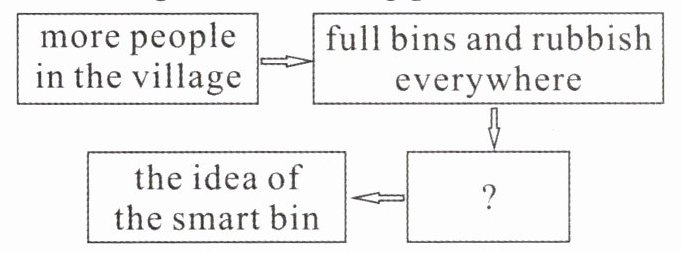
more people in the village → full bins and rubbish everywhere ↓ ? ← the idea of the smart bin
A. villagers' encouragement B. picking up rubbish around C. the development of local tourism
(
A. A new invention. B. The rubbish problem. C. Four young inventors.
(
① Do you ever find yourself standing in front of rubbish bins (垃圾箱), not sure whether the piece of waste in your hand is recyclable (可回收的) or not? To solve this problem, four high school students from Hong Kong, China have invented a smart rubbish bin that uses AI to sort the waste. The students named the bin Waste Collection Point.
② Connected to a computer, the bin uses a camera to tell the kind of the waste and sorts it into plastic, paper, glass, or other kinds. The team tested every product in the school shop and took at least 500 pictures of each one. "To train the AI, we had to take many photos from different angles (角度)," said the students.
③ The idea of the smart bin was born in 2020, when the students were in Grade Ten. At that time, people from the city crowded into their village for holidays. They left behind a lot of rubbish and caused more pollution.
④ "All the bins were full, and there was even rubbish on the mountain," the students said. "Every weekend, we had to join the villagers in picking up the waste."
⑤ The students decided to develop a special bin that would encourage people to protect the environment. Although school ended at 2 p.m., the team would continue to work on their invention until 6 or 7 p.m. at school. Even on weekends, they would still meet and work together online.
⑥ "We hope our bin can be widely used in the city," the students said. "Then it will be easier than ever for people to recycle and protect our environment."
(
C
) 1. What can we know about Waste Collection Point according to the first paragraph?A. Its price. B. Its size. C. Its use.
(
A
) 2. Why can we infer the team took so many pictures from different angles?A. To make sure the bin can sort waste correctly.
B. To teach the AI to tell products from the school shop.
C. To tell the computer how to control the bin through the camera.
(
B
) 3. This chart shows why Waste Collection Point was developed. Which of the following is the missing part?more people in the village → full bins and rubbish everywhere ↓ ? ← the idea of the smart bin
A. villagers' encouragement B. picking up rubbish around C. the development of local tourism
(
A
) 4. What is this passage mainly about?A. A new invention. B. The rubbish problem. C. Four young inventors.
(
C
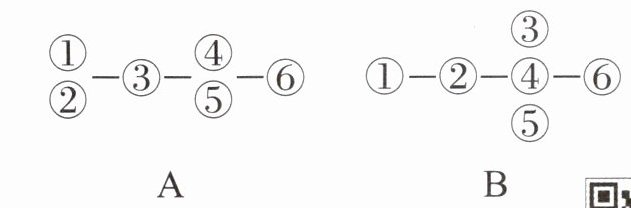
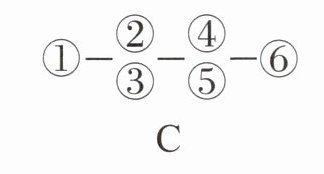
) 5. How is this passage organized?
答案:
【解析】:
本题主要考查对英语阅读理解的能力,包括细节理解、推理判断、图表理解和主旨大意等方面。
第一题需要根据第一段内容判断关于“Waste Collection Point”的已知信息;
第二题需要根据文中提到的拍照训练AI的内容,推断拍照的目的;
第三题需要根据图表内容和文中描述,推断缺失的部分;
第四题需要概括文章的主旨大意;
第五题需要分析文章的组织结构。
1. 第一段主要介绍了四个来自中国香港的高中生发明了一种使用AI进行垃圾分类的智能垃圾桶,并命名为“Waste Collection Point”。其中明确提到了该垃圾桶的用途,即使用AI进行垃圾分类。
因此,本题选C。
2. 文中提到团队为了训练AI,从不同角度拍摄了许多照片。这表明拍照的目的是为了确保AI能够正确识别并分类垃圾。
B选项和C选项并不是拍照的主要目的。
因此,本题选A。
3. 根据图表和文中描述,智能垃圾桶的发明是由于村里来了更多的人,导致垃圾桶满溢,垃圾遍地。因此,缺失的部分应该是与垃圾相关的内容。
文中提到学生们每个周末都要和村民一起捡垃圾,所以B选项“picking up rubbish around”符合语境。
A选项“村民的鼓励”和C选项“当地旅游业的发展”与图表内容和文中描述不符。
因此,本题选B。
4. 文章主要介绍了四个来自中国香港的高中生发明的一种使用AI进行垃圾分类的智能垃圾桶。
虽然文章也提到了垃圾问题和四位年轻发明家,但主要焦点是介绍这一新发明。
因此,本题选A。
5. 文章首先介绍了智能垃圾桶的发明背景和用途(第一段),然后详细描述了其工作原理和拍照训练AI的过程(第二段),接着讲述了发明背后的故事和原因(第三、四段),最后介绍了学生们的发明意愿和期望(第六段)。
第五段是对整个发明过程的补充说明。
因此,文章的组织结构符合选项C。
【答案】:
1. C;
2. A;
3. B;
4. A;
5. C。
本题主要考查对英语阅读理解的能力,包括细节理解、推理判断、图表理解和主旨大意等方面。
第一题需要根据第一段内容判断关于“Waste Collection Point”的已知信息;
第二题需要根据文中提到的拍照训练AI的内容,推断拍照的目的;
第三题需要根据图表内容和文中描述,推断缺失的部分;
第四题需要概括文章的主旨大意;
第五题需要分析文章的组织结构。
1. 第一段主要介绍了四个来自中国香港的高中生发明了一种使用AI进行垃圾分类的智能垃圾桶,并命名为“Waste Collection Point”。其中明确提到了该垃圾桶的用途,即使用AI进行垃圾分类。
因此,本题选C。
2. 文中提到团队为了训练AI,从不同角度拍摄了许多照片。这表明拍照的目的是为了确保AI能够正确识别并分类垃圾。
B选项和C选项并不是拍照的主要目的。
因此,本题选A。
3. 根据图表和文中描述,智能垃圾桶的发明是由于村里来了更多的人,导致垃圾桶满溢,垃圾遍地。因此,缺失的部分应该是与垃圾相关的内容。
文中提到学生们每个周末都要和村民一起捡垃圾,所以B选项“picking up rubbish around”符合语境。
A选项“村民的鼓励”和C选项“当地旅游业的发展”与图表内容和文中描述不符。
因此,本题选B。
4. 文章主要介绍了四个来自中国香港的高中生发明的一种使用AI进行垃圾分类的智能垃圾桶。
虽然文章也提到了垃圾问题和四位年轻发明家,但主要焦点是介绍这一新发明。
因此,本题选A。
5. 文章首先介绍了智能垃圾桶的发明背景和用途(第一段),然后详细描述了其工作原理和拍照训练AI的过程(第二段),接着讲述了发明背后的故事和原因(第三、四段),最后介绍了学生们的发明意愿和期望(第六段)。
第五段是对整个发明过程的补充说明。
因此,文章的组织结构符合选项C。
【答案】:
1. C;
2. A;
3. B;
4. A;
5. C。
查看更多完整答案,请扫码查看

