

 搜索
搜索
第2页
- 第1页
- 第2页
- 第3页
- 第4页
- 第5页
- 第6页
- 第7页
- 第8页
- 第9页
- 第10页
- 第11页
- 第12页
- 第13页
- 第14页
- 第15页
- 第16页
- 第17页
- 第18页
- 第19页
- 第20页
- 第21页
- 第22页
- 第23页
- 第24页
- 第25页
- 第26页
- 第27页
- 第28页
- 第29页
- 第30页
- 第31页
- 第32页
- 第33页
- 第34页
- 第35页
- 第36页
- 第37页
- 第38页
- 第39页
- 第40页
- 第41页
- 第42页
- 第43页
- 第44页
- 第45页
- 第46页
- 第47页
- 第48页
- 第49页
- 第50页
- 第51页
- 第52页
- 第53页
- 第54页
- 第55页
- 第56页
- 第57页
- 第58页
- 第59页
- 第60页
- 第61页
- 第62页
- 第63页
- 第64页
- 第65页
- 第66页
- 第67页
- 第68页
- 第69页
- 第70页
- 第71页
- 第72页
- 第73页
- 第74页
- 第75页
- 第76页
- 第77页
- 第78页
- 第79页
- 第80页
- 第81页
- 第82页
- 第83页
- 第84页
- 第85页
- 第86页
- 第87页
- 第88页
- 第89页
- 第90页
- 第91页
- 第92页
- 第93页
- 第94页
- 第95页
- 第96页
- 第97页
- 第98页
- 第99页
- 第100页
- 第101页
- 第102页
- 第103页
- 第104页
- 第105页
- 第106页
- 第107页
- 第108页
- 第109页
- 第110页
- 第111页
- 第112页
- 第113页
- 第114页
- 第115页
- 第116页
- 第117页
- 第118页
- 第119页
- 第120页
- 第121页
- 第122页
- 第123页
- 第124页
- 第125页
- 第126页
- 第127页
- 第128页
- 第129页
- 第130页
- 第131页
- 第132页
- 第133页
- 第134页
- 第135页
- 第136页
- 第137页
- 第138页
- 第139页
- 第140页
- 第141页
- 第142页
- 第143页
- 第144页
- 第145页
- 第146页
- 第147页
- 第148页
- 第149页
- 第150页
- 第151页
- 第152页
- 第153页
- 第154页
- 第155页
- 第156页
- 第157页
- 第158页
- 第159页
- 第160页
- 第161页
- 第162页
- 第163页
- 第164页
- 第165页
- 第166页
- 第167页
- 第168页
- 第169页
- 第170页
- 第171页
- 第172页
- 第173页
- 第174页
- 第175页
- 第176页
- 第177页
- 第178页
- 第179页
- 第180页
- 第181页
- 第182页
- 第183页
- 第184页
- 第185页
- 第186页
- 第187页
- 第188页
- 第189页
- 第190页
- 第191页
- 第192页
- 第193页
- 第194页
- 第195页
- 第196页
- 第197页
- 第198页
- 第199页
- 第200页
四、根据短文内容,从 A、B、C 三个选项中选出可以填入空白处的最佳选项。
As the saying goes, “It’s never too old to learn.” Peng Shengwu, an 85-year-old grandma from Changsha, is a good example.
Peng was a math teacher and knew little English. She 1______
At first, Tang was too shy to 3______
Peng is 6______
It’s not easy for people of her age to learn a new language. Peng sticks (粘贴) cards with English words or expressions on the wall or takes them 8______
Learning makes Peng 10______
( ) 1. A. began B. achieved C. expected
( ) 2. A. fun B. trouble C. interest
( ) 3. A. listen B. speak C. write
( ) 4. A. Actually B. Certainly C. Slowly
( ) 5. A. kept B. practiced C. considered
( ) 6. A. rich B. interested C. talented
( ) 7. A. truthfully B. carefully C. seriously
( ) 8. A. out B. over C. along
( ) 9. A. learn B. understand C. remember
( ) 10. A. happy B. excited C. relaxed
As the saying goes, “It’s never too old to learn.” Peng Shengwu, an 85-year-old grandma from Changsha, is a good example.
Peng was a math teacher and knew little English. She 1______
A
to learn it because of her grandson Tang Kaifeng. Tang has hearing problems, so he had 2______B
learning languages. In order to help him with his English study, Peng went to his English classes with him. At first, Tang was too shy to 3______
B
. To encourage him, Peng would often make simple English conversations with him at home. 4______C
, the boy became confident (自信的). Peng helped Tang with his English until middle school. During these years, she developed a strong interest in English and 5______A
learning it by herself. Then she got into a local university for seniors. Peng is 6______
B
in English very much. She works hard in class. She often asks questions after class and takes homework 7______C
. She never misses class. It’s not easy for people of her age to learn a new language. Peng sticks (粘贴) cards with English words or expressions on the wall or takes them 8______
A
when going out. In this way she can 9______C
them while walking or taking a bus. She also likes to listen to English while cooking. Learning makes Peng 10______
A
. For her, learning English is healthy exercise for the brain (大脑). ( ) 1. A. began B. achieved C. expected
( ) 2. A. fun B. trouble C. interest
( ) 3. A. listen B. speak C. write
( ) 4. A. Actually B. Certainly C. Slowly
( ) 5. A. kept B. practiced C. considered
( ) 6. A. rich B. interested C. talented
( ) 7. A. truthfully B. carefully C. seriously
( ) 8. A. out B. over C. along
( ) 9. A. learn B. understand C. remember
( ) 10. A. happy B. excited C. relaxed
答案:
【解析】:
这是一道英语完形填空题,主要考查对短文内容的理解以及词汇在语境中的运用。解题的关键在于通读短文,理解上下文语境,然后根据每个空白处的前后文意思,从给出的选项中选出最符合语境的答案。
1. 第一空,根据后文“In order to help him with his English study, Peng went to his English classes with him.”可知,彭奶奶开始学习英语是为了帮助孙子,所以这里应该用“began”表示开始学习英语。
2. 第二空,根据“Tang has hearing problems”以及后文彭奶奶帮助他学习英语,可以推断出他在学习语言上有困难,所以选“trouble”。
3. 第三空,根据后文“Peng would often make simple English conversations with him at home.”可知,彭奶奶经常和孙子进行简单的英语对话,说明孙子一开始太害羞而不敢说英语,所以选“speak”。
4. 第四空,根据后文“the boy became confident”可知,这里需要一个表示时间过程的副词,说明是在彭奶奶的鼓励下,孙子逐渐变得自信,所以选“Slowly”。
5. 第五空,根据前文“Peng helped Tang with his English until middle school. During these years, she developed a strong interest in English”可知,彭奶奶在帮助孙子的过程中对英语产生了浓厚兴趣,并且持续自学,所以选“kept”。
6. 第六空,根据后文“She works hard in class. She often asks questions after class...”可知,彭奶奶对英语非常感兴趣,所以选“interested”。
7. 第七空,根据前文“She often asks questions after class”以及后文“She never misses class.”可知,彭奶奶学习很认真,对待作业也很认真,所以选“seriously”的近义词“carefully”更符合语境,表示认真地对待作业。但考虑到选项限制,这里“seriously”也表达了认真的态度,故选择“seriously”。
8. 第八空,根据前文“Peng sticks cards with English words or expressions on the wall”以及后文“when going out”可知,彭奶奶还会把单词卡片带出去,所以选“out”。
9. 第九空,根据前文“In this way”以及后文“while walking or taking a bus”可知,彭奶奶这样做是为了在走路或乘公交车时记住单词,所以选“remember”。
10. 第十空,根据后文“For her, learning English is healthy exercise for the brain”可知,学习让彭奶奶感到快乐,所以选“happy”。
【答案】:
1. A;2. B;3. B;4. C;5. A;6. B;7. C;8. A;9. C;10. A。
这是一道英语完形填空题,主要考查对短文内容的理解以及词汇在语境中的运用。解题的关键在于通读短文,理解上下文语境,然后根据每个空白处的前后文意思,从给出的选项中选出最符合语境的答案。
1. 第一空,根据后文“In order to help him with his English study, Peng went to his English classes with him.”可知,彭奶奶开始学习英语是为了帮助孙子,所以这里应该用“began”表示开始学习英语。
2. 第二空,根据“Tang has hearing problems”以及后文彭奶奶帮助他学习英语,可以推断出他在学习语言上有困难,所以选“trouble”。
3. 第三空,根据后文“Peng would often make simple English conversations with him at home.”可知,彭奶奶经常和孙子进行简单的英语对话,说明孙子一开始太害羞而不敢说英语,所以选“speak”。
4. 第四空,根据后文“the boy became confident”可知,这里需要一个表示时间过程的副词,说明是在彭奶奶的鼓励下,孙子逐渐变得自信,所以选“Slowly”。
5. 第五空,根据前文“Peng helped Tang with his English until middle school. During these years, she developed a strong interest in English”可知,彭奶奶在帮助孙子的过程中对英语产生了浓厚兴趣,并且持续自学,所以选“kept”。
6. 第六空,根据后文“She works hard in class. She often asks questions after class...”可知,彭奶奶对英语非常感兴趣,所以选“interested”。
7. 第七空,根据前文“She often asks questions after class”以及后文“She never misses class.”可知,彭奶奶学习很认真,对待作业也很认真,所以选“seriously”的近义词“carefully”更符合语境,表示认真地对待作业。但考虑到选项限制,这里“seriously”也表达了认真的态度,故选择“seriously”。
8. 第八空,根据前文“Peng sticks cards with English words or expressions on the wall”以及后文“when going out”可知,彭奶奶还会把单词卡片带出去,所以选“out”。
9. 第九空,根据前文“In this way”以及后文“while walking or taking a bus”可知,彭奶奶这样做是为了在走路或乘公交车时记住单词,所以选“remember”。
10. 第十空,根据后文“For her, learning English is healthy exercise for the brain”可知,学习让彭奶奶感到快乐,所以选“happy”。
【答案】:
1. A;2. B;3. B;4. C;5. A;6. B;7. C;8. A;9. C;10. A。
五、根据短文内容选择最佳选项。
Getting good grades is a key goal for most students in Grade 9. But how can we prepare for the Senior High School Entrance Examination wisely? Here is a survey of some students’ favorite ways to prepare for it.
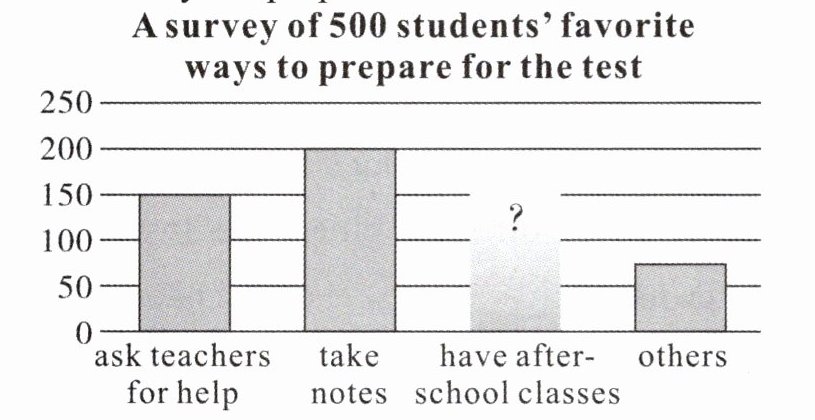
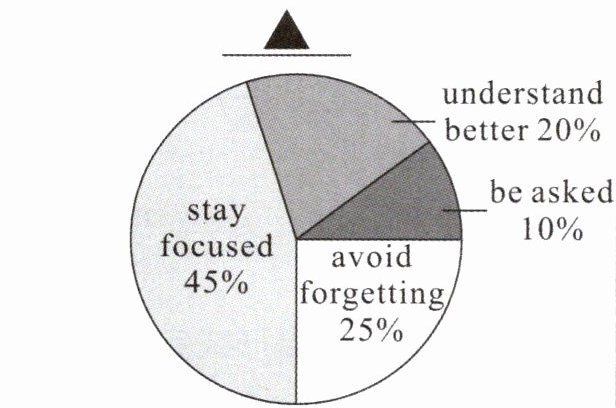
Notes: wisely 明智地;survey 调查;avoid 避免;focused 注意力集中的
(
A. To tell students the importance of finding the right studying ways.
B. To find out the best way to prepare for the Senior High School Entrance Examination.
C. To know about how some students are preparing for the Senior High School Entrance Examination.
(
A. 15%. B. 20%. C. 70%.
(
A. The reasons for taking notes
B. The students’ ideas on the test
C. The importance of asking the teacher for help
(
A. The writer thinks the best way is to ask teachers for help.
B. The results explain why students should prepare for the test wisely.
C. The results show that students have different ways to study for the test.
(
A. Sports. B. Travel. C. Study.
Getting good grades is a key goal for most students in Grade 9. But how can we prepare for the Senior High School Entrance Examination wisely? Here is a survey of some students’ favorite ways to prepare for it.
Notes: wisely 明智地;survey 调查;avoid 避免;focused 注意力集中的
(
C
) 1. What’s the purpose of the survey? A. To tell students the importance of finding the right studying ways.
B. To find out the best way to prepare for the Senior High School Entrance Examination.
C. To know about how some students are preparing for the Senior High School Entrance Examination.
(
B
) 2. What percent of the students study for the test by having after-school classes? A. 15%. B. 20%. C. 70%.
(
A
) 3. What can be put into “▲”? A. The reasons for taking notes
B. The students’ ideas on the test
C. The importance of asking the teacher for help
(
C
) 4. What can we infer from the material (材料)? A. The writer thinks the best way is to ask teachers for help.
B. The results explain why students should prepare for the test wisely.
C. The results show that students have different ways to study for the test.
(
C
) 5. In which part of a magazine can we read the material? A. Sports. B. Travel. C. Study.
答案:
1. C
2. B
3. A
4. C
5. C
2. B
3. A
4. C
5. C
查看更多完整答案,请扫码查看

