

 搜索
搜索
第53页
- 第2页
- 第3页
- 第4页
- 第5页
- 第6页
- 第7页
- 第8页
- 第9页
- 第10页
- 第11页
- 第12页
- 第13页
- 第14页
- 第15页
- 第16页
- 第17页
- 第18页
- 第19页
- 第20页
- 第21页
- 第22页
- 第23页
- 第24页
- 第25页
- 第26页
- 第27页
- 第28页
- 第29页
- 第30页
- 第31页
- 第32页
- 第33页
- 第34页
- 第35页
- 第36页
- 第37页
- 第38页
- 第39页
- 第40页
- 第41页
- 第42页
- 第43页
- 第44页
- 第45页
- 第46页
- 第47页
- 第48页
- 第49页
- 第50页
- 第51页
- 第52页
- 第53页
- 第54页
- 第55页
- 第56页
- 第57页
- 第58页
- 第59页
- 第60页
- 第61页
- 第62页
- 第63页
- 第64页
- 第65页
- 第66页
- 第67页
- 第68页
B
A foreign man has learned the skills needed to perform Peking Opera, making the audience enjoy his lively performance of the Monkey King.
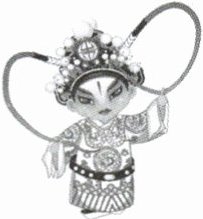
Ghaffar Pourazar, born in Iran, said he had been a big fan of Bruce Lee since he was a child and was full of interest about China. In 1993, he happened to watch Peking Opera performed by professionals from Jingju Theater Company of Beijing. Ghaffar said he fell in love with the beautiful voices, colorful costumes, excellent shows and so on. So after one year, he arrived in China alone and became a student of Peking Opera at a Beijing school.
At the age of 32, he had to learn with teenage students every day, starting from the most basic training of the legs and waist. At the time, he was mostly troubled by the dialog in Peking Opera. To him, it was the biggest challenge. But he never gave up.
Four years later, he began to learn to perform the Monkey King, a traditional character from the Chinese classic story Journey to the West. He said he arrived at the workroom an hour earlier than other performers today and also bought books and CDs to better understand the character.
Ghaffar is not only good at speaking the dialog but has also won fame for Peking Opera. He once got a top international prize for performing the Monkey King.
To help more people enjoy Peking Opera, Ghaffar often teaches the traditional art form in schools in the United States, Britain and other countries. When he found that the language was difficult to understand, he started to translate Peking Opera song lyrics. Ghaffar led a group of actors to perform 66 times in a month and a half in the United States. He also led a 48-member team to perform in Malaysia. In the past years, he has performed in more than 400 shows.
(
A. Being older than other teenage students.
B. The training of the legs and waist.
C. Performing Peking Opera.
D. The dialog in Peking Opera.
(
a. He went to China by himself.
b. He became interested in China.
c. He learned basic skills of Peking Opera.
d. He learned to play the role of the Monkey King.
e. He watched Peking Opera performed by professionals.
f. He won an international prize for his performance as the Monkey King.
A. a→b→c→e→d→f
B. a→d→b→f→c→e
C. b→e→d→c→a→f
D. b→e→a→c→d→f
(
A. Talented and lucky.
B. Hard-working and successful.
C. World-famous and humorous.
D. Strict but patient.
(
A. The introduction of Peking Opera.
B. A foreign friend's love for Peking Opera.
C. Ghaffar's performances around the world.
D. Ghaffar's journey of learning a traditional Chinese art form.
A foreign man has learned the skills needed to perform Peking Opera, making the audience enjoy his lively performance of the Monkey King.
Ghaffar Pourazar, born in Iran, said he had been a big fan of Bruce Lee since he was a child and was full of interest about China. In 1993, he happened to watch Peking Opera performed by professionals from Jingju Theater Company of Beijing. Ghaffar said he fell in love with the beautiful voices, colorful costumes, excellent shows and so on. So after one year, he arrived in China alone and became a student of Peking Opera at a Beijing school.
At the age of 32, he had to learn with teenage students every day, starting from the most basic training of the legs and waist. At the time, he was mostly troubled by the dialog in Peking Opera. To him, it was the biggest challenge. But he never gave up.
Four years later, he began to learn to perform the Monkey King, a traditional character from the Chinese classic story Journey to the West. He said he arrived at the workroom an hour earlier than other performers today and also bought books and CDs to better understand the character.
Ghaffar is not only good at speaking the dialog but has also won fame for Peking Opera. He once got a top international prize for performing the Monkey King.
To help more people enjoy Peking Opera, Ghaffar often teaches the traditional art form in schools in the United States, Britain and other countries. When he found that the language was difficult to understand, he started to translate Peking Opera song lyrics. Ghaffar led a group of actors to perform 66 times in a month and a half in the United States. He also led a 48-member team to perform in Malaysia. In the past years, he has performed in more than 400 shows.
(
D
)4. What does the underlined word "it" in Paragraph 3 refer to?A. Being older than other teenage students.
B. The training of the legs and waist.
C. Performing Peking Opera.
D. The dialog in Peking Opera.
(
D
)5. In what order did the following happen in Ghaffar's experiences?a. He went to China by himself.
b. He became interested in China.
c. He learned basic skills of Peking Opera.
d. He learned to play the role of the Monkey King.
e. He watched Peking Opera performed by professionals.
f. He won an international prize for his performance as the Monkey King.
A. a→b→c→e→d→f
B. a→d→b→f→c→e
C. b→e→d→c→a→f
D. b→e→a→c→d→f
(
B
)6. Which of the following best describes Ghaffar?A. Talented and lucky.
B. Hard-working and successful.
C. World-famous and humorous.
D. Strict but patient.
(
B
)7. What is the text mainly about?A. The introduction of Peking Opera.
B. A foreign friend's love for Peking Opera.
C. Ghaffar's performances around the world.
D. Ghaffar's journey of learning a traditional Chinese art form.
答案:
4.D 5.D 6.B 7.B
不知你是否记住了画波浪线的单词?请再复习一遍并收入你的小词典!
鼓舞人心的
鼓舞人心的
inspiring
答案:
inspiring
查看更多完整答案,请扫码查看

