

 搜索
搜索
第34页
- 第2页
- 第3页
- 第4页
- 第5页
- 第6页
- 第7页
- 第8页
- 第9页
- 第10页
- 第11页
- 第12页
- 第13页
- 第14页
- 第15页
- 第16页
- 第17页
- 第18页
- 第19页
- 第20页
- 第21页
- 第22页
- 第23页
- 第24页
- 第25页
- 第26页
- 第27页
- 第28页
- 第29页
- 第30页
- 第31页
- 第32页
- 第33页
- 第34页
- 第35页
- 第36页
- 第37页
- 第38页
- 第39页
- 第40页
- 第41页
- 第42页
- 第43页
- 第44页
- 第45页
- 第46页
- 第47页
- 第48页
- 第49页
- 第50页
- 第51页
- 第52页
- 第53页
- 第54页
- 第55页
- 第56页
- 第57页
- 第58页
- 第59页
- 第60页
- 第61页
- 第62页
- 第63页
- 第64页
- 第65页
- 第66页
- 第67页
- 第68页
Ⅰ.用括号中所给单词的适当形式填空
1. The
2. It
3. The tiger is seen as the
4. In
5. Lisa will be the first one
6. Nowadays,things made in China
1. The
popularity
(popular)of private cars is changing people's lifestyle.2. It
is believed
(believe)that aliens(外星人)live in some places far from the earth.3. The tiger is seen as the
ruler
(rule)of this forest.4. In
Western
(west)countries,people use knives and forks to eat.5. Lisa will be the first one
to speak
(speak)at tomorrow morning's meeting.6. Nowadays,things made in China
are traded
(trade)among different countries.
答案:
1. popularity 2. is believed 3. ruler 4. Western 5. to speak 6. are traded
1. 答案:popularity
句意:私家车的流行正在改变人们的生活方式。
解析:这里需要一个名词来表示“流行”,括号里的popular是形容词,它的名词形式是popularity,所以填popularity。
2. 答案:is believed
句意:人们相信外星人生活在远离地球的一些地方。
解析:“It is believed that...”是固定句型,意思是“人们相信……”,这里it是形式主语,真正的主语是后面的从句,所以填is believed。
3. 答案:ruler
句意:老虎被看作这片森林的统治者。
解析:这里需要一个名词表示“统治者”,括号里的rule是动词“统治”,它的名词形式ruler表示“统治者”,所以填ruler。
4. 答案:Western
句意:在西方国家,人们用刀叉吃饭。
解析:这里需要一个形容词来修饰countries(国家),括号里的west是名词“西方”,它的形容词形式Western表示“西方的”,且首字母要大写,所以填Western。
5. 答案:to speak
句意:丽萨将是明天上午会议上第一个发言的人。
解析:“the first one to do sth.”是固定用法,意思是“第一个做某事的人”,这里需要用动词不定式,所以填to speak。
6. 答案:are traded
句意:如今,中国制造的商品在不同国家之间交易。
解析:这里things(商品)和trade(交易)之间是被动关系,即商品“被交易”,所以要用被动语态“be+过去分词”,主语things是复数,所以be动词用are,trade的过去分词是traded,填are traded。
Ⅱ.用方框中所给词语的适当形式填空,每词仅用一次
doubt spread nation boil take place
1. The story
2. As a
3. The boy burned his hand when he was
4. Carol never tells lies,so we have no reason to
5.
doubt spread nation boil take place
1. The story
took place
in the early 19th century in France.2. As a
national
drink,tea has been part of people's lives in China for thousands of years.3. The boy burned his hand when he was
boiling
eggs.4. Carol never tells lies,so we have no reason to
doubt
what she says.5.
To spread
Chinese culture,many college students go abroad to teach Chinese.
答案:
1. took place 2. national 3. boiling 4. doubt 5. To spread
Ⅲ.用合适的词完成句子,每空限填一词
1. —How did you know the news?
—I knew it
2. A child fell
3. Those students didn't leave the classroom
4.
1. —How did you know the news?
—I knew it
by
accident.2. A child fell
into
the hole and stayed there for
two hours.3. Those students didn't leave the classroom
until
the rain stopped.4.
Even
though/if
they face the biggest difficulty,they won't give up.
答案:
1. by 2. into;for 3. until 4. Even though/if
Ⅳ.词汇运用
阅读下面短文,根据首字母或括号内所给汉语注释写出单词的正确形式(每空一词)。
The rapid development of science and technology has led to many inventions. However,many of them were invented by 1.
How magic it is! A new product was 8.
阅读下面短文,根据首字母或括号内所给汉语注释写出单词的正确形式(每空一词)。
The rapid development of science and technology has led to many inventions. However,many of them were invented by 1.
accident
. For example,the first towel(毛巾)was invented by a company 2.because
of a mistake. The company wasn't very popular at that time. They 3.ordered
the fine tissue(纸巾)in long rolls(卷)from a paper factory. But the tissue was too 4.thick
(厚)to use. There was no 5.doubt
(疑问)that the wrong paper needed to be sent back. At that time,one manager had an 6.idea
. He said that this kind of paper could be used to make a good towel. Finally,the company sold the paper rolls in 7.stores/shops
(商店)as "Sani-towels".How magic it is! A new product was 8.
created
(创造)instead of sending the wrong paper back. It 9.remains/keeps/stays
(保持不变)useful today,and it is 10.widely
(广泛)used in our daily lives. So you see,mistakes can be great learning experience if you can think of them in a new way.
答案:
1. accident 2. because 3. ordered 4. thick 5. doubt 6. idea 7. stores/shops 8. created 9. remains/keeps/stays 10. widely
Ⅴ.阅读理解
Traditional clothing plays an important role in any country's history and culture. In China,when it comes to traditional clothing,hanfu,qipao and the Chinese tunic suit(中山装)are the most popular. However,most Chinese people are unclear about them. Here is some information about these three kinds of clothing.
Hanfu
Hanfu was created for the Han people in the beginning. It shows the Chinese belief(信念). Its color,its style and even the length all relate to Chinese culture.
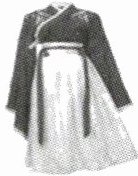
Hanfu first appeared in the Shang Dynasty. It was popular for a long time in Chinese history from the Qin Dynasty to the Ming Dynasty. At the beginning of the Qing Dynasty,however,it lost its popularity. In recent years,with growing calls for reviving(复兴)traditional Chinese culture,many Chinese people have taken an interest in hanfu.
Qipao
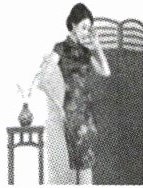
Qipao,also known as the cheongsam,appeared in the 1920s and remained as the "national clothing" until the 1960s. At first,people made it wide and loose,covering most parts of the body. Yet it was not beautiful and people wanted a more beautiful kind of clothing. So in the 1930s,people made the traditional qipao tight to show the beauty of a woman's body. Now,lots of women still like to wear it.
The Chinese tunic suit
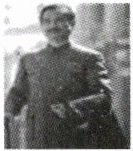
It is also called the "Zhongshan suit",because it was named after Sun Yat-sen,a famous person in Chinese history. It looked simple but good,so it quickly became popular among Chinese men in the mid-20th century. Although other kinds of clothing have replaced it,leaders of China still wear it when going to important events.
(
A. To ask for information.
B. To give an important idea.
C. To lead in the topic of the text.
D. To tell readers how to give examples.
(
A. It started to appear during the Han Dynasty.
B. It has a close relationship with Chinese culture.
C. It disappeared in the Ming Dynasty in Chinese history.
D. Few people have an interest in wearing it nowadays.
(
A. They were both named after famous people.
B. They both appeared in the late 20th century.
C. They were both very tight in the beginning.
D. They were both popular in the 20th century.
(
A. Jenny,who has difficulty in learning Chinese.
B. Lily,who is from the US and is good at making clothes.
C. Xiao Qin,who wants to write about Chinese culture.
D. Lin Tao,who is from China and is interested in modern clothing.
Traditional clothing plays an important role in any country's history and culture. In China,when it comes to traditional clothing,hanfu,qipao and the Chinese tunic suit(中山装)are the most popular. However,most Chinese people are unclear about them. Here is some information about these three kinds of clothing.
Hanfu
Hanfu was created for the Han people in the beginning. It shows the Chinese belief(信念). Its color,its style and even the length all relate to Chinese culture.
Hanfu first appeared in the Shang Dynasty. It was popular for a long time in Chinese history from the Qin Dynasty to the Ming Dynasty. At the beginning of the Qing Dynasty,however,it lost its popularity. In recent years,with growing calls for reviving(复兴)traditional Chinese culture,many Chinese people have taken an interest in hanfu.
Qipao
Qipao,also known as the cheongsam,appeared in the 1920s and remained as the "national clothing" until the 1960s. At first,people made it wide and loose,covering most parts of the body. Yet it was not beautiful and people wanted a more beautiful kind of clothing. So in the 1930s,people made the traditional qipao tight to show the beauty of a woman's body. Now,lots of women still like to wear it.
The Chinese tunic suit
It is also called the "Zhongshan suit",because it was named after Sun Yat-sen,a famous person in Chinese history. It looked simple but good,so it quickly became popular among Chinese men in the mid-20th century. Although other kinds of clothing have replaced it,leaders of China still wear it when going to important events.
(
C
)1. What's the purpose of Paragraph 1?A. To ask for information.
B. To give an important idea.
C. To lead in the topic of the text.
D. To tell readers how to give examples.
(
B
)2. What can we know about hanfu from the text?A. It started to appear during the Han Dynasty.
B. It has a close relationship with Chinese culture.
C. It disappeared in the Ming Dynasty in Chinese history.
D. Few people have an interest in wearing it nowadays.
(
D
)3. What do qipao and the Chinese tunic suit have in common?A. They were both named after famous people.
B. They both appeared in the late 20th century.
C. They were both very tight in the beginning.
D. They were both popular in the 20th century.
(
C
)4. Who would be the target(目标)reader of this text?A. Jenny,who has difficulty in learning Chinese.
B. Lily,who is from the US and is good at making clothes.
C. Xiao Qin,who wants to write about Chinese culture.
D. Lin Tao,who is from China and is interested in modern clothing.
答案:
1—4 CBDC
查看更多完整答案,请扫码查看

