

 搜索
搜索
第30页
- 第1页
- 第2页
- 第3页
- 第4页
- 第5页
- 第6页
- 第7页
- 第8页
- 第9页
- 第10页
- 第11页
- 第12页
- 第13页
- 第14页
- 第15页
- 第16页
- 第17页
- 第18页
- 第19页
- 第20页
- 第21页
- 第22页
- 第23页
- 第24页
- 第25页
- 第26页
- 第27页
- 第28页
- 第29页
- 第30页
- 第31页
- 第32页
- 第33页
- 第34页
- 第35页
- 第36页
- 第37页
- 第38页
- 第39页
- 第40页
- 第41页
- 第42页
- 第43页
- 第44页
- 第45页
- 第46页
- 第47页
- 第48页
- 第49页
- 第50页
- 第51页
- 第52页
- 第53页
- 第54页
- 第55页
- 第56页
- 第57页
- 第58页
- 第59页
- 第60页
- 第61页
- 第62页
- 第63页
- 第64页
- 第65页
- 第66页
- 第67页
- 第68页
- 第69页
- 第70页
- 第71页
- 第72页
- 第73页
- 第74页
- 第75页
- 第76页
- 第77页
- 第78页
- 第79页
- 第80页
- 第81页
- 第82页
- 第83页
- 第84页
- 第85页
- 第86页
- 第87页
- 第88页
- 第89页
- 第90页
- 第91页
- 第92页
- 第93页
- 第94页
- 第95页
- 第96页
- 第97页
- 第98页
- 第99页
- 第100页
- 第101页
- 第102页
- 第103页
- 第104页
- 第105页
- 第106页
- 第107页
- 第108页
- 第109页
- 第110页
- 第111页
Ⅰ.根据句意及汉语提示填写单词。
1. I'll send a ____ (明信片) to my pen pal for Christmas Day.
2. Is there a beautiful lake ____ (在……旁边) your house?
3. If you need to go to the ____ (洗手间), please raise your hand.
4. ____ (原谅) me for taking your books without telling you.
5. This book is popular and it can be found in many ____ (书店).
1. I'll send a ____ (明信片) to my pen pal for Christmas Day.
2. Is there a beautiful lake ____ (在……旁边) your house?
3. If you need to go to the ____ (洗手间), please raise your hand.
4. ____ (原谅) me for taking your books without telling you.
5. This book is popular and it can be found in many ____ (书店).
答案:
1.postcard 2.beside 3.restroom/washroom 4.Pardon 5.bookstores
Ⅱ.用括号内所给单词的适当形式填空。
6. The government has built a lot of public ____ (washroom) in our city.
7. I ____ (normal) go to bed early, but I stayed up last night.
8. How many ____ (stamp) has your friend collected so far?
9. The reading room for children is on the ____ (two) floor.
10. There is a living room, three bedrooms and two ____ (bathroom) in their house.
6. The government has built a lot of public ____ (washroom) in our city.
7. I ____ (normal) go to bed early, but I stayed up last night.
8. How many ____ (stamp) has your friend collected so far?
9. The reading room for children is on the ____ (two) floor.
10. There is a living room, three bedrooms and two ____ (bathroom) in their house.
答案:
6.washrooms 7.normally 8.stamps 9.second 10.bathrooms
Ⅲ.用方框中所给单词的适当形式填空。
big wear close spend get
11. Could you tell me how ____ to the new museum?
12. I'm excited ____ my birthday with all my friends at home this weekend.
13. It is one of the ____ supermarkets in Lanzhou.
14. It's warm today. You don't need ____ such thick clothes.
15. The wind is blowing heavily. Would you mind ____ the window?
big wear close spend get
11. Could you tell me how ____ to the new museum?
12. I'm excited ____ my birthday with all my friends at home this weekend.
13. It is one of the ____ supermarkets in Lanzhou.
14. It's warm today. You don't need ____ such thick clothes.
15. The wind is blowing heavily. Would you mind ____ the window?
答案:
11.to get 12.to spend 13.biggest 14.to wear 15.closing
Ⅳ.完成句子:根据所给汉语意思,用单词或短语完成下列英文句子。
16. 校园寻宝活动开始了,学生们兴奋地想要出发。
The campus treasure hunt begins, and the students ____ start.
17. 活动规则是,每个小组要从图书馆前开始寻宝。
The rule of the activity is that each group has to ____ the area in front of the library.
18. 其中一组学生按照线索提示,在走到路口时右转。
One group of students, following the clues, ____ when they reach the intersection.
19. 正当他们匆忙地寻找下一条线索时,听到了旁边学生的欢呼声。
While they are looking for the next clue in a ____, they hear the cheers of the students nearby.
20. 有位同学在路过体育馆时,偶然发现了藏在角落的宝物。
A student, when ____ the gymnasium, accidentally discovers the treasure hidden in the corner.
16. 校园寻宝活动开始了,学生们兴奋地想要出发。
The campus treasure hunt begins, and the students ____ start.
17. 活动规则是,每个小组要从图书馆前开始寻宝。
The rule of the activity is that each group has to ____ the area in front of the library.
18. 其中一组学生按照线索提示,在走到路口时右转。
One group of students, following the clues, ____ when they reach the intersection.
19. 正当他们匆忙地寻找下一条线索时,听到了旁边学生的欢呼声。
While they are looking for the next clue in a ____, they hear the cheers of the students nearby.
20. 有位同学在路过体育馆时,偶然发现了藏在角落的宝物。
A student, when ____ the gymnasium, accidentally discovers the treasure hidden in the corner.
答案:
16.are excited to 17.start/begin with 18.turn right 19.rush/hurry 20.walking by/passing by/going past
Ⅴ.阅读理解。
阅读下面短文,从所给的四个选项中选出能回答所提问题或完成所给句子的一个最佳答案。
A北外附中标本经典题 My family came to live in Australia from Britain ten years ago. I was only four then, so I do not remember what it was like in Britain. But my mom said that it rained a lot.
First, we lived in Sydney. Our garden was beautiful. There were lots of trees with yellow flowers. I remember the picnics that we had there. My mom made salads with cold beef, and we also ate sweet Australian grapes. The big problem with the picnics was the ants(蚂蚁). As soon as we started to eat, they arrived. We all tried to brush them off, but it was no good. They got everywhere.
Ants were a problem at the next place that we lived in, too. This time it was in central Australia. It was very hot there, and there were a lot of flies. Also, my mom was always worried about the sun and made us stay inside a lot.
We did not stay there very long. I was ten when we moved back to Sydney, and we are still here. I like the place that we live in now. Although I do not like ants, I think they are better than flies!
( )21. When did the writer's family move to Australia?
A. When he was ten.
B. Five years ago.
C. When he was four.
D. Fifteen years ago.
( )22. What did the writer's family have for picnics?
A. Hot dogs and apples.
B. Hamburgers and oranges.
C. Grapes and salads with cold beef.
D. Sandwiches and bananas.
( )23. 新考向 图片示意 What was a problem when the writer's family moved back to Sydney?
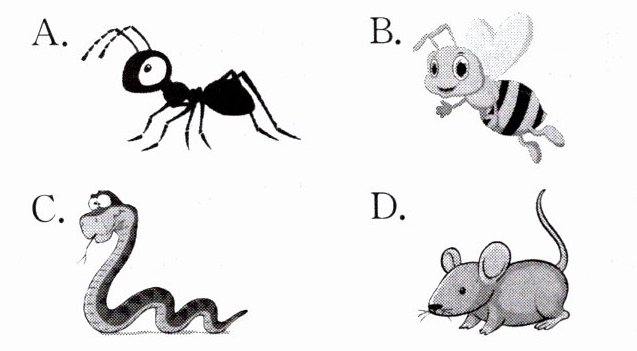
( )24. What can we infer from the text?
A. The writer's family had picnics in the park.
B. The weather was very cool in central Australia.
C. The writer likes flies better than ants.
D. The writer's mother thought too much sun was bad for the children.
( )25. What's the text mainly about?
A. The differences between Sydney and central Australia.
B. The writer's experiences in different places in Australia.
C. The problems the writer's family faced in Australia.
D. The reasons why the writer likes Sydney.
阅读下面短文,从所给的四个选项中选出能回答所提问题或完成所给句子的一个最佳答案。
A北外附中标本经典题 My family came to live in Australia from Britain ten years ago. I was only four then, so I do not remember what it was like in Britain. But my mom said that it rained a lot.
First, we lived in Sydney. Our garden was beautiful. There were lots of trees with yellow flowers. I remember the picnics that we had there. My mom made salads with cold beef, and we also ate sweet Australian grapes. The big problem with the picnics was the ants(蚂蚁). As soon as we started to eat, they arrived. We all tried to brush them off, but it was no good. They got everywhere.
Ants were a problem at the next place that we lived in, too. This time it was in central Australia. It was very hot there, and there were a lot of flies. Also, my mom was always worried about the sun and made us stay inside a lot.
We did not stay there very long. I was ten when we moved back to Sydney, and we are still here. I like the place that we live in now. Although I do not like ants, I think they are better than flies!
( )21. When did the writer's family move to Australia?
A. When he was ten.
B. Five years ago.
C. When he was four.
D. Fifteen years ago.
( )22. What did the writer's family have for picnics?
A. Hot dogs and apples.
B. Hamburgers and oranges.
C. Grapes and salads with cold beef.
D. Sandwiches and bananas.
( )23. 新考向 图片示意 What was a problem when the writer's family moved back to Sydney?
( )24. What can we infer from the text?
A. The writer's family had picnics in the park.
B. The weather was very cool in central Australia.
C. The writer likes flies better than ants.
D. The writer's mother thought too much sun was bad for the children.
( )25. What's the text mainly about?
A. The differences between Sydney and central Australia.
B. The writer's experiences in different places in Australia.
C. The problems the writer's family faced in Australia.
D. The reasons why the writer likes Sydney.
答案:
21-25 CCADB
查看更多完整答案,请扫码查看

