

 搜索
搜索
第1页
- 第1页
- 第2页
- 第3页
- 第4页
- 第5页
- 第6页
- 第7页
- 第8页
- 第9页
- 第10页
- 第11页
- 第12页
- 第13页
- 第14页
- 第15页
- 第16页
- 第17页
- 第18页
- 第19页
- 第20页
- 第21页
- 第22页
- 第23页
- 第24页
- 第25页
- 第26页
- 第27页
- 第28页
- 第29页
- 第30页
- 第31页
- 第32页
- 第33页
- 第34页
- 第35页
- 第36页
- 第37页
- 第38页
- 第39页
- 第40页
- 第41页
- 第42页
- 第43页
- 第44页
- 第45页
- 第46页
- 第47页
- 第48页
- 第49页
- 第50页
- 第51页
- 第52页
- 第53页
- 第54页
- 第55页
- 第56页
- 第57页
- 第58页
- 第59页
- 第60页
- 第61页
- 第62页
- 第63页
- 第64页
- 第65页
- 第66页
- 第67页
- 第68页
- 第69页
- 第70页
- 第71页
- 第72页
- 第73页
- 第74页
- 第75页
- 第76页
- 第77页
- 第78页
- 第79页
- 第80页
- 第81页
- 第82页
- 第83页
- 第84页
- 第85页
- 第86页
- 第87页
- 第88页
- 第89页
- 第90页
- 第91页
- 第92页
- 第93页
- 第94页
- 第95页
- 第96页
- 第97页
- 第98页
- 第99页
- 第100页
- 第101页
- 第102页
- 第103页
- 第104页
- 第105页
- 第106页
- 第107页
- 第108页
- 第109页
- 第110页
- 第111页
Ⅰ. 根据句意及汉语提示填写单词。
1. In the history class, the teacher read the introduction about the Terracotta Army ______ (大声地) so that the students could hear more clearly.
2. The teacher asked the students to write several __________ (句子) to describe their feelings of eating this delicious food.
3. Mom was very __________ (有耐心的). She taught me to make Shaanxi - style oil - splashed noodles and explained each step one by one.
4. During the family gathering, we had a lively ______________ (谈话) about the local customs of Shaanxi.
5. I saw an article about Shaanxi paper - cutting art in the __________ (课本) and was deeply attracted by those beautiful patterns.
1. In the history class, the teacher read the introduction about the Terracotta Army ______ (大声地) so that the students could hear more clearly.
2. The teacher asked the students to write several __________ (句子) to describe their feelings of eating this delicious food.
3. Mom was very __________ (有耐心的). She taught me to make Shaanxi - style oil - splashed noodles and explained each step one by one.
4. During the family gathering, we had a lively ______________ (谈话) about the local customs of Shaanxi.
5. I saw an article about Shaanxi paper - cutting art in the __________ (课本) and was deeply attracted by those beautiful patterns.
答案:
1. aloud 2. sentences 3. patient 4. conversation 5. textbook
Ⅱ. 用括号内所给单词的适当形式填空。
6. The words “right” and “write” have the same ______________ (pronounce).
7. We can save money by __________ (cook) our own meals instead of eating out.
8. The ______________ (careful) you write, the __________ (few) mistakes you'll make.
9. I think it's too hard ______________ (remember) so many words in a short time.
10. —It's hard for me to improve my writing skills.
—What about __________ (keep) a diary in English every day?
6. The words “right” and “write” have the same ______________ (pronounce).
7. We can save money by __________ (cook) our own meals instead of eating out.
8. The ______________ (careful) you write, the __________ (few) mistakes you'll make.
9. I think it's too hard ______________ (remember) so many words in a short time.
10. —It's hard for me to improve my writing skills.
—What about __________ (keep) a diary in English every day?
答案:
6. pronunciation 7. cooking 8. more carefully; fewer 9. to remember 10. keeping
Ⅲ. 用方框中所给单词的适当形式填空。
speak mean wash read patient
11. I'm a slow __________. Please give me more time to enjoy the book.
12. I can hardly be a doctor, because I don't have enough __________ at all.
13. Your __________ English is really good. How do you improve your speaking skills?
14. My father finished __________ the dishes after 7 p. m. yesterday.
15. You can guess the __________ of the word in the context.
speak mean wash read patient
11. I'm a slow __________. Please give me more time to enjoy the book.
12. I can hardly be a doctor, because I don't have enough __________ at all.
13. Your __________ English is really good. How do you improve your speaking skills?
14. My father finished __________ the dishes after 7 p. m. yesterday.
15. You can guess the __________ of the word in the context.
答案:
11. reader 12. patience 13. spoken 14. washing 15. meaning
Ⅳ. 完成句子:根据所给汉语意思,用单词或短语完成下列英文句子。
16. 英语课上,老师要求同学们两人一组进行对话。
In the English class, the teacher asked the students to have ______________ in pairs.
17. 轮到李华时,他需要做一个报告,介绍自己最喜欢的一本书。
When it was Li Hua's turn, he needed to ______________ to introduce his favorite book.
18. 一开始,李华很紧张,说话时结结巴巴。
__________, Li Hua was very nervous and stuttered when speaking.
19. 但他努力让自己冷静下来,逐字清晰地表达自己的想法。
But he tried to calm himself down and expressed his ideas ______________ clearly.
20. 老师和同学们都鼓励他,告诉他要有耐心,慢慢说。
The teacher and classmates all encouraged him and told him to __________ and speak slowly.
16. 英语课上,老师要求同学们两人一组进行对话。
In the English class, the teacher asked the students to have ______________ in pairs.
17. 轮到李华时,他需要做一个报告,介绍自己最喜欢的一本书。
When it was Li Hua's turn, he needed to ______________ to introduce his favorite book.
18. 一开始,李华很紧张,说话时结结巴巴。
__________, Li Hua was very nervous and stuttered when speaking.
19. 但他努力让自己冷静下来,逐字清晰地表达自己的想法。
But he tried to calm himself down and expressed his ideas ______________ clearly.
20. 老师和同学们都鼓励他,告诉他要有耐心,慢慢说。
The teacher and classmates all encouraged him and told him to __________ and speak slowly.
答案:
16. conversations 17. give a report 18. At first 19. word by word 20. be patient
Ⅴ. 阅读理解。
阅读下面短文,从所给的四个选项中选出能回答所提问题或完成所给句子的一个最佳答案。
Learning a second language is hard for many people. It takes time, practice, and can be frustrating (令人沮丧的). Because of this, some people might not want to try learning a third language. However, it might not be as difficult as you think.
In fact, many people speak several languages. They, called polyglots, say that learning a third language can be easier than learning the second one. Why is that?
One reason is that by the time you learn a third language, you already understand how languages work. When we learn our first language as children, we don't think about how it works—we just start using it. But when we learn a second language, we notice things like sentence structures and grammar rules that are different from our first language. For example, some languages have masculine and feminine (阳性和阴性) nouns, while English does not. Learning these things makes it easier for your brain to understand similar rules in other languages.
Also, learning a second language helps you develop useful skills, like remembering new words and grammar rules. These skills can help you when learning a third language, making it easier and faster to learn.
Lastly, you might have felt difficult when learning a second language at first, but now that you've done it, you might feel more confident about learning a third language. You know what to expect and are more prepared for the challenge.
If you want to learn a third language, choosing one that is similar to the languages you already know might make learning easier.
( )21. How many reasons are given to explain why learning a third language can be easier?
A. One.
B. Two.
C. Three.
D. Four.
( )22. The underlined word “polyglots” in the second paragraph probably means ______.
A. people who study languages in a professional way
B. people who can speak many languages
C. people who are good at grammar
D. people who like to communicate with foreigners
( )23. According to the text, what makes learning a third language easier compared to learning the second language?
A. Knowing more about different cultures.
B. Having more time and an easier language.
C. Being more interested in languages after learning the second one.
D. Understanding language structures and developing skills from learning the second language.
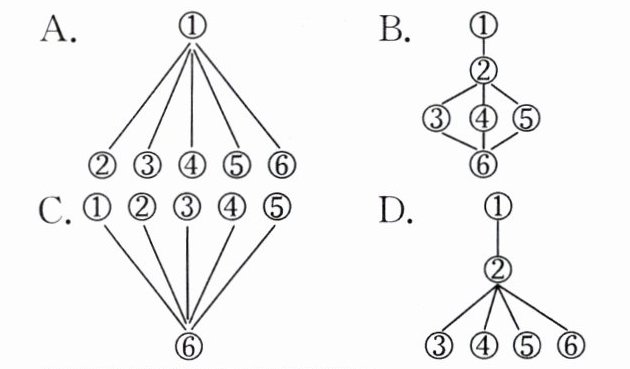
( )24. 新考向 篇章结构 What's the structure of the text? (① = Paragraph 1...)
( )25. 新考向 写作意图 What is the purpose of the text?
A. To encourage people to learn a third language.
B. To show the difficulties of learning a second language.
C. To compare the differences between the first and second languages.
D. To explain the importance of learning multiple (多个的) languages.
阅读下面短文,从所给的四个选项中选出能回答所提问题或完成所给句子的一个最佳答案。
Learning a second language is hard for many people. It takes time, practice, and can be frustrating (令人沮丧的). Because of this, some people might not want to try learning a third language. However, it might not be as difficult as you think.
In fact, many people speak several languages. They, called polyglots, say that learning a third language can be easier than learning the second one. Why is that?
One reason is that by the time you learn a third language, you already understand how languages work. When we learn our first language as children, we don't think about how it works—we just start using it. But when we learn a second language, we notice things like sentence structures and grammar rules that are different from our first language. For example, some languages have masculine and feminine (阳性和阴性) nouns, while English does not. Learning these things makes it easier for your brain to understand similar rules in other languages.
Also, learning a second language helps you develop useful skills, like remembering new words and grammar rules. These skills can help you when learning a third language, making it easier and faster to learn.
Lastly, you might have felt difficult when learning a second language at first, but now that you've done it, you might feel more confident about learning a third language. You know what to expect and are more prepared for the challenge.
If you want to learn a third language, choosing one that is similar to the languages you already know might make learning easier.
( )21. How many reasons are given to explain why learning a third language can be easier?
A. One.
B. Two.
C. Three.
D. Four.
( )22. The underlined word “polyglots” in the second paragraph probably means ______.
A. people who study languages in a professional way
B. people who can speak many languages
C. people who are good at grammar
D. people who like to communicate with foreigners
( )23. According to the text, what makes learning a third language easier compared to learning the second language?
A. Knowing more about different cultures.
B. Having more time and an easier language.
C. Being more interested in languages after learning the second one.
D. Understanding language structures and developing skills from learning the second language.
( )24. 新考向 篇章结构 What's the structure of the text? (① = Paragraph 1...)
( )25. 新考向 写作意图 What is the purpose of the text?
A. To encourage people to learn a third language.
B. To show the difficulties of learning a second language.
C. To compare the differences between the first and second languages.
D. To explain the importance of learning multiple (多个的) languages.
答案:
21-25 CBDBA
查看更多完整答案,请扫码查看

