

 搜索
搜索
第39页
- 第1页
- 第2页
- 第3页
- 第4页
- 第5页
- 第6页
- 第7页
- 第8页
- 第9页
- 第10页
- 第11页
- 第12页
- 第13页
- 第14页
- 第15页
- 第16页
- 第17页
- 第18页
- 第19页
- 第20页
- 第21页
- 第22页
- 第23页
- 第24页
- 第25页
- 第26页
- 第27页
- 第28页
- 第29页
- 第30页
- 第31页
- 第32页
- 第33页
- 第34页
- 第35页
- 第36页
- 第37页
- 第38页
- 第39页
- 第40页
- 第41页
- 第42页
- 第43页
- 第44页
- 第45页
- 第46页
- 第47页
- 第48页
- 第49页
- 第50页
- 第51页
- 第52页
- 第53页
- 第54页
- 第55页
- 第56页
- 第57页
- 第58页
- 第59页
- 第60页
- 第61页
- 第62页
- 第63页
- 第64页
- 第65页
- 第66页
- 第67页
- 第68页
- 第69页
- 第70页
- 第71页
- 第72页
- 第73页
- 第74页
- 第75页
- 第76页
- 第77页
- 第78页
- 第79页
- 第80页
- 第81页
- 第82页
- 第83页
- 第84页
- 第85页
- 第86页
- 第87页
- 第88页
- 第89页
- 第90页
- 第91页
- 第92页
- 第93页
- 第94页
- 第95页
Ⅰ 词语运用
(2024山西中考,59—63,★☆☆)
请阅读下面语篇,根据其内容,在空白处填入适当的单词,使其通顺、连贯。每空一词。
As the saying goes, “Life is like a box of chocolates, you never know what you will get.”
During our preparation for zhongkao, we might get the bitter (苦的) chocolate. The bitterness comes from many things, 1 getting up early, doing all kinds of exercises and so on.
But when we taste the bitterness carefully, we will be surprised to discover some sweetness in it. The sweetness comes from the 2 who love us. The first must be our parents. They helped us to tidy up our rooms and prepare delicious meals. Besides, we want to express thanks to our teachers. They 3 us to bring out the best in ourselves. Also, we shouldn’t forget our classmates. They helped us to keep moving when we wanted to give 4 . With the help of all of them, we could achieve so much in our life.
And life is the same. Bitterness is just the outside, 5 the sweetness is the inside. When we think life is not what we expect, we can look on the bright side and will find something nice.
(E9211003)
1. ________ 2. ________ 3. ________ 4. ________ 5. ________
(2024山西中考,59—63,★☆☆)
请阅读下面语篇,根据其内容,在空白处填入适当的单词,使其通顺、连贯。每空一词。
As the saying goes, “Life is like a box of chocolates, you never know what you will get.”
During our preparation for zhongkao, we might get the bitter (苦的) chocolate. The bitterness comes from many things, 1 getting up early, doing all kinds of exercises and so on.
But when we taste the bitterness carefully, we will be surprised to discover some sweetness in it. The sweetness comes from the 2 who love us. The first must be our parents. They helped us to tidy up our rooms and prepare delicious meals. Besides, we want to express thanks to our teachers. They 3 us to bring out the best in ourselves. Also, we shouldn’t forget our classmates. They helped us to keep moving when we wanted to give 4 . With the help of all of them, we could achieve so much in our life.
And life is the same. Bitterness is just the outside, 5 the sweetness is the inside. When we think life is not what we expect, we can look on the bright side and will find something nice.
(E9211003)
1. ________ 2. ________ 3. ________ 4. ________ 5. ________
答案:
1. like/including 根据“many things”和“getting up early, doing all kinds of exercises and so on”可知,getting up early, doing all kinds of exercises and so on是对many things的列举,故可填like;也可以理解为many things包括getting up early, doing all kinds of exercises and so on,所以也可以填including。
2. people/persons 根据“who love us”可知,此处是定语从句;关系词是who,故先行词是人;再根据动词love可知先行词是复数形式,故填people/persons。
3. helped 根据前文中“They helped us to tidy up our rooms and prepare delicious meals.”和后文中“They helped us to keep moving when we wanted to give 4 .”以及语境可知,此处填helped。
4. up 句意:当我们想要放弃时,他们帮助我们继续前进。give up意为“放弃”,符合句意,故填up。
5. but 句意:苦涩只是外在的,但是甜蜜是内在的。前后分句是转折关系,故填but。
Ⅱ 阅读理解
跨生物·猫咪的表情 (2024四川成都中考,71—75,★☆☆)
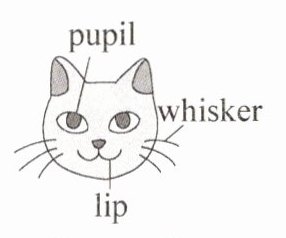
Have you ever looked at a cat’s face and wondered what it is thinking? Well, according to a new study, cats have many different facial expressions, which show how they are feeling.
The research was carried out by the scientists at the University of California, in the US. They visited a local cat café over several months to record videos of 53 cats, collecting 194 minutes of videos. They found that the cats have 276 different expressions. “Each expression was a mixture of different facial movements, which included licking (舔) their nose, opening their mouth, or widening the pupils of their eyes,” said the scientists. They also found cats use 26 of these facial movements in total, which can be mixed to express how they are feeling. Dogs use 27 facial movements and humans use a total of 44.
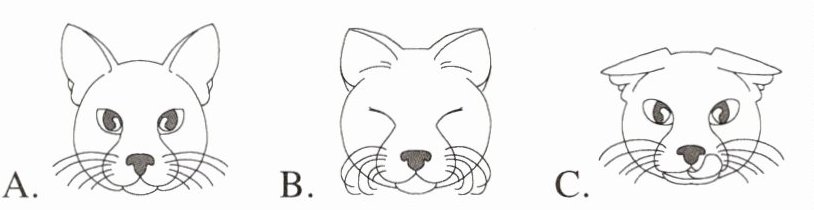
Out of the expressions they recorded, 45% were friendly and 37% were angry. “A friendly cat moves its ears and whiskers forward and closes its eyes. However, an angry cat often flattens its ears to its head, makes its pupils smaller and licks its lips,” said the team.
Although the researchers aren’t sure what the cats were trying to communicate with each other using their faces, they plan to study cats in other places to improve their understanding. They also hope that the research could help animal shelters (收容所) improve the way they look after the cats. Some pet owners even suggest the researchers develop an app for them to find out what their cats’ facial expressions really mean.
6. Which of the following uses the most facial movements?
A.Humans. B.Dogs. C.Cats.
7.新考法·图片理解题 Which picture shows a cat’s angry expression?
8. What might the scientists do next?
A.Use an app to study cats’ expressions.
B.Build an animal shelter to look after cats.
C.Keep on studying to know more about cats.
9.新考法·文本发展题 How does the writer develop the text?
A.By giving numbers and choices.
B.By showing examples and results.
C.By presenting opinions and facts.
10.新考法·写作意图题 What’s the writing purpose of the text?
A.To call on people to love cats more.
B.To introduce a new study about cats.
C.To tell readers why the team did the research.
跨生物·猫咪的表情 (2024四川成都中考,71—75,★☆☆)
Have you ever looked at a cat’s face and wondered what it is thinking? Well, according to a new study, cats have many different facial expressions, which show how they are feeling.
The research was carried out by the scientists at the University of California, in the US. They visited a local cat café over several months to record videos of 53 cats, collecting 194 minutes of videos. They found that the cats have 276 different expressions. “Each expression was a mixture of different facial movements, which included licking (舔) their nose, opening their mouth, or widening the pupils of their eyes,” said the scientists. They also found cats use 26 of these facial movements in total, which can be mixed to express how they are feeling. Dogs use 27 facial movements and humans use a total of 44.
Out of the expressions they recorded, 45% were friendly and 37% were angry. “A friendly cat moves its ears and whiskers forward and closes its eyes. However, an angry cat often flattens its ears to its head, makes its pupils smaller and licks its lips,” said the team.
Although the researchers aren’t sure what the cats were trying to communicate with each other using their faces, they plan to study cats in other places to improve their understanding. They also hope that the research could help animal shelters (收容所) improve the way they look after the cats. Some pet owners even suggest the researchers develop an app for them to find out what their cats’ facial expressions really mean.
6. Which of the following uses the most facial movements?
A.Humans. B.Dogs. C.Cats.
7.新考法·图片理解题 Which picture shows a cat’s angry expression?
8. What might the scientists do next?
A.Use an app to study cats’ expressions.
B.Build an animal shelter to look after cats.
C.Keep on studying to know more about cats.
9.新考法·文本发展题 How does the writer develop the text?
A.By giving numbers and choices.
B.By showing examples and results.
C.By presenting opinions and facts.
10.新考法·写作意图题 What’s the writing purpose of the text?
A.To call on people to love cats more.
B.To introduce a new study about cats.
C.To tell readers why the team did the research.
答案:
6. A 细节理解题。根据第二段中的“They also found cats use 26 of these facial movements in total, which can be mixed to express how they are feeling. Dogs use 27 facial movements and humans use a total of 44.”可知,猫使用26种面部动作,狗使用27种,人类共使用44种,人类使用的面部动作最多。故选A。
7. C 细节理解题。根据第三段中的“However, an angry cat often flattens its ears to its head, makes its pupils smaller and licks its lips”可知,一只生气的猫通常会把耳朵贴在头上,瞳孔变小,舔嘴唇,故选项C中的猫做出了生气的表情。
8. C 推理判断题。根据第四段中的“Although the researchers aren’t sure what the cats were trying to communicate with each other using their faces, they plan to study cats in other places to improve their understanding.”可知,研究人员不确定猫使用面部表情进行交流传递的信息,他们计划在其他地方研究猫,以提高他们对猫的了解。故推断科学家们接下来会继续研究以了解更多关于猫的信息。故选C。
9. B 推理判断题。通读全文可知,文章介绍了一项关于猫的面部表情的研究,研究中记录了多只猫的多种面部表情,研究人员对此作出了解释。故作者是通过阐述实例以及结果的方式发展本文的。故选B。
10. B 写作意图题。通读全文可知,本文介绍了一项关于猫面部表情的研究,文章的写作目的是介绍这项新研究。故选B。
查看更多完整答案,请扫码查看

