

 搜索
搜索
第78页
- 第1页
- 第2页
- 第3页
- 第4页
- 第5页
- 第6页
- 第7页
- 第8页
- 第9页
- 第10页
- 第11页
- 第12页
- 第13页
- 第14页
- 第15页
- 第16页
- 第17页
- 第18页
- 第19页
- 第20页
- 第21页
- 第22页
- 第23页
- 第24页
- 第25页
- 第26页
- 第27页
- 第28页
- 第29页
- 第30页
- 第31页
- 第32页
- 第33页
- 第34页
- 第35页
- 第36页
- 第37页
- 第38页
- 第39页
- 第40页
- 第41页
- 第42页
- 第43页
- 第44页
- 第45页
- 第46页
- 第47页
- 第48页
- 第49页
- 第50页
- 第51页
- 第52页
- 第53页
- 第54页
- 第55页
- 第56页
- 第57页
- 第58页
- 第59页
- 第60页
- 第61页
- 第62页
- 第63页
- 第64页
- 第65页
- 第66页
- 第67页
- 第68页
- 第69页
- 第70页
- 第71页
- 第72页
- 第73页
- 第74页
- 第75页
- 第76页
- 第77页
- 第78页
- 第79页
- 第80页
- 第81页
- 第82页
- 第83页
- 第84页
- 第85页
- 第86页
- 第87页
- 第88页
- 第89页
- 第90页
- 第91页
- 第92页
- 第93页
- 第94页
- 第95页
- 第96页
- 第97页
- 第98页
- 第99页
- 第100页
- 第101页
- 第102页
- 第103页
- 第104页
- 第105页
- 第106页
- 第107页
- 第108页
- 第109页
- 第110页
- 第111页
- 第112页
- 第113页
- 第114页
- 第115页
- 第116页
- 第117页
- 第118页
- 第119页
- 第120页
- 第121页
- 第122页
- 第123页
- 第124页
- 第125页
- 第126页
- 第127页
- 第128页
- 第129页
- 第130页
- 第131页
- 第132页
- 第133页
- 第134页
- 第135页
- 第136页
- 第137页
- 第138页
- 第139页
- 第140页
- 第141页
- 第142页
- 第143页
- 第144页
- 第145页
- 第146页
- 第147页
- 第148页
- 第149页
- 第150页
- 第151页
- 第152页
- 第153页
- 第154页
- 第155页
- 第156页
- 第157页
- 第158页
- 第159页
- 第160页
- 第161页
- 第162页
- 第163页
- 第164页
- 第165页
- 第166页
- 第167页
- 第168页
- 第169页
- 第170页
- 第171页
- 第172页
- 第173页
- 第174页
- 第175页
- 第176页
- 第177页
- 第178页
- 第179页
- 第180页
- 第181页
- 第182页
- 第183页
- 第184页
- 第185页
- 第186页
- 第187页
- 第188页
- 第189页
- 第190页
- 第191页
- 第192页
- 第193页
- 第194页
- 第195页
- 第196页
- 第197页
- 第198页
- 第199页
- 第200页
- 第201页
- 第202页
- 第203页
- 第204页
- 第205页
- 第206页
- 第207页
- 第208页
- 第209页
- 第210页
- 第211页
- 第212页
- 第213页
- 第214页
- 第215页
- 第216页
- 第217页
- 第218页
- 第219页
- 第220页
- 第221页
- 第222页
- 第223页
- 第224页
- 第225页
- 第226页
D
“I can’t believe you put that photo of me on WeChat!” Does this sound familiar? Do your parents post photos of you online? Are there photos out there that you really don’t want the world to see? Posting photos of your children online which is also called sharenting is becoming more and more popular around the world.
But French police have warned that parents could face future lawsuits (起诉) from their children. Under French law, you are not allowed to publish a photo of someone without their consent.
Some children have asked their parents not to share photos online. Children grow up fast and parents must respect that.
“Mom, we’ve discussed this. You may not post anything without my consent,” Apple Martin wrote the above comment under a photo taken by her famous mother, Gwyneth Paltrow, of the two of them skiing, and a media storm followed.
Ray Fitzgerald, a parenting coach, advises his followers to stick to the “three P rules of posting”.
• Privacy—Make sure private images stay private and check that your privacy settings are as tight as possible.
• Perception—If you were a teenager, would you like your parents to share that picture of you online? If the answer is no, then don’t post it.
• Permission—Always ask a teenager’s permission before posting an image.
I asked some teenagers and here are some of their comments.
After much discussion, most people seem to agree that it’s time to stop sharenting when your children are about 12 or 13 years old. The pictures can be so embarrassing and they’re out there forever. Which side are you on?
27. Which of the following might be sharenting?
A. Dale, a teenage boy, likes taking photos of his parents and posting them online.
B. Grace, a teacher, likes taking photos of her own daily life and posting them online.
C. Anna, a mother, likes taking photos of her 6-year-old son and posting them online.
D. Kevin, a father, likes taking photos of the beautiful nature and posting them online.
28. What does the underlined word “consent” in Paragraph 2 probably mean?
A. Agreement.
B. Advice.
C. Action.
D. Ability.
29. What can be known from the passage?
A. It’s all right for parents to post their children’s photos online.
B. It’s necessary for parents to stick to the “three P rules of posting”.
C. Both Sam and Jack think it’s a good idea to post children’s photos online.
D. All parents should stop posting pictures of children older than 12 years old.
30. Which is the best title for the text?
A. Sharenting to Show Love!
B. Sharent Online!
C. Three P Rules of Sharenting!
D. To Sharent or Not?
“I can’t believe you put that photo of me on WeChat!” Does this sound familiar? Do your parents post photos of you online? Are there photos out there that you really don’t want the world to see? Posting photos of your children online which is also called sharenting is becoming more and more popular around the world.
But French police have warned that parents could face future lawsuits (起诉) from their children. Under French law, you are not allowed to publish a photo of someone without their consent.
Some children have asked their parents not to share photos online. Children grow up fast and parents must respect that.
“Mom, we’ve discussed this. You may not post anything without my consent,” Apple Martin wrote the above comment under a photo taken by her famous mother, Gwyneth Paltrow, of the two of them skiing, and a media storm followed.
Ray Fitzgerald, a parenting coach, advises his followers to stick to the “three P rules of posting”.
• Privacy—Make sure private images stay private and check that your privacy settings are as tight as possible.
• Perception—If you were a teenager, would you like your parents to share that picture of you online? If the answer is no, then don’t post it.
• Permission—Always ask a teenager’s permission before posting an image.
I asked some teenagers and here are some of their comments.
After much discussion, most people seem to agree that it’s time to stop sharenting when your children are about 12 or 13 years old. The pictures can be so embarrassing and they’re out there forever. Which side are you on?
27. Which of the following might be sharenting?
A. Dale, a teenage boy, likes taking photos of his parents and posting them online.
B. Grace, a teacher, likes taking photos of her own daily life and posting them online.
C. Anna, a mother, likes taking photos of her 6-year-old son and posting them online.
D. Kevin, a father, likes taking photos of the beautiful nature and posting them online.
28. What does the underlined word “consent” in Paragraph 2 probably mean?
A. Agreement.
B. Advice.
C. Action.
D. Ability.
29. What can be known from the passage?
A. It’s all right for parents to post their children’s photos online.
B. It’s necessary for parents to stick to the “three P rules of posting”.
C. Both Sam and Jack think it’s a good idea to post children’s photos online.
D. All parents should stop posting pictures of children older than 12 years old.
30. Which is the best title for the text?
A. Sharenting to Show Love!
B. Sharent Online!
C. Three P Rules of Sharenting!
D. To Sharent or Not?
答案:
27.C 28.A 29.B 30.D
第二节 任务型阅读(共5小题;每小题2分,满分10分)
阅读下面材料,从方框中所给的A—E五个选项中选出正确选项(

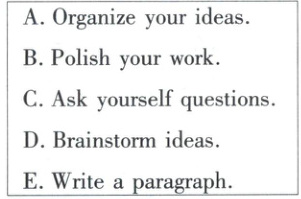
阅读下面材料,从方框中所给的A—E五个选项中选出正确选项(
其
中
一
项
是
多
余
选
项
),将其序号填入31—34小题,并回答第35小题。
答案:
31.D 32.A 33.E 34.B 35.I usually use brainstorming. It helps me come up with creative ideas quickly.
查看更多完整答案,请扫码查看

