

 搜索
搜索
第42页
- 第1页
- 第2页
- 第3页
- 第4页
- 第5页
- 第6页
- 第7页
- 第8页
- 第9页
- 第10页
- 第11页
- 第12页
- 第13页
- 第14页
- 第15页
- 第16页
- 第17页
- 第18页
- 第19页
- 第20页
- 第21页
- 第22页
- 第23页
- 第24页
- 第25页
- 第26页
- 第27页
- 第28页
- 第29页
- 第30页
- 第31页
- 第32页
- 第33页
- 第34页
- 第35页
- 第36页
- 第37页
- 第38页
- 第39页
- 第40页
- 第41页
- 第42页
- 第43页
- 第44页
- 第45页
- 第46页
- 第47页
- 第48页
- 第49页
- 第50页
- 第51页
- 第52页
- 第53页
- 第54页
- 第55页
- 第56页
- 第57页
- 第58页
- 第59页
- 第60页
- 第61页
- 第62页
- 第63页
- 第64页
- 第65页
- 第66页
- 第67页
- 第68页
- 第69页
- 第70页
- 第71页
- 第72页
- 第73页
- 第74页
- 第75页
- 第76页
- 第77页
- 第78页
- 第79页
- 第80页
- 第81页
- 第82页
- 第83页
- 第84页
- 第85页
- 第86页
- 第87页
- 第88页
- 第89页
- 第90页
- 第91页
- 第92页
- 第93页
- 第94页
- 第95页
- 第96页
- 第97页
- 第98页
- 第99页
- 第100页
- 第101页
- 第102页
- 第103页
- 第104页
- 第105页
- 第106页
- 第107页
- 第108页
- 第109页
- 第110页
- 第111页
- 第112页
- 第113页
- 第114页
- 第115页
- 第116页
- 第117页
- 第118页
- 第119页
- 第120页
- 第121页
- 第122页
- 第123页
- 第124页
- 第125页
- 第126页
- 第127页
- 第128页
- 第129页
- 第130页
- 第131页
- 第132页
- 第133页
- 第134页
- 第135页
- 第136页
- 第137页
- 第138页
- 第139页
- 第140页
- 第141页
- 第142页
- 第143页
- 第144页
- 第145页
- 第146页
- 第147页
- 第148页
- 第149页
- 第150页
- 第151页
- 第152页
- 第153页
- 第154页
- 第155页
- 第156页
- 第157页
- 第158页
- 第159页
- 第160页
- 第161页
- 第162页
- 第163页
- 第164页
- 第165页
- 第166页
- 第167页
- 第168页
- 第169页
- 第170页
- 第171页
- 第172页
- 第173页
- 第174页
- 第175页
- 第176页
- 第177页
- 第178页
- 第179页
- 第180页
- 第181页
- 第182页
- 第183页
- 第184页
- 第185页
- 第186页
- 第187页
- 第188页
- 第189页
- 第190页
- 第191页
- 第192页
- 第193页
- 第194页
- 第195页
- 第196页
- 第197页
- 第198页
- 第199页
- 第200页
- 第201页
- 第202页
- 第203页
- 第204页
- 第205页
- 第206页
- 第207页
- 第208页
- 第209页
- 第210页
- 第211页
- 第212页
- 第213页
- 第214页
- 第215页
- 第216页
- 第217页
- 第218页
- 第219页
- 第220页
- 第221页
- 第222页
- 第223页
- 第224页
- 第225页
- 第226页
D
The National Health Service (NHS) in the UK is doing something really cool. They are testing tiny cameras that patients can actually swallow (吞) to get checked for cancer (癌症). Cancer is a terrible disease. The earlier cancer is found, the easier it is to treat. So, the NHS invites people who might be at risk of certain cancers to have a check once or twice a year. Usually, people need to go to the hospital for the checks.
These special cameras are called PillCams. Why? Because they are put in a small capsule (胶囊) that's easy to swallow, just like taking a kind of medicine. The capsule also has a tiny light. As it travels through the body, it takes pictures of the patient's bowel (肠). The pictures are sent to a small device (装置) in a bag that the patient wears. After the camera finishes its job, the patient returns the bag to the hospital. Then, doctors can look at the photos carefully to see if there are any problems. The whole process takes 5 to 8 hours, and during this time, the patient can still go about their normal day, doing things like going to work or doing simple housework.
This amazing technology has already been tried in Scotland. Now, it's being tested on 11 000 patients all over the UK, including England, Wales and Northern Ireland. Sir Simon Stevens, who is in charge of the NHS in England, said, “What seemed like something from a science fiction movie is now becoming real. These small cameras take two pictures every second as they move through your body, looking for signs of cancer and other health problems.” It's so exciting to think about how this new technology can help more people stay healthy!
27. What cool thing is the National Health Service doing?
A. They are searching a new kind of medicine.
B. They are describing the risk of many diseases.
C. They are testing special cameras to check cancer.
D. They are asking people to buy some special cameras.
28. How do PillCams send pictures to the doctors according to the text?
A. Patients themselves take the capsule back to the hospital.
B. Patients return the special bag with pictures to the hospital.
C. Doctors come to the patient's home to get the pictures.
D. The pictures are sent directly to the hospital's computer.
29. In which part of the UK has the PillCam technology been tested first?
A. In England.
B. In Wales.
C. In Scotland.
D. In Northern Ireland.
30. What can we learn from the text?
A. The PillCam technology can help more people keep healthy.
B. The PillCam technology is from a science fiction movie.
C. The PillCam technology can control all kinds of diseases.
D. The PillCam technology can make the cameras work fast.
第二节 任务型阅读(共 5 小题;每小题 2 分,满分 10 分)
阅读下面材料,从方框中所给出的 A—E 五个选项中选出正确选项(其中一
Reading opens doors to new worlds, develops your imagination, and even helps you do better in school. But getting started can be a little bit difficult. Here are some easy, enjoyable ways to make reading a natural part of your daily life.
▲31
Start by searching different topics like space, nature or science to see what interests you most. Visit your school or local library and try different books until you find something you enjoy. The right book will make you want to keep reading.
▲Small steps are okay.
You don't need to finish a whole book in one sitting. Start with just 10-15 minutes a day—maybe during breakfast, before bed, or on the bus. You don't have to read for hours. 32
▲Read with a friend.
Join or start a book club with classmates or friends. 33 After reading, share your favorite parts or discuss what surprised you. Friends can also suggest some other great books to you. It makes reading more fun and social.
▲Make it a habit.
34 Record your progress in a notebook or an app. As reading becomes part of your life, you'll notice the more you read, the easier it gets and the more you'll enjoy it.
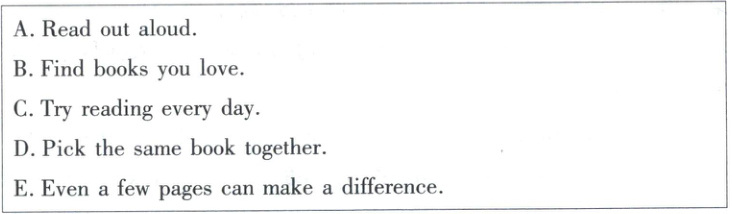
35. Which do you think is the most useful way to get reading started? Why? (不超过 20 词)
________
The National Health Service (NHS) in the UK is doing something really cool. They are testing tiny cameras that patients can actually swallow (吞) to get checked for cancer (癌症). Cancer is a terrible disease. The earlier cancer is found, the easier it is to treat. So, the NHS invites people who might be at risk of certain cancers to have a check once or twice a year. Usually, people need to go to the hospital for the checks.
These special cameras are called PillCams. Why? Because they are put in a small capsule (胶囊) that's easy to swallow, just like taking a kind of medicine. The capsule also has a tiny light. As it travels through the body, it takes pictures of the patient's bowel (肠). The pictures are sent to a small device (装置) in a bag that the patient wears. After the camera finishes its job, the patient returns the bag to the hospital. Then, doctors can look at the photos carefully to see if there are any problems. The whole process takes 5 to 8 hours, and during this time, the patient can still go about their normal day, doing things like going to work or doing simple housework.
This amazing technology has already been tried in Scotland. Now, it's being tested on 11 000 patients all over the UK, including England, Wales and Northern Ireland. Sir Simon Stevens, who is in charge of the NHS in England, said, “What seemed like something from a science fiction movie is now becoming real. These small cameras take two pictures every second as they move through your body, looking for signs of cancer and other health problems.” It's so exciting to think about how this new technology can help more people stay healthy!
27. What cool thing is the National Health Service doing?
A. They are searching a new kind of medicine.
B. They are describing the risk of many diseases.
C. They are testing special cameras to check cancer.
D. They are asking people to buy some special cameras.
28. How do PillCams send pictures to the doctors according to the text?
A. Patients themselves take the capsule back to the hospital.
B. Patients return the special bag with pictures to the hospital.
C. Doctors come to the patient's home to get the pictures.
D. The pictures are sent directly to the hospital's computer.
29. In which part of the UK has the PillCam technology been tested first?
A. In England.
B. In Wales.
C. In Scotland.
D. In Northern Ireland.
30. What can we learn from the text?
A. The PillCam technology can help more people keep healthy.
B. The PillCam technology is from a science fiction movie.
C. The PillCam technology can control all kinds of diseases.
D. The PillCam technology can make the cameras work fast.
第二节 任务型阅读(共 5 小题;每小题 2 分,满分 10 分)
阅读下面材料,从方框中所给出的 A—E 五个选项中选出正确选项(其中一
项
是
多
余
选
项
),将其序号填入第 31—34 小题,并回答第 35 小题。Reading opens doors to new worlds, develops your imagination, and even helps you do better in school. But getting started can be a little bit difficult. Here are some easy, enjoyable ways to make reading a natural part of your daily life.
▲31
Start by searching different topics like space, nature or science to see what interests you most. Visit your school or local library and try different books until you find something you enjoy. The right book will make you want to keep reading.
▲Small steps are okay.
You don't need to finish a whole book in one sitting. Start with just 10-15 minutes a day—maybe during breakfast, before bed, or on the bus. You don't have to read for hours. 32
▲Read with a friend.
Join or start a book club with classmates or friends. 33 After reading, share your favorite parts or discuss what surprised you. Friends can also suggest some other great books to you. It makes reading more fun and social.
▲Make it a habit.
34 Record your progress in a notebook or an app. As reading becomes part of your life, you'll notice the more you read, the easier it gets and the more you'll enjoy it.
35. Which do you think is the most useful way to get reading started? Why? (不超过 20 词)
________
答案:
27.C 28.B 29.C 30.A 31.B 32.E 33.D 34.C 35.
(1)Reading with a friend is the most helpful way to start, because friends can share the fun of reading.
(2)Forming the habit of reading is the most useful way to start, because habits make reading part of daily life.
(3)Trying reading every day is the most helpful way to start, because it builds a steady reading routine.
(4)Finding books you love is the most helpful way to start, because interest makes reading both fun and sustainable. (答案不唯一,合理即可)
(1)Reading with a friend is the most helpful way to start, because friends can share the fun of reading.
(2)Forming the habit of reading is the most useful way to start, because habits make reading part of daily life.
(3)Trying reading every day is the most helpful way to start, because it builds a steady reading routine.
(4)Finding books you love is the most helpful way to start, because interest makes reading both fun and sustainable. (答案不唯一,合理即可)
查看更多完整答案,请扫码查看

