

 搜索
搜索
第100页
- 第1页
- 第2页
- 第3页
- 第4页
- 第5页
- 第6页
- 第7页
- 第8页
- 第9页
- 第10页
- 第11页
- 第12页
- 第13页
- 第14页
- 第15页
- 第16页
- 第17页
- 第18页
- 第19页
- 第20页
- 第21页
- 第22页
- 第23页
- 第24页
- 第25页
- 第26页
- 第27页
- 第28页
- 第29页
- 第30页
- 第31页
- 第32页
- 第33页
- 第34页
- 第35页
- 第36页
- 第37页
- 第38页
- 第39页
- 第40页
- 第41页
- 第42页
- 第43页
- 第44页
- 第45页
- 第46页
- 第47页
- 第48页
- 第49页
- 第50页
- 第51页
- 第52页
- 第53页
- 第54页
- 第55页
- 第56页
- 第57页
- 第58页
- 第59页
- 第60页
- 第61页
- 第62页
- 第63页
- 第64页
- 第65页
- 第66页
- 第67页
- 第68页
- 第69页
- 第70页
- 第71页
- 第72页
- 第73页
- 第74页
- 第75页
- 第76页
- 第77页
- 第78页
- 第79页
- 第80页
- 第81页
- 第82页
- 第83页
- 第84页
- 第85页
- 第86页
- 第87页
- 第88页
- 第89页
- 第90页
- 第91页
- 第92页
- 第93页
- 第94页
- 第95页
- 第96页
- 第97页
- 第98页
- 第99页
- 第100页
- 第101页
- 第102页
- 第103页
- 第104页
- 第105页
- 第106页
- 第107页
- 第108页
- 第109页
- 第110页
- 第111页
- 第112页
- 第113页
- 第114页
- 第115页
- 第116页
- 第117页
- 第118页
- 第119页
A(2024·泰州市靖江期末)
Many children act(表演) in TV shows. They work a few hours a day, so they can't go to a usual school. How do they learn?
Many TV shows are made in Hollywood. There, about forty teachers give lessons to child actors(演员). They teach at the students' workplaces. The teachers' jobs are very important. They need to make sure the children do not work more hours than they are allowed(准许) to. The children study different subjects, but the teachers also make sure that the children have enough rest and playtime.
Child actors have to have classes about twenty hours a week. According to California's laws(法律), they must have classes from September to the middle of June next year. If they do not get good marks(成绩) in school, they must stop working in TV shows.
TV children are usually good students, and most of their teachers like this special job. They have their classes in many interesting places. Sometimes, the classroom is a river boat. Sometimes, it is the inside of a spaceship. Often the children do well in both study and work.
( )1. Where do child actors have lessons?
A. At their homes.
B. In a special school.
C. In their TV shows.
D. At their workplaces.
( )2. What should child actors do with the help of their teachers?
A. Work for long hours.
B. Learn different subjects.
C. Have lessons the whole year.
D. Use all their free time to study.
( )3. 新考法 学科融合 How long must child actors have lessons each month?
A. About 20 hours.
B. About 40 hours.
C. About 80 hours.
D. About 100 hours.
( )4. What does the underlined word "they" in the third paragraph refer to(指代)?
A. Child actors.
B. The teachers.
C. California's laws.
D. TV shows.
( )5. Which of the following is TRUE according to the passage?
A. Most teachers of child actors don't like their jobs.
B. TV children have lessons in many different places.
C. Every child can become a child actor with the help of teachers.
D. TV children don't need to get good marks when they are working.
Many children act(表演) in TV shows. They work a few hours a day, so they can't go to a usual school. How do they learn?
Many TV shows are made in Hollywood. There, about forty teachers give lessons to child actors(演员). They teach at the students' workplaces. The teachers' jobs are very important. They need to make sure the children do not work more hours than they are allowed(准许) to. The children study different subjects, but the teachers also make sure that the children have enough rest and playtime.
Child actors have to have classes about twenty hours a week. According to California's laws(法律), they must have classes from September to the middle of June next year. If they do not get good marks(成绩) in school, they must stop working in TV shows.
TV children are usually good students, and most of their teachers like this special job. They have their classes in many interesting places. Sometimes, the classroom is a river boat. Sometimes, it is the inside of a spaceship. Often the children do well in both study and work.
( )1. Where do child actors have lessons?
A. At their homes.
B. In a special school.
C. In their TV shows.
D. At their workplaces.
( )2. What should child actors do with the help of their teachers?
A. Work for long hours.
B. Learn different subjects.
C. Have lessons the whole year.
D. Use all their free time to study.
( )3. 新考法 学科融合 How long must child actors have lessons each month?
A. About 20 hours.
B. About 40 hours.
C. About 80 hours.
D. About 100 hours.
( )4. What does the underlined word "they" in the third paragraph refer to(指代)?
A. Child actors.
B. The teachers.
C. California's laws.
D. TV shows.
( )5. Which of the following is TRUE according to the passage?
A. Most teachers of child actors don't like their jobs.
B. TV children have lessons in many different places.
C. Every child can become a child actor with the help of teachers.
D. TV children don't need to get good marks when they are working.
答案:
1. D 2. B 3. C 【解析】根据第三段首句“Child actors have to have classes about twenty hours a week.”可知,儿童演员一个月必须上大约(20×4=)80小时的课。4. A 5. B
B
Back to the Hanfu-ture: Young Chinese revive(复兴) traditional fashion
Now a growing number of young people are wearing traditional hanfu, or "Han
Unit 6 I My clothes, my style
clothing". You may see them eating, shopping, travelling or even working in hanfu.
Hanfu becomes popular in part because the government is promoting(发扬) traditional culture. Period dramas(古装剧) have also helped promote the public's interest in traditional Chinese clothes.
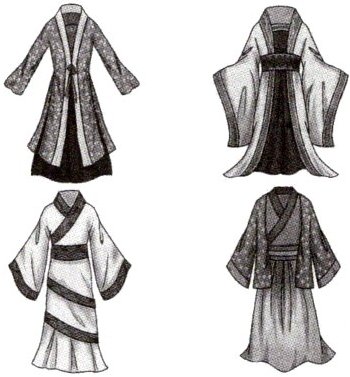
What hanfu is like is not fixed(固定的) since each Han-dominated(汉族统治的) dynasty had its own style, but the clothes are usually loose, with sleeves that hang down to the knees and flowing robes that drape around the body.
In modern China, people in different fields are interested in wearing hanfu: from history lovers to students and even young workers.
"Clothes are the foundation(基础) of culture," said Jiang Xue, who is a member of a hanfu club in Beijing. "If we as a people and as a country do not even understand our traditional clothing or don't wear them, how can we talk about other important parts of our culture?"
However, there is still a long way for the style to go into people's daily life. Some say they are afraid of being watched by others when wearing hanfu in public.
Hanfu-ture
| Introduction | It is a new 1 and more and more young people start to go out in hanfu. |
| --- | --- |
| 2 to wear hanfu | * To promote traditional culture.
* To help understand other important parts of Chinese culture. |
| Features of hanfu | * 3 loose.
* Sleeves that hang down to the knees.
* Flowing robes that drape around the body. |
| Problems to solve | * Some are afraid of wearing hanfu in public 4 others may watch them.
* It takes 5 for the public to accept(接受) hanfu. |
1. ________ 2. ________ 3. ________ 4. ________ 5. ________
Back to the Hanfu-ture: Young Chinese revive(复兴) traditional fashion
Now a growing number of young people are wearing traditional hanfu, or "Han
Unit 6 I My clothes, my style
clothing". You may see them eating, shopping, travelling or even working in hanfu.
Hanfu becomes popular in part because the government is promoting(发扬) traditional culture. Period dramas(古装剧) have also helped promote the public's interest in traditional Chinese clothes.
What hanfu is like is not fixed(固定的) since each Han-dominated(汉族统治的) dynasty had its own style, but the clothes are usually loose, with sleeves that hang down to the knees and flowing robes that drape around the body.
In modern China, people in different fields are interested in wearing hanfu: from history lovers to students and even young workers.
"Clothes are the foundation(基础) of culture," said Jiang Xue, who is a member of a hanfu club in Beijing. "If we as a people and as a country do not even understand our traditional clothing or don't wear them, how can we talk about other important parts of our culture?"
However, there is still a long way for the style to go into people's daily life. Some say they are afraid of being watched by others when wearing hanfu in public.
Hanfu-ture
| Introduction | It is a new 1 and more and more young people start to go out in hanfu. |
| --- | --- |
| 2 to wear hanfu | * To promote traditional culture.
* To help understand other important parts of Chinese culture. |
| Features of hanfu | * 3 loose.
* Sleeves that hang down to the knees.
* Flowing robes that drape around the body. |
| Problems to solve | * Some are afraid of wearing hanfu in public 4 others may watch them.
* It takes 5 for the public to accept(接受) hanfu. |
1. ________ 2. ________ 3. ________ 4. ________ 5. ________
答案:
1. fashion 2. Reasons 3. Usually 4. because/as 5. time
查看更多完整答案,请扫码查看

