

 搜索
搜索
第11页
- 第2页
- 第3页
- 第4页
- 第5页
- 第6页
- 第7页
- 第8页
- 第9页
- 第10页
- 第11页
- 第12页
- 第13页
- 第14页
- 第15页
- 第16页
- 第17页
- 第18页
- 第19页
- 第20页
- 第21页
- 第22页
- 第23页
- 第24页
- 第25页
- 第26页
- 第27页
- 第28页
- 第29页
- 第30页
- 第31页
- 第32页
- 第33页
- 第34页
- 第35页
- 第36页
- 第37页
- 第38页
- 第39页
- 第40页
- 第41页
- 第42页
- 第43页
- 第44页
- 第45页
- 第46页
- 第47页
- 第48页
- 第49页
- 第50页
- 第51页
- 第52页
- 第53页
- 第54页
- 第55页
- 第56页
- 第57页
- 第58页
- 第59页
- 第60页
- 第61页
- 第62页
- 第63页
- 第64页
- 第65页
- 第66页
- 第67页
- 第68页
- 第69页
- 第70页
- 第71页
- 第72页
- 第73页
- 第74页
- 第75页
- 第76页
- 第77页
- 第78页
- 第79页
- 第80页
- 第81页
- 第82页
- 第83页
- 第84页
- 第85页
- 第86页
- 第87页
- 第88页
- 第89页
- 第90页
- 第91页
- 第92页
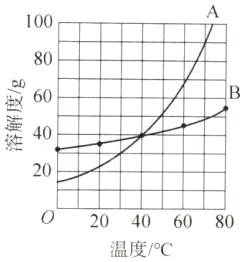
19. 下图是 $ \mathrm{A} $ 物质的溶解度曲线图,下表反映 $ \mathrm{B} $ 物质在不同温度时的溶解度。
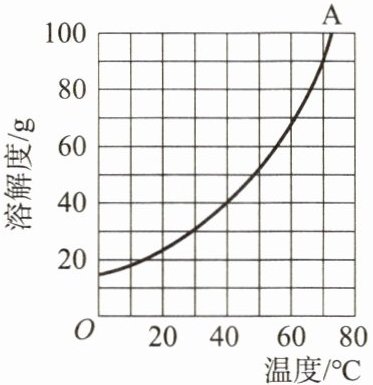

(1) 请根据上表数据,在图上绘制出 $ \mathrm{B} $ 物质的溶解度曲线。
(2) $ 70^{\circ} \mathrm{C} $ 时,$ \mathrm{A} $ 物质的溶解度为
(3)
(4) $ 20^{\circ} \mathrm{C} $ 时,向 $ 100 \mathrm{~g} $ 水中加入 $ 35 \mathrm{~g} \mathrm{~B} $ 物质,充分溶解后得到______(填“饱和”或“不饱和”)溶液。$ 20^{\circ} \mathrm{C} $ 时,向 $ 100 \mathrm{~g} $ 水中加入 $ 40 \mathrm{~g} \mathrm{~B} $ 物质,若要使 $ \mathrm{B} $ 物质完全溶解,可以采取的方法是______。
(1) 请根据上表数据,在图上绘制出 $ \mathrm{B} $ 物质的溶解度曲线。
(2) $ 70^{\circ} \mathrm{C} $ 时,$ \mathrm{A} $ 物质的溶解度为
90g
。(3)
40
℃时,$ \mathrm{A} $、$ \mathrm{B} $ 两种物质的溶解度相同。(4) $ 20^{\circ} \mathrm{C} $ 时,向 $ 100 \mathrm{~g} $ 水中加入 $ 35 \mathrm{~g} \mathrm{~B} $ 物质,充分溶解后得到______(填“饱和”或“不饱和”)溶液。$ 20^{\circ} \mathrm{C} $ 时,向 $ 100 \mathrm{~g} $ 水中加入 $ 40 \mathrm{~g} \mathrm{~B} $ 物质,若要使 $ \mathrm{B} $ 物质完全溶解,可以采取的方法是______。
答案:
19.
(1)
(2)90g
(3)40
(4)饱和 加入溶剂(水)或升高温度(升温到40℃及以上)
19.
(1)
(2)90g
(3)40
(4)饱和 加入溶剂(水)或升高温度(升温到40℃及以上)
查看更多完整答案,请扫码查看

