

 搜索
搜索
第125页
- 第1页
- 第2页
- 第3页
- 第4页
- 第5页
- 第6页
- 第7页
- 第8页
- 第9页
- 第10页
- 第11页
- 第12页
- 第13页
- 第14页
- 第15页
- 第16页
- 第17页
- 第18页
- 第19页
- 第20页
- 第21页
- 第22页
- 第23页
- 第24页
- 第25页
- 第26页
- 第27页
- 第28页
- 第29页
- 第30页
- 第31页
- 第32页
- 第33页
- 第34页
- 第35页
- 第36页
- 第37页
- 第38页
- 第39页
- 第40页
- 第41页
- 第42页
- 第43页
- 第44页
- 第45页
- 第46页
- 第47页
- 第48页
- 第49页
- 第50页
- 第51页
- 第52页
- 第53页
- 第54页
- 第55页
- 第56页
- 第57页
- 第58页
- 第59页
- 第60页
- 第61页
- 第62页
- 第63页
- 第64页
- 第65页
- 第66页
- 第67页
- 第68页
- 第69页
- 第70页
- 第71页
- 第72页
- 第73页
- 第74页
- 第75页
- 第76页
- 第77页
- 第78页
- 第79页
- 第80页
- 第81页
- 第82页
- 第83页
- 第84页
- 第85页
- 第86页
- 第87页
- 第88页
- 第89页
- 第90页
- 第91页
- 第92页
- 第93页
- 第94页
- 第95页
- 第96页
- 第97页
- 第98页
- 第99页
- 第100页
- 第101页
- 第102页
- 第103页
- 第104页
- 第105页
- 第106页
- 第107页
- 第108页
- 第109页
- 第110页
- 第111页
- 第112页
- 第113页
- 第114页
- 第115页
- 第116页
- 第117页
- 第118页
- 第119页
- 第120页
- 第121页
- 第122页
- 第123页
- 第124页
- 第125页
- 第126页
- 第127页
- 第128页
- 第129页
- 第130页
- 第131页
- 第132页
- 第133页
- 第134页
- 第135页
- 第136页
三、阅读理解(共 15 小题,每小题 2 分,满分 30 分)
阅读下面四篇材料,然后从各题所给的 A、B、C、D 四个选项中选出一个最佳选项。
A
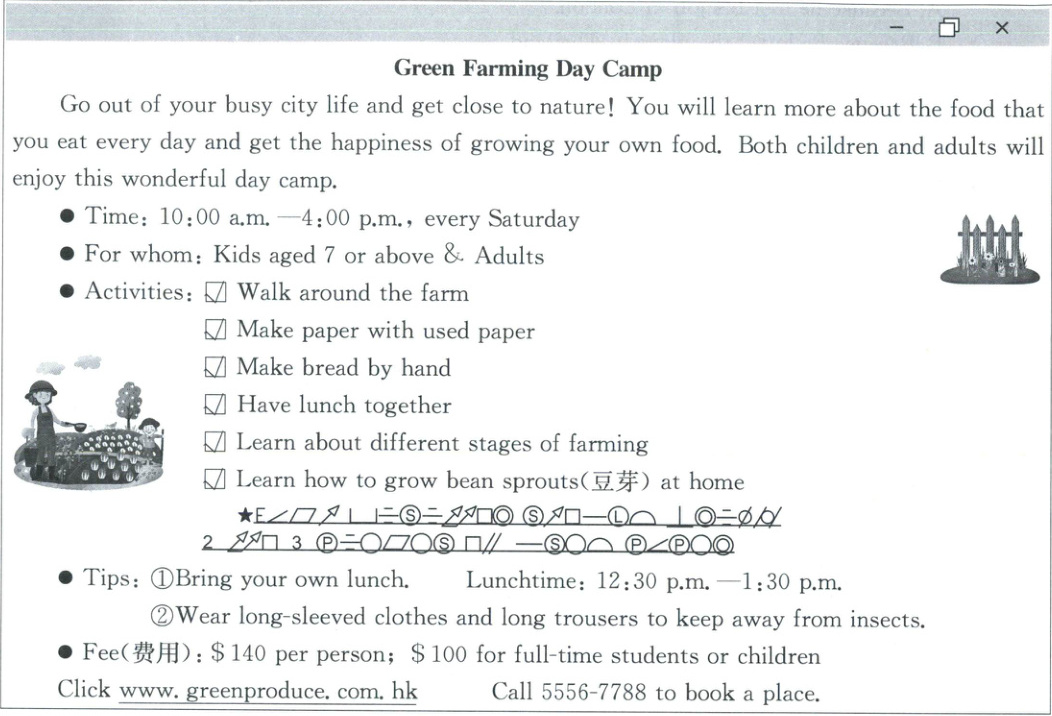
( )26. For visitors, the camp is a good place to ______.
A. enjoy the busy city life
B. taste all kinds of foods
C. know more about food
D. grow food in cities
( )27. What do we know about Green Farming Day Camp?
A. Only children can learn to make paper.
B. People don't need to take anything.
C. Everyone has some bread for lunch.
D. The camp lasts for six hours on Saturday.
( )28. Where can we probably read the article?
A. In a magazine.
B. On the Internet.
C. In a storybook.
D. On television.
阅读下面四篇材料,然后从各题所给的 A、B、C、D 四个选项中选出一个最佳选项。
A
( )26. For visitors, the camp is a good place to ______.
A. enjoy the busy city life
B. taste all kinds of foods
C. know more about food
D. grow food in cities
( )27. What do we know about Green Farming Day Camp?
A. Only children can learn to make paper.
B. People don't need to take anything.
C. Everyone has some bread for lunch.
D. The camp lasts for six hours on Saturday.
( )28. Where can we probably read the article?
A. In a magazine.
B. On the Internet.
C. In a storybook.
D. On television.
答案:
26.C 27.D 28.B
B
Cheng Xin started a group on Douban four years ago. She called it “We Love Walking in the Park”. She didn't plan to make the group big. But people who love parks from all over China and other countries joined. They share their park stories, photos and what they think about parks.
In the group, there's a special topic named “20 minutes for parks”. It is based on(基于) a study that says spending 20 minutes in a park every day can help you feel less stressed(焦虑的). This idea is popular with young people in China.
Luo Yanyan lives in Shenzhen now. She likes the idea of spending time in parks. Shenzhen has many parks close to where people live and work. Luo usually goes to a park during her lunch break when she works in the company. She says it helps her relax.
Parks are special places for quite a few people. They also show what a city is like. When Luo first came to Shenzhen, she thought it was just a place to make money. But then she found out it has 1,260 parks! Luo decided to visit them all. She has been to almost 100 so far and made videos about them. She says it helps her understand the city better.
( )29. Who will probably join Cheng Xin's group?
A. People who love sharing stories.
B. People who plan to live in big cities.
C. People who are good at making videos.
D. People who like spending time in parks.
( )30. The underlined word “it” in the third paragraph refers to ______.
A. going to parks
B. living in Shenzhen
C. working in the company
D. having lunch breaks
( )31. How does the writer develop the last two paragraphs?
A. By telling a story.
B. By giving an example.
C. By asking questions.
D. By using pictures.
( )32. What can we infer from the passage?
A. Cheng Xin wants more people to join her group.
B. Cheng Xin feels stressed before going to parks.
C. Luo Yanyan thinks it's enjoyable to stay in parks.
D. Luo Yanyan dislikes Shenzhen and its parks.
Cheng Xin started a group on Douban four years ago. She called it “We Love Walking in the Park”. She didn't plan to make the group big. But people who love parks from all over China and other countries joined. They share their park stories, photos and what they think about parks.
In the group, there's a special topic named “20 minutes for parks”. It is based on(基于) a study that says spending 20 minutes in a park every day can help you feel less stressed(焦虑的). This idea is popular with young people in China.
Luo Yanyan lives in Shenzhen now. She likes the idea of spending time in parks. Shenzhen has many parks close to where people live and work. Luo usually goes to a park during her lunch break when she works in the company. She says it helps her relax.
Parks are special places for quite a few people. They also show what a city is like. When Luo first came to Shenzhen, she thought it was just a place to make money. But then she found out it has 1,260 parks! Luo decided to visit them all. She has been to almost 100 so far and made videos about them. She says it helps her understand the city better.
( )29. Who will probably join Cheng Xin's group?
A. People who love sharing stories.
B. People who plan to live in big cities.
C. People who are good at making videos.
D. People who like spending time in parks.
( )30. The underlined word “it” in the third paragraph refers to ______.
A. going to parks
B. living in Shenzhen
C. working in the company
D. having lunch breaks
( )31. How does the writer develop the last two paragraphs?
A. By telling a story.
B. By giving an example.
C. By asking questions.
D. By using pictures.
( )32. What can we infer from the passage?
A. Cheng Xin wants more people to join her group.
B. Cheng Xin feels stressed before going to parks.
C. Luo Yanyan thinks it's enjoyable to stay in parks.
D. Luo Yanyan dislikes Shenzhen and its parks.
答案:
29.D 30.A 31.B 32.C
查看更多完整答案,请扫码查看

