

 搜索
搜索
2026年点金训练精讲巧练高中英语选择性必修第二册外研版
注:目前有些书本章节名称可能整理的还不是很完善,但都是按照顺序排列的,请同学们按照顺序仔细查找。练习册 2026年点金训练精讲巧练高中英语选择性必修第二册外研版 答案主要是用来给同学们做完题方便对答案用的,请勿直接抄袭。
第48页
- 第1页
- 第2页
- 第3页
- 第4页
- 第5页
- 第6页
- 第7页
- 第8页
- 第9页
- 第10页
- 第11页
- 第12页
- 第13页
- 第14页
- 第15页
- 第16页
- 第17页
- 第18页
- 第19页
- 第20页
- 第21页
- 第22页
- 第23页
- 第24页
- 第25页
- 第26页
- 第27页
- 第28页
- 第29页
- 第30页
- 第31页
- 第32页
- 第33页
- 第34页
- 第35页
- 第36页
- 第37页
- 第38页
- 第39页
- 第40页
- 第41页
- 第42页
- 第43页
- 第44页
- 第45页
- 第46页
- 第47页
- 第48页
- 第49页
- 第50页
- 第51页
- 第52页
- 第53页
- 第54页
- 第55页
- 第56页
- 第57页
- 第58页
- 第59页
- 第60页
- 第61页
- 第62页
- 第63页
- 第64页
- 第65页
- 第66页
- 第67页
- 第68页
- 第69页
- 第70页
- 第71页
- 第72页
- 第73页
- 第74页
- 第75页
- 第76页
- 第77页
- 第78页
- 第79页
- 第80页
- 第81页
- 第82页
- 第83页
- 第84页
- 第85页
- 第86页
- 第87页
- 第88页
- 第89页
- 第90页
- 第91页
- 第92页
- 第93页
- 第94页
- 第95页
- 第96页
- 第97页
- 第98页
- 第99页
- 第100页
- 第101页
- 第102页
- 第103页
- 第104页
- 第105页
- 第106页
- 第107页
- 第108页
- 第109页
- 第110页
- 第111页
- 第112页
- 第113页
- 第114页
- 第115页
- 第116页
- 第117页
- 第118页
- 第119页
一、单元重构
请根据本单元所学内容,完成思维导图。
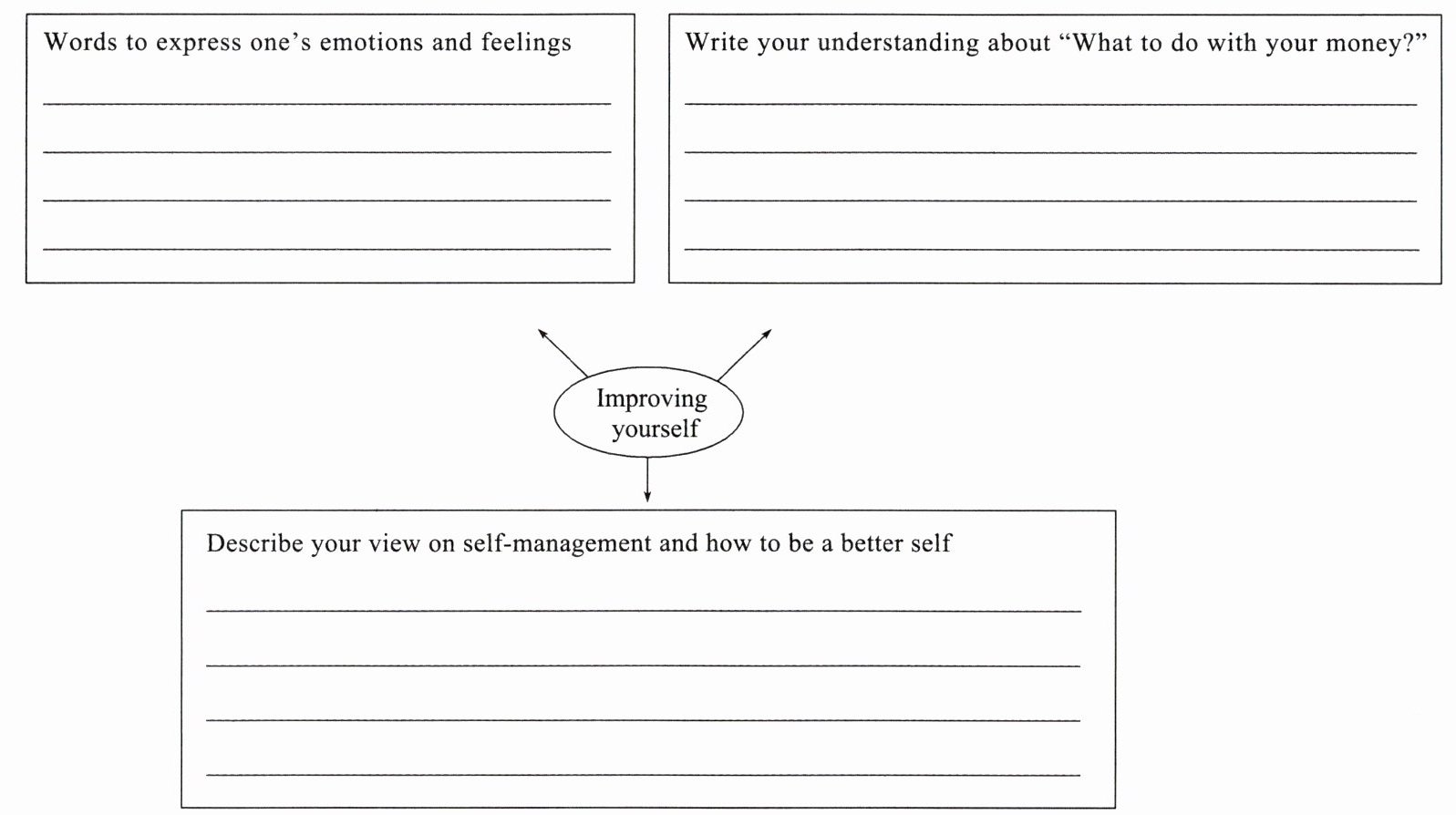
请根据本单元所学内容,完成思维导图。
答案:
Words to express one’s emotions and feelings
- Happy
- Sad
- Angry
- Excited
- Nervous
Write your understanding about “What to do with your money?”
- Save for the future
- Spend on necessary things
- Invest in yourself (e.g., education)
- Donate to charity
Describe your view on self - management and how to be a better self
- Self - management is about controlling your time, emotions, and actions.
- Set clear goals.
- Develop good habits (e.g., regular exercise, reading).
- Learn from mistakes and improve continuously.
- Manage stress effectively.
- Happy
- Sad
- Angry
- Excited
- Nervous
Write your understanding about “What to do with your money?”
- Save for the future
- Spend on necessary things
- Invest in yourself (e.g., education)
- Donate to charity
Describe your view on self - management and how to be a better self
- Self - management is about controlling your time, emotions, and actions.
- Set clear goals.
- Develop good habits (e.g., regular exercise, reading).
- Learn from mistakes and improve continuously.
- Manage stress effectively.
二、拓展阅读
阅读下面的文章,完成后面的题目。
Learning for Life
The more I learn, the better I know how much there is still left to learn. As I journey through my life, I have become aware that acquiring knowledge is not only a means by which you can better understand the world, but also a way of appreciating how much, as an individual, you do not know. The ability to admit this should not be perceived as a weakness, but as a strength. I once had an art teacher, pointing out that it is not only what you can see that is important, but also what you cannot see. When I drew a still life, it was impressed upon me that the blank spaces between the objects were just as vital to the success of the composition as the actual objects themselves. Also, as the great educator Confucius stated, “When you know a thing, to recognize that you know it; and when you do not know a thing, to recognize that you do not know it—that is wisdom.”
It is vital to remain lifelong learners in a rapidly changing world. As you progress through life, you may study and work in new environments. Consequently, you will be exposed to many new ideas, beliefs, practices and learning experiences. Furthermore, the production of knowledge is bound to grow rapidly. New knowledge is constantly being generated and what you already know is being revised all the time, to the extent that it can be difficult to keep pace with the latest developments. Indeed, you may one day do jobs that do not yet exist, use technologies that are not yet developed and resolve problems that are not yet problems! This is not to suggest that there is no need for you to study in school but to acknowledge that refreshing your knowledge through lifelong learning is both essential and beneficial.
So, how can you proceed? Firstly, lifelong learning is an attitude. Lifelong learners are those who have an open mind. Be objective and make yourself open to new knowledge and ideas. Do not criticize them or reject them simply because they differ from what you know or believe. At the same time, you need to develop critical thinking skills so that you do not blindly accept new ideas. Instead, you should inquire further to assess the truth of what you are being told. Secondly, take advantage of opportunities for lifelong learning—for example, you could register online and subscribe to e-learning courses, which have become increasingly popular in recent years. You could also visit the local library, where resources are rich and diverse. Finally, understand that it is not sufficient to simply know something or to understand what you know, because for knowledge to have concrete value, it must be applied. Importantly, after its application, there must then follow a review process of analysis, evaluation and improvement so that your comprehension of the world becomes a continuous process.
In summary, in a world of constant change, one should never cease to learn. Lifelong learning will help you develop your skills and further your career, and will boost your sense of self-worth and keep your mind active. Therefore, know what you know and use it; know what you do not know and embrace it; know that you will never know all there is to know and wonder at it.
1. What does the author think about the ability to admit not knowing something?
A. It is a sign of ignorance.
B. It is a weakness.
C. It is a strength.
D. It is unimportant.
2. What did the art teacher emphasize?
A. The importance of visible elements in art.
B. The significance of invisible elements in art.
C. Only focusing on the objects in a still life.
D. Drawing as many objects as possible in a still life.
3. According to the passage, in a rapidly changing world, which of the following is a characteristic of knowledge?
A. Knowledge production will stop.
B. Old knowledge will never be changed.
C. New knowledge is constantly emerging and old knowledge is being revised.
D. There will be less new knowledge in the future.
4. What does the text mainly tell us?
A. The experience of the author’s art study.
B. The importance of lifelong learning.
C. Confucius’ educational thoughts.
D. How to be a good artist.
阅读下面的文章,完成后面的题目。
Learning for Life
The more I learn, the better I know how much there is still left to learn. As I journey through my life, I have become aware that acquiring knowledge is not only a means by which you can better understand the world, but also a way of appreciating how much, as an individual, you do not know. The ability to admit this should not be perceived as a weakness, but as a strength. I once had an art teacher, pointing out that it is not only what you can see that is important, but also what you cannot see. When I drew a still life, it was impressed upon me that the blank spaces between the objects were just as vital to the success of the composition as the actual objects themselves. Also, as the great educator Confucius stated, “When you know a thing, to recognize that you know it; and when you do not know a thing, to recognize that you do not know it—that is wisdom.”
It is vital to remain lifelong learners in a rapidly changing world. As you progress through life, you may study and work in new environments. Consequently, you will be exposed to many new ideas, beliefs, practices and learning experiences. Furthermore, the production of knowledge is bound to grow rapidly. New knowledge is constantly being generated and what you already know is being revised all the time, to the extent that it can be difficult to keep pace with the latest developments. Indeed, you may one day do jobs that do not yet exist, use technologies that are not yet developed and resolve problems that are not yet problems! This is not to suggest that there is no need for you to study in school but to acknowledge that refreshing your knowledge through lifelong learning is both essential and beneficial.
So, how can you proceed? Firstly, lifelong learning is an attitude. Lifelong learners are those who have an open mind. Be objective and make yourself open to new knowledge and ideas. Do not criticize them or reject them simply because they differ from what you know or believe. At the same time, you need to develop critical thinking skills so that you do not blindly accept new ideas. Instead, you should inquire further to assess the truth of what you are being told. Secondly, take advantage of opportunities for lifelong learning—for example, you could register online and subscribe to e-learning courses, which have become increasingly popular in recent years. You could also visit the local library, where resources are rich and diverse. Finally, understand that it is not sufficient to simply know something or to understand what you know, because for knowledge to have concrete value, it must be applied. Importantly, after its application, there must then follow a review process of analysis, evaluation and improvement so that your comprehension of the world becomes a continuous process.
In summary, in a world of constant change, one should never cease to learn. Lifelong learning will help you develop your skills and further your career, and will boost your sense of self-worth and keep your mind active. Therefore, know what you know and use it; know what you do not know and embrace it; know that you will never know all there is to know and wonder at it.
1. What does the author think about the ability to admit not knowing something?
A. It is a sign of ignorance.
B. It is a weakness.
C. It is a strength.
D. It is unimportant.
2. What did the art teacher emphasize?
A. The importance of visible elements in art.
B. The significance of invisible elements in art.
C. Only focusing on the objects in a still life.
D. Drawing as many objects as possible in a still life.
3. According to the passage, in a rapidly changing world, which of the following is a characteristic of knowledge?
A. Knowledge production will stop.
B. Old knowledge will never be changed.
C. New knowledge is constantly emerging and old knowledge is being revised.
D. There will be less new knowledge in the future.
4. What does the text mainly tell us?
A. The experience of the author’s art study.
B. The importance of lifelong learning.
C. Confucius’ educational thoughts.
D. How to be a good artist.
答案:
1. C
2. B
3. C
4. B
2. B
3. C
4. B
查看更多完整答案,请扫码查看

