

 搜索
搜索
2025年红对勾练吧九年级英语全一册冀教版
注:目前有些书本章节名称可能整理的还不是很完善,但都是按照顺序排列的,请同学们按照顺序仔细查找。练习册 2025年红对勾练吧九年级英语全一册冀教版 答案主要是用来给同学们做完题方便对答案用的,请勿直接抄袭。
第127页
- 第1页
- 第2页
- 第3页
- 第4页
- 第5页
- 第6页
- 第7页
- 第8页
- 第9页
- 第10页
- 第11页
- 第12页
- 第13页
- 第14页
- 第15页
- 第16页
- 第17页
- 第18页
- 第19页
- 第20页
- 第21页
- 第22页
- 第23页
- 第24页
- 第25页
- 第26页
- 第27页
- 第28页
- 第29页
- 第30页
- 第31页
- 第32页
- 第33页
- 第34页
- 第35页
- 第36页
- 第37页
- 第38页
- 第39页
- 第40页
- 第41页
- 第42页
- 第43页
- 第44页
- 第45页
- 第46页
- 第47页
- 第48页
- 第49页
- 第50页
- 第51页
- 第52页
- 第53页
- 第54页
- 第55页
- 第56页
- 第57页
- 第58页
- 第59页
- 第60页
- 第61页
- 第62页
- 第63页
- 第64页
- 第65页
- 第66页
- 第67页
- 第68页
- 第69页
- 第70页
- 第71页
- 第72页
- 第73页
- 第74页
- 第75页
- 第76页
- 第77页
- 第78页
- 第79页
- 第80页
- 第81页
- 第82页
- 第83页
- 第84页
- 第85页
- 第86页
- 第87页
- 第88页
- 第89页
- 第90页
- 第91页
- 第92页
- 第93页
- 第94页
- 第95页
- 第96页
- 第97页
- 第98页
- 第99页
- 第100页
- 第101页
- 第102页
- 第103页
- 第104页
- 第105页
- 第106页
- 第107页
- 第108页
- 第109页
- 第110页
- 第111页
- 第112页
- 第113页
- 第114页
- 第115页
- 第116页
- 第117页
- 第118页
- 第119页
- 第120页
- 第121页
- 第122页
- 第123页
- 第124页
- 第125页
- 第126页
- 第127页
- 第128页
- 第129页
- 第130页
- 第131页
- 第132页
Ⅰ. 短文填空【主题:人与社会 中国特色文化与传统】
China is a large country. It has special cultures with a very long history.
Chinese food plays 1.
The Chinese calendar is different from the one in 4.
The Chinese zodiac, 10.
Chinese is a difficult language. Chinese writing 12.
China is a large country. It has special cultures with a very long history.
Chinese food plays 1.
an
important part in Chinese families. Chinese people eat 2. their
(they) meals with chopsticks. One of the main foods 3. is
(be) rice. Tea is a popular drink.The Chinese calendar is different from the one in 4.
Western
(west) countries. Chinese New Year is in late winter. It 5. is called
(call) the Spring Festival, too. And it also has some special 6. traditional
(tradition) customs. For example, each family 7. sweeps
(sweep) the floor before the Spring Festival 8. because
they believe they can sweep away all the old year's bad 9. luck
(lucky) in this way.The Chinese zodiac, 10.
known
(know) as Shengxiao, follows a twelve - year cycle. Each year is named 11. after
an animal. For example, the year of 2025 is the Year of the Snake.Chinese is a difficult language. Chinese writing 12.
has developed
(develop) for over 4 000 years. It has thousands 13. of
characters. A character stands for a word and also a 14. meaning
(mean). Besides putonghua, Chinese people speak some other 15. forms
(form) of the language, and there are many kinds of dialects (方言).
答案:
1. an 2. their 3. is 4. Western 5. is called 6. traditional 7. sweeps 8. because 9. luck 10. known 11. after 12. has developed 13. of 14. meaning 15. forms
Ⅱ. 阅读理解【主题:人与社会 风俗礼仪】
"Good morning." "How are you?" "How's it going?" These are greetings that we can say to each other every day. But there are many other ways to greet people around the world. Let's take a look.
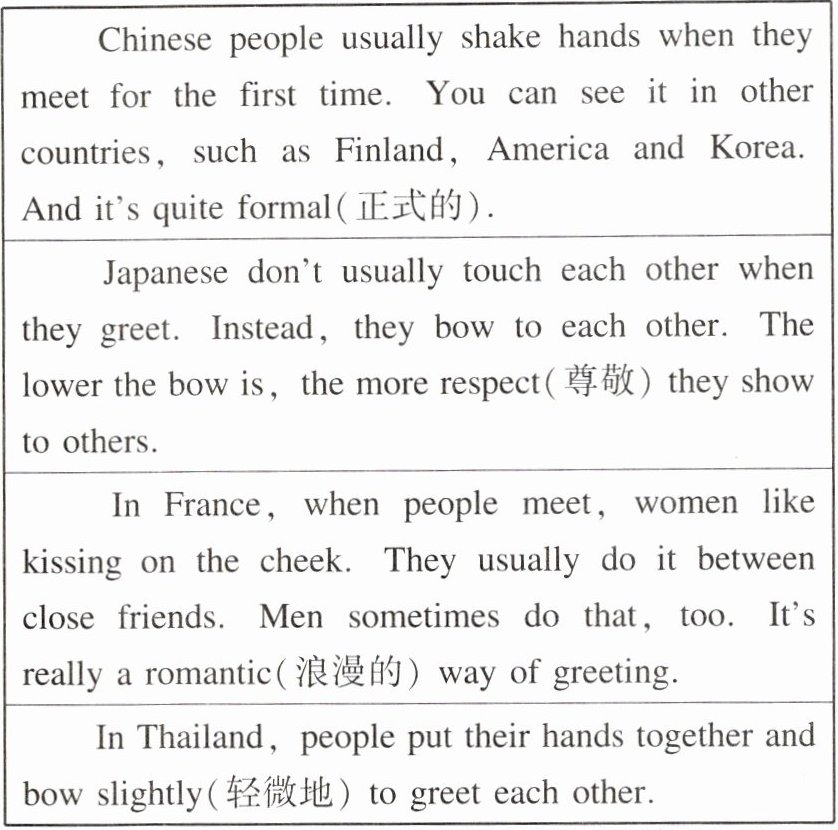
Though we have different ways to greet people, we should learn to respect each other and live in peace.
1. How many ways of greetings are mentioned in this text?
A. Four.
B. Six.
C. Seven.
D. Eight.
2. Linda likes to kiss on the cheek when she greets others. Where is Linda most probably from?
A. Finland.
B. France.
C. Thailand.
D. Japan.
3. Which of the following pictures shows how people in Thailand usually greet each other?
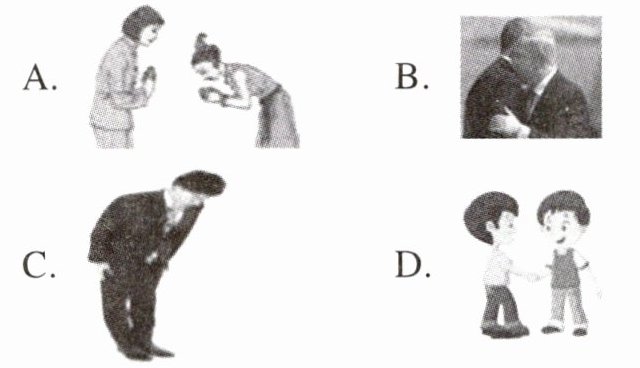
4. Which of the following statements is TRUE after reading this text?
A. People in Japan usually bow to each other for greetings.
B. Most people bow to each other to greet others in the world.
C. People in Korea put their hands together to greet you.
D. Men in France don't kiss each other on their cheeks.
5. In which part of the newspaper can you probably find this text?
A. Star Story.
B. Wonderful World.
C. Science Study.
D. School Time.
"Good morning." "How are you?" "How's it going?" These are greetings that we can say to each other every day. But there are many other ways to greet people around the world. Let's take a look.
Though we have different ways to greet people, we should learn to respect each other and live in peace.
1. How many ways of greetings are mentioned in this text?
A. Four.
B. Six.
C. Seven.
D. Eight.
2. Linda likes to kiss on the cheek when she greets others. Where is Linda most probably from?
A. Finland.
B. France.
C. Thailand.
D. Japan.
3. Which of the following pictures shows how people in Thailand usually greet each other?
4. Which of the following statements is TRUE after reading this text?
A. People in Japan usually bow to each other for greetings.
B. Most people bow to each other to greet others in the world.
C. People in Korea put their hands together to greet you.
D. Men in France don't kiss each other on their cheeks.
5. In which part of the newspaper can you probably find this text?
A. Star Story.
B. Wonderful World.
C. Science Study.
D. School Time.
答案:
1. C 2. B 3. A 4. A 5. B
查看更多完整答案,请扫码查看

