

 搜索
搜索
2025年红对勾练吧九年级英语全一册冀教版
注:目前有些书本章节名称可能整理的还不是很完善,但都是按照顺序排列的,请同学们按照顺序仔细查找。练习册 2025年红对勾练吧九年级英语全一册冀教版 答案主要是用来给同学们做完题方便对答案用的,请勿直接抄袭。
第116页
- 第1页
- 第2页
- 第3页
- 第4页
- 第5页
- 第6页
- 第7页
- 第8页
- 第9页
- 第10页
- 第11页
- 第12页
- 第13页
- 第14页
- 第15页
- 第16页
- 第17页
- 第18页
- 第19页
- 第20页
- 第21页
- 第22页
- 第23页
- 第24页
- 第25页
- 第26页
- 第27页
- 第28页
- 第29页
- 第30页
- 第31页
- 第32页
- 第33页
- 第34页
- 第35页
- 第36页
- 第37页
- 第38页
- 第39页
- 第40页
- 第41页
- 第42页
- 第43页
- 第44页
- 第45页
- 第46页
- 第47页
- 第48页
- 第49页
- 第50页
- 第51页
- 第52页
- 第53页
- 第54页
- 第55页
- 第56页
- 第57页
- 第58页
- 第59页
- 第60页
- 第61页
- 第62页
- 第63页
- 第64页
- 第65页
- 第66页
- 第67页
- 第68页
- 第69页
- 第70页
- 第71页
- 第72页
- 第73页
- 第74页
- 第75页
- 第76页
- 第77页
- 第78页
- 第79页
- 第80页
- 第81页
- 第82页
- 第83页
- 第84页
- 第85页
- 第86页
- 第87页
- 第88页
- 第89页
- 第90页
- 第91页
- 第92页
- 第93页
- 第94页
- 第95页
- 第96页
- 第97页
- 第98页
- 第99页
- 第100页
- 第101页
- 第102页
- 第103页
- 第104页
- 第105页
- 第106页
- 第107页
- 第108页
- 第109页
- 第110页
- 第111页
- 第112页
- 第113页
- 第114页
- 第115页
- 第116页
- 第117页
- 第118页
- 第119页
- 第120页
- 第121页
- 第122页
- 第123页
- 第124页
- 第125页
- 第126页
- 第127页
- 第128页
- 第129页
- 第130页
- 第131页
- 第132页
Ⅱ. (2024重庆期末)阅读理解【主题:人与社会 流行词】
①Do you often hear “Xianyanbao”? This is one of the buzzwords(流行词) in 2023. Do you know more?
②What would you use to describe your life in 2023? Maybe “Taikula!” is a good choice. It means it's very cool to do something. If one of your friends wins a game, you can also say it to him or her.
③ “Hajimi” comes from Japanese and means honey. People like using it as the background music of some videos nowadays. Usually some cute cats are in the video. The music is so sweet and the cats are so cute that people love them very much. Singing the song will make you think of lovely things and feel happy.
④Another popular word is “Yaoyaolingxian”. The Consumer Business CEO of Huawei, Yu Chengdong, often used it to show Huawei phones are better than other brands(品牌). In the launch(发布会) of Huawei Mate 40 series, he used it as many as fourteen times. Now people would like to use it to show something is far ahead.
⑤Do you often hear “dopamine(多巴胺)”, too? It is a symbol of happiness and excitement and shows you are happy with something, like dopamine clothing and dopamine diet. Dopamine clothing is a style of clothing. If people wear colourful and bright clothes, usually they feel very happy.
⑥Some young people prefer using these words in their daily lives. Wang Xue, a student of Beijing International School, says that she likes using the words because they're fashionable(时髦的) and popular among students. They can better show her feelings.
⑦However, some people worry that some words on the Internet mean something bad. And if people only use them to show their feelings, it may cause problems. If a student often uses these words in their language learning, this may prevent them from learning languages well.
1. Which of the following has the same meaning as “hajimi”?
A. Lovely.
B. Dangerous.
C. Unfriendly.
D. Clever.
(
2. If a girl wears colourful and bright clothes on the street, what can we use to describe her?
A. Yaoyaolingxian.
B. Hajimi.
C. Dopamine diet.
D. Dopamine clothing.
(
3. What does the example of Wang Xue in Paragraph 6 show?
A. These buzzwords are popular with some young people.
B. Only students like the buzzwords.
C. Most of the people think it's not good to use the words on the Internet.
D. Different people have different opinions on the use of buzzwords.
(
4. What's the structure(结构) of the passage?
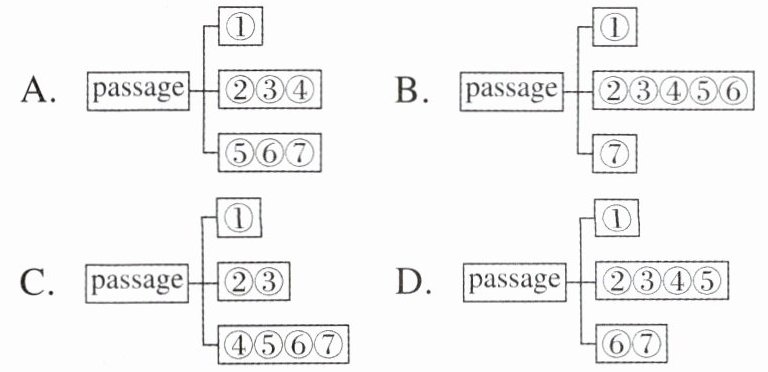
(
①Do you often hear “Xianyanbao”? This is one of the buzzwords(流行词) in 2023. Do you know more?
②What would you use to describe your life in 2023? Maybe “Taikula!” is a good choice. It means it's very cool to do something. If one of your friends wins a game, you can also say it to him or her.
③ “Hajimi” comes from Japanese and means honey. People like using it as the background music of some videos nowadays. Usually some cute cats are in the video. The music is so sweet and the cats are so cute that people love them very much. Singing the song will make you think of lovely things and feel happy.
④Another popular word is “Yaoyaolingxian”. The Consumer Business CEO of Huawei, Yu Chengdong, often used it to show Huawei phones are better than other brands(品牌). In the launch(发布会) of Huawei Mate 40 series, he used it as many as fourteen times. Now people would like to use it to show something is far ahead.
⑤Do you often hear “dopamine(多巴胺)”, too? It is a symbol of happiness and excitement and shows you are happy with something, like dopamine clothing and dopamine diet. Dopamine clothing is a style of clothing. If people wear colourful and bright clothes, usually they feel very happy.
⑥Some young people prefer using these words in their daily lives. Wang Xue, a student of Beijing International School, says that she likes using the words because they're fashionable(时髦的) and popular among students. They can better show her feelings.
⑦However, some people worry that some words on the Internet mean something bad. And if people only use them to show their feelings, it may cause problems. If a student often uses these words in their language learning, this may prevent them from learning languages well.
1. Which of the following has the same meaning as “hajimi”?
A. Lovely.
B. Dangerous.
C. Unfriendly.
D. Clever.
(
A
)2. If a girl wears colourful and bright clothes on the street, what can we use to describe her?
A. Yaoyaolingxian.
B. Hajimi.
C. Dopamine diet.
D. Dopamine clothing.
(
D
)3. What does the example of Wang Xue in Paragraph 6 show?
A. These buzzwords are popular with some young people.
B. Only students like the buzzwords.
C. Most of the people think it's not good to use the words on the Internet.
D. Different people have different opinions on the use of buzzwords.
(
A
)4. What's the structure(结构) of the passage?
(
D
)
答案:
Ⅱ. 1. A 2. D 3. A 4. D
查看更多完整答案,请扫码查看

