

 搜索
搜索
第177页
- 第1页
- 第2页
- 第3页
- 第4页
- 第5页
- 第6页
- 第7页
- 第8页
- 第9页
- 第10页
- 第11页
- 第12页
- 第13页
- 第14页
- 第15页
- 第16页
- 第17页
- 第18页
- 第19页
- 第20页
- 第21页
- 第22页
- 第23页
- 第24页
- 第25页
- 第26页
- 第27页
- 第28页
- 第29页
- 第30页
- 第31页
- 第32页
- 第33页
- 第34页
- 第35页
- 第36页
- 第37页
- 第38页
- 第39页
- 第40页
- 第41页
- 第42页
- 第43页
- 第44页
- 第45页
- 第46页
- 第47页
- 第48页
- 第49页
- 第50页
- 第51页
- 第52页
- 第53页
- 第54页
- 第55页
- 第56页
- 第57页
- 第58页
- 第59页
- 第60页
- 第61页
- 第62页
- 第63页
- 第64页
- 第65页
- 第66页
- 第67页
- 第68页
- 第69页
- 第70页
- 第71页
- 第72页
- 第73页
- 第74页
- 第75页
- 第76页
- 第77页
- 第78页
- 第79页
- 第80页
- 第81页
- 第82页
- 第83页
- 第84页
- 第85页
- 第86页
- 第87页
- 第88页
- 第89页
- 第90页
- 第91页
- 第92页
- 第93页
- 第94页
- 第95页
- 第96页
- 第97页
- 第98页
- 第99页
- 第100页
- 第101页
- 第102页
- 第103页
- 第104页
- 第105页
- 第106页
- 第107页
- 第108页
- 第109页
- 第110页
- 第111页
- 第112页
- 第113页
- 第114页
- 第115页
- 第116页
- 第117页
- 第118页
- 第119页
- 第120页
- 第121页
- 第122页
- 第123页
- 第124页
- 第125页
- 第126页
- 第127页
- 第128页
- 第129页
- 第130页
- 第131页
- 第132页
- 第133页
- 第134页
- 第135页
- 第136页
- 第137页
- 第138页
- 第139页
- 第140页
- 第141页
- 第142页
- 第143页
- 第144页
- 第145页
- 第146页
- 第147页
- 第148页
- 第149页
- 第150页
- 第151页
- 第152页
- 第153页
- 第154页
- 第155页
- 第156页
- 第157页
- 第158页
- 第159页
- 第160页
- 第161页
- 第162页
- 第163页
- 第164页
- 第165页
- 第166页
- 第167页
- 第168页
- 第169页
- 第170页
- 第171页
- 第172页
- 第173页
- 第174页
- 第175页
- 第176页
- 第177页
- 第178页
- 第179页
- 第180页
- 第181页
Ⅴ. 阅读理解
(2024·江西改编) The Maori arrived in New Zealand from Polynesian (波利尼西亚) islands about a thousand years ago. They were the first people to live in New Zealand.
In the late 18th century, Europeans came to live in New Zealand. At that time, the population of the Maori was maybe 250,000 in New Zealand. Over the next one hundred years, wars and disease killed many Maori people. By the end of the 19th century, there were only about 40, 000 Maori people left. During this time, the Maori also lost much of their land to the Europeans. Many of them were afraid that they might lose their traditions and language, too, but this did not happen.
Today the Maori population is increasing. There are about 500,000 Maori people in New Zealand. Most live like other New Zealanders, but they are keeping the Maori language and traditions alive. There are now Maori radio and television stations. Many schools teach in the Maori language. Nearly one half of Maori language speakers are 25 years old or younger.
Maori culture is also alive and well. At the centre of Maori culture is the “marae”. This is a special place for ceremonies and meetings. Today the number of marae in New Zealand is increasing. Many of the new marae are in the cities. Now people in the cities can meet and learn about their Maori traditions.
Today most New Zealand cities have Maori festivals each year. Among festival activities are competitions in speaking, dancing and singing. Children practise for months. Then all the Maori in the area arrive to watch the competitions and see who wins.
The Maori have gone through hard times. Today they live a comfortable, modern life. They keep their cultural traditions alive, because they have passed and are passing them on to their children.
1. When did the Maori first arrive in New Zealand?
A. Around 11th century.
B. Around 16th century.
C. Around 18th century.
2. What happened to the Maori during the 19th century?
A. They owned more land.
B. They lost their language.
C. They had a smaller population.
3. How do the Maori keep their traditions alive? Check and choose the right answer.
a. Increase the number of marae.
b. Move to the centre of New Zealand.
c. Set up Maori radio and TV stations.
d. Teach in the Maori language in many schools.
e. Hold competitions in speaking, dancing and singing.
A. bcde
B. abcd
C. acde
4. What’s the theme of the passage?
A. Art.
B. Culture.
C. Travel.
5. What would be the best structure of the passage?
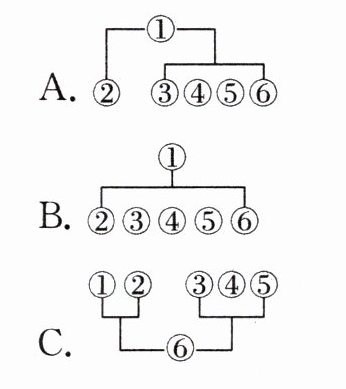
A.
```
①
├─②
├─③④⑤⑥
```
B.
```
①
├─②
├─③
├─④
├─⑤
├─⑥
```
C.
```
①②
├─⑥
├─③④⑤
```
(2024·江西改编) The Maori arrived in New Zealand from Polynesian (波利尼西亚) islands about a thousand years ago. They were the first people to live in New Zealand.
In the late 18th century, Europeans came to live in New Zealand. At that time, the population of the Maori was maybe 250,000 in New Zealand. Over the next one hundred years, wars and disease killed many Maori people. By the end of the 19th century, there were only about 40, 000 Maori people left. During this time, the Maori also lost much of their land to the Europeans. Many of them were afraid that they might lose their traditions and language, too, but this did not happen.
Today the Maori population is increasing. There are about 500,000 Maori people in New Zealand. Most live like other New Zealanders, but they are keeping the Maori language and traditions alive. There are now Maori radio and television stations. Many schools teach in the Maori language. Nearly one half of Maori language speakers are 25 years old or younger.
Maori culture is also alive and well. At the centre of Maori culture is the “marae”. This is a special place for ceremonies and meetings. Today the number of marae in New Zealand is increasing. Many of the new marae are in the cities. Now people in the cities can meet and learn about their Maori traditions.
Today most New Zealand cities have Maori festivals each year. Among festival activities are competitions in speaking, dancing and singing. Children practise for months. Then all the Maori in the area arrive to watch the competitions and see who wins.
The Maori have gone through hard times. Today they live a comfortable, modern life. They keep their cultural traditions alive, because they have passed and are passing them on to their children.
1. When did the Maori first arrive in New Zealand?
A
A. Around 11th century.
B. Around 16th century.
C. Around 18th century.
2. What happened to the Maori during the 19th century?
C
A. They owned more land.
B. They lost their language.
C. They had a smaller population.
3. How do the Maori keep their traditions alive? Check and choose the right answer.
C
a. Increase the number of marae.
b. Move to the centre of New Zealand.
c. Set up Maori radio and TV stations.
d. Teach in the Maori language in many schools.
e. Hold competitions in speaking, dancing and singing.
A. bcde
B. abcd
C. acde
4. What’s the theme of the passage?
B
A. Art.
B. Culture.
C. Travel.
5. What would be the best structure of the passage?
C
A.
```
①
├─②
├─③④⑤⑥
```
B.
```
①
├─②
├─③
├─④
├─⑤
├─⑥
```
C.
```
①②
├─⑥
├─③④⑤
```
答案:
Ⅴ.1.A 2.C 3.C 4.B 5.C
查看更多完整答案,请扫码查看

