

 搜索
搜索
第153页
- 第1页
- 第2页
- 第3页
- 第4页
- 第5页
- 第6页
- 第7页
- 第8页
- 第9页
- 第10页
- 第11页
- 第12页
- 第13页
- 第14页
- 第15页
- 第16页
- 第17页
- 第18页
- 第19页
- 第20页
- 第21页
- 第22页
- 第23页
- 第24页
- 第25页
- 第26页
- 第27页
- 第28页
- 第29页
- 第30页
- 第31页
- 第32页
- 第33页
- 第34页
- 第35页
- 第36页
- 第37页
- 第38页
- 第39页
- 第40页
- 第41页
- 第42页
- 第43页
- 第44页
- 第45页
- 第46页
- 第47页
- 第48页
- 第49页
- 第50页
- 第51页
- 第52页
- 第53页
- 第54页
- 第55页
- 第56页
- 第57页
- 第58页
- 第59页
- 第60页
- 第61页
- 第62页
- 第63页
- 第64页
- 第65页
- 第66页
- 第67页
- 第68页
- 第69页
- 第70页
- 第71页
- 第72页
- 第73页
- 第74页
- 第75页
- 第76页
- 第77页
- 第78页
- 第79页
- 第80页
- 第81页
- 第82页
- 第83页
- 第84页
- 第85页
- 第86页
- 第87页
- 第88页
- 第89页
- 第90页
- 第91页
- 第92页
- 第93页
- 第94页
- 第95页
- 第96页
- 第97页
- 第98页
- 第99页
- 第100页
- 第101页
- 第102页
- 第103页
- 第104页
- 第105页
- 第106页
- 第107页
- 第108页
- 第109页
- 第110页
- 第111页
- 第112页
- 第113页
- 第114页
- 第115页
- 第116页
- 第117页
- 第118页
- 第119页
- 第120页
- 第121页
- 第122页
- 第123页
- 第124页
- 第125页
- 第126页
- 第127页
- 第128页
- 第129页
- 第130页
- 第131页
- 第132页
- 第133页
- 第134页
- 第135页
- 第136页
- 第137页
- 第138页
- 第139页
- 第140页
- 第141页
- 第142页
- 第143页
- 第144页
- 第145页
- 第146页
- 第147页
- 第148页
- 第149页
- 第150页
- 第151页
- 第152页
- 第153页
- 第154页
- 第155页
- 第156页
- 第157页
- 第158页
- 第159页
- 第160页
- 第161页
- 第162页
- 第163页
- 第164页
- 第165页
- 第166页
- 第167页
- 第168页
- 第169页
素养:文化意识 难度:中 用时:7分钟
[2024 长春经开区期末] ①In the world, what people in different places are supposed to do isn't always the same. Something that seems common to you may seem strange to others. Here are some surprising examples.
②People in Malaysia use their thumb (拇指) to point. In many cultures, people probably think that pointing with a finger isn't very nice. However, in some countries like Indonesia and Malaysia, it is considered much more polite to point with the thumb.
③Nigerians kneel (跪下) when greeting others. A group of people in Nigeria takes greeting manners seriously, especially with their elders. When an adult comes, it is common for young people to greet him or her by dropping to their knees. Women kneel, and men prostrate (使拜倒) themselves. This traditional custom is a sign of respect for the elders.
④The Japanese enjoy slurping. Most cultures have rules about table manners. In western countries, making noise while eating food is usually considered impolite. However, in Japan, making slurping sounds while eating noodles can be accepted. This probably has something to do with the way noodles are eaten. The Japanese slurp up their noodles without winding them around an eating tool. This way of noodle eating is naturally noisier. Making slurping sounds when eating noodles in Japan shows that you're enjoying them.
⑤Using your left hand might be impolite. In some countries, the use of the left hand for eating or other activities is considered impolite. People in these countries use their left hands for cleaning themselves after using the toilet, so the left hand is considered dirty. This custom is known in much of the Middle East, Sri Lanka, and parts of Africa.
1 In which country or countries is it more polite to point with the thumb?
A. Only Malaysia.
B. Indonesia and Malaysia.
C. All Asian countries.
D. Western countries.
2 What does the underlined word "slurping" mean in English?
A. Keeping quiet.
B. Talking loudly.
C. Being on time.
D. Eating or drinking noisily.
3 Why is the left hand considered dirty in some countries?
A. Because it is used less frequently than the right hand.
B. Because it is used for handling unclean objects in daily life.
C. Because it is used for cleaning oneself after using the toilet.
D. Because it is believed to have more bacteria naturally.
4 新考法·篇章结构题 Which of the following can show the structure of the passage?
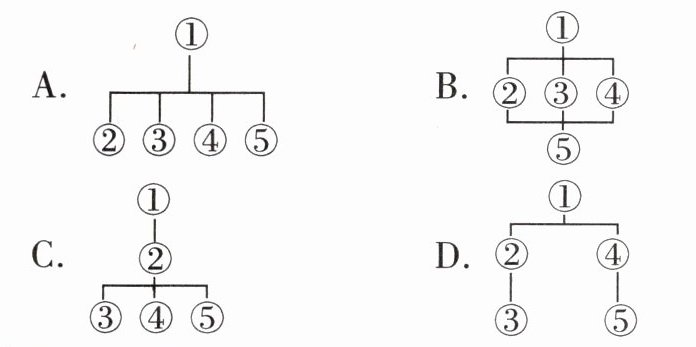
A.
B.
C.
D.
5 What's the purpose of the passage?
A. To show how to learn about cultural customs.
B. To introduce some surprising customs to readers.
C. To explain the importance of greeting manners.
D. To teach readers how to eat with proper table manners.
[2024 长春经开区期末] ①In the world, what people in different places are supposed to do isn't always the same. Something that seems common to you may seem strange to others. Here are some surprising examples.
②People in Malaysia use their thumb (拇指) to point. In many cultures, people probably think that pointing with a finger isn't very nice. However, in some countries like Indonesia and Malaysia, it is considered much more polite to point with the thumb.
③Nigerians kneel (跪下) when greeting others. A group of people in Nigeria takes greeting manners seriously, especially with their elders. When an adult comes, it is common for young people to greet him or her by dropping to their knees. Women kneel, and men prostrate (使拜倒) themselves. This traditional custom is a sign of respect for the elders.
④The Japanese enjoy slurping. Most cultures have rules about table manners. In western countries, making noise while eating food is usually considered impolite. However, in Japan, making slurping sounds while eating noodles can be accepted. This probably has something to do with the way noodles are eaten. The Japanese slurp up their noodles without winding them around an eating tool. This way of noodle eating is naturally noisier. Making slurping sounds when eating noodles in Japan shows that you're enjoying them.
⑤Using your left hand might be impolite. In some countries, the use of the left hand for eating or other activities is considered impolite. People in these countries use their left hands for cleaning themselves after using the toilet, so the left hand is considered dirty. This custom is known in much of the Middle East, Sri Lanka, and parts of Africa.
1 In which country or countries is it more polite to point with the thumb?
A. Only Malaysia.
B. Indonesia and Malaysia.
C. All Asian countries.
D. Western countries.
2 What does the underlined word "slurping" mean in English?
A. Keeping quiet.
B. Talking loudly.
C. Being on time.
D. Eating or drinking noisily.
3 Why is the left hand considered dirty in some countries?
A. Because it is used less frequently than the right hand.
B. Because it is used for handling unclean objects in daily life.
C. Because it is used for cleaning oneself after using the toilet.
D. Because it is believed to have more bacteria naturally.
4 新考法·篇章结构题 Which of the following can show the structure of the passage?
A.
B.
C.
D.
5 What's the purpose of the passage?
A. To show how to learn about cultural customs.
B. To introduce some surprising customs to readers.
C. To explain the importance of greeting manners.
D. To teach readers how to eat with proper table manners.
答案:
1 B 细节理解题。根据第二段中的“However, in some countries like Indonesia and Malaysia, it is considered much more polite to point with the thumb”可知,在印度尼西亚和马来西亚,用拇指来指东西被认为更有礼貌,故选B。2 D 词义猜测题。根据第四段中的“In western countries, making noise while eating food is usually considered impolite”可知,“slurping”指的是“吃东西或喝东西时发出声音”,故选D。3 C 细节理解题。根据第五段中的“People in these countries use their left hands for cleaning themselves after using the toilet, so the left hand is considered dirty”可知,左手被认为是脏的,因为它被用于如厕后清洁自己,故选C。4 A 篇章结构题。通读全文可知,第一段先引入主题,第二段到第五段分别介绍不同国家的习俗,所以这篇文章的结构是“总—分”结构,故选A。5 B 写作意图题。通读全文可知,本文主要介绍了不同国家和地区的文化习俗,所以它的目的是向读者介绍一些令人惊讶的文化习俗,故选B。
查看更多完整答案,请扫码查看

