

 搜索
搜索
第8页
- 第2页
- 第3页
- 第4页
- 第5页
- 第6页
- 第7页
- 第8页
- 第9页
- 第10页
- 第11页
- 第12页
- 第13页
- 第14页
- 第15页
- 第16页
- 第17页
- 第18页
- 第19页
- 第20页
- 第21页
- 第22页
- 第23页
- 第24页
- 第25页
- 第26页
- 第27页
- 第28页
- 第29页
- 第30页
- 第31页
- 第32页
- 第33页
- 第34页
- 第35页
- 第36页
- 第37页
- 第38页
- 第39页
- 第40页
- 第41页
- 第42页
- 第43页
- 第44页
- 第45页
- 第46页
- 第47页
- 第48页
- 第49页
- 第50页
- 第51页
- 第52页
- 第53页
- 第54页
- 第55页
- 第56页
- 第57页
- 第58页
- 第59页
- 第60页
- 第61页
- 第62页
- 第63页
- 第64页
- 第65页
- 第66页
- 第67页
- 第68页
- 第69页
- 第70页
- 第71页
- 第72页
- 第73页
- 第74页
- 第75页
- 第76页
- 第77页
- 第78页
- 第79页
- 第80页
- 第81页
- 第82页
- 第83页
- 第84页
- 第85页
- 第86页
- 第87页
- 第88页
1. found的用法
学作动词,意为“创立;创建”,其过去式与过去分词都为founded。
【注意】found也是动词find的过去式和过去分词,意为“发现;找到”。
用①二十年前,一对年迈的夫妻创办了这所著名的大学。
An old couple
②I
学作动词,意为“创立;创建”,其过去式与过去分词都为founded。
【注意】found也是动词find的过去式和过去分词,意为“发现;找到”。
用①二十年前,一对年迈的夫妻创办了这所著名的大学。
An old couple
founded
the famous university twenty years ago.②I
found
(find) a wallet lying on the floor just now.
答案:
1. ①founded ②found
2. off的用法
学(1)作副词,意为“不上课;休息;不工作”,其常用短语have/take some time off意为“放一段时间假;休息一段时间”。
(2)作介词,意为“下(飞机、火车、公共汽车等)”,其常用短语get off意为“下(飞机、火车、公共汽车等)”;fall off意为“从……跌落”。
用①下周我有三天假期。
I will
②你应该等车停了再下车。
You should wait until the bus stops before you ______.
学(1)作副词,意为“不上课;休息;不工作”,其常用短语have/take some time off意为“放一段时间假;休息一段时间”。
(2)作介词,意为“下(飞机、火车、公共汽车等)”,其常用短语get off意为“下(飞机、火车、公共汽车等)”;fall off意为“从……跌落”。
用①下周我有三天假期。
I will
have
three
days
off
next week.②你应该等车停了再下车。
You should wait until the bus stops before you ______.
答案:
2. ①have/take three days off ②get off
3.【辨析】some time, sometime, some times与sometimes
学(1)some time指一段时间。
(2)sometime指将来或过去的某时。
(3)some times意为“几次”。
(4)sometimes意为“有时候;不时”,为频率副词,常放在句中或句首。
用用some time,sometime,sometimes或some times填空
①Every man is a fool ______,and none at all times.
②We'll take our holiday ______ in November.
③The Smiths plan to stay in Hainan for
④I am sure that we have met
学(1)some time指一段时间。
(2)sometime指将来或过去的某时。
(3)some times意为“几次”。
(4)sometimes意为“有时候;不时”,为频率副词,常放在句中或句首。
用用some time,sometime,sometimes或some times填空
①Every man is a fool ______,and none at all times.
②We'll take our holiday ______ in November.
③The Smiths plan to stay in Hainan for
some time
.④I am sure that we have met
some times/sometime
before.
答案:
3. ①sometimes ②sometime ③some time ④some times/sometime
Ⅰ. 根据句意及首字母或汉语注释完成单词
1. The Peking University was
2. We often have seven days
3. As s
4. World Letter Writing Day falls on 1st September. It is the n
5. As for John's summer v
1. The Peking University was
founded
(创立)in 1898.2. We often have seven days
off
(不上课)on the National Day holiday.3. As s
oon
as we arrive at the hotel,we will check in and then have fun in the city.4. World Letter Writing Day falls on 1st September. It is the n
inth
month of a year.5. As for John's summer v
acation
,he plans to do some volunteer work.
答案:
Ⅰ.1.founded 2.off 3.soon 4.ninth 5.vacation
Ⅱ. 用方框中所给词语的适当形式填空
flag six band until all kinds of
1. Ben got the
2. Look,there are
3. On National Day,you can see many
4. We won't leave you alone
5. Kate plays the violin very well and she is a member of the school
flag six band until all kinds of
1. Ben got the
sixth
place in the maths exam.2. Look,there are
all kinds of
fishes swimming in the pool.3. On National Day,you can see many
flags
in the street.4. We won't leave you alone
until
your parents come to pick you up.5. Kate plays the violin very well and she is a member of the school
band
.
答案:
Ⅱ.1.sixth 2.all kinds of 3.flags 4.until 5.band
Ⅲ. 语法填空
In China,the Spring Festival is the most important festival. It falls 1.
Before the Spring Festival comes,people go out 2.
The celebrations begin on the eve of the lunar New Year. The family get together for 5.
During the holidays,they go to visit relatives and 7.
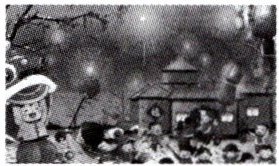
In China,the Spring Festival is the most important festival. It falls 1.
on
the first day of the first month of the lunar calendar(阴历).Before the Spring Festival comes,people go out 2.
to buy
(buy)things,such as meat,fruit,sweets and new clothes. They clean their houses 3. and
decorate(装饰)them. The Chinese character fu is a must. It is 4. usually
(usual)stuck upside down,which means fu comes.The celebrations begin on the eve of the lunar New Year. The family get together for 5.
a
big dinner. If a person is far from home,he 6. will try
(try)to get home for this big dinner.During the holidays,they go to visit relatives and 7.
friends
(friend)and exchange New Year greetings. They sit around 8. talking
(talk)and eating candies,cakes and all kinds of delicious foods. You can never imagine 9. how
excited they are! Also,people in the north of China often eat dumplings for breakfast. People in the south often eat niangao because niangao sounds like the phrase “10. higher
(high)every year”. The celebrations last for 15 days.
答案:
Ⅲ.1.on 2.to buy 3.and 4.usually 5.a 6.will try 7.friends 8.talking 9.how 10.higher
Ⅳ. 阅读理解
Spain is famous for its tomato festival,called La Tomatina. It happens in the town of Bunol,located in the Valencia region of Spain,on the last Wednesday of August every year. During the festival there are all kinds of activities,but the most exciting part is the tomato fight. It takes place(发生)at the end of long celebration. You're encouraged to throw tomatoes in the fight. There're many stories about how the festival began. One of the stories goes that during the 1940s,some friends started a tomato fight,while another story is about a local band. Anyway,everyone in Bunol seems to have a different story.
Before the tomato fight,there are parades(游行),musical bands,street parties and so on. On the day of the fight,shopkeepers cover their windows and doors in order to keep away from the tomato fight. At the same time,thousands of tourists and local people come to the town square together. Then large trucks(卡车)full of tomatoes arrive. From the back of the large trucks,a great town band start to throw tomatoes at others. Then the crowds fight back,throwing the tomatoes at anything and anyone. Soon the streets are in the sea of red tomato juice.
Everyone is supposed to obey a small number of rules. You must squash(压烂)the tomato before throwing it and you are allowed to throw nothing but tomatoes.
It is usually over in less than half an hour. Everyone then sets off to the river to clean up. Sounds like fun!
Which of the following is TRUE about the tomato fight according to the text?
(
B. It happens in a small city in Spain every year.
C. It happens at the beginning of La Tomatina.
D. It is the most exciting activity of La Tomatina.
(
A. Shopkeepers.
B. Tourists.
C. A great town band.
D. The crowds.
(
A. The streets are full of trucks because of the fight.
B. There is only one story about how the festival began.
C. Everyone must squash the tomato before throwing it.
D. The shopkeepers cover their windows and doors because of bad weather.
(
A. Travel in Spain
B. The Tomato Festival in Spain
C. The History of Spain
D. Rules of the Tomato Festival
Spain is famous for its tomato festival,called La Tomatina. It happens in the town of Bunol,located in the Valencia region of Spain,on the last Wednesday of August every year. During the festival there are all kinds of activities,but the most exciting part is the tomato fight. It takes place(发生)at the end of long celebration. You're encouraged to throw tomatoes in the fight. There're many stories about how the festival began. One of the stories goes that during the 1940s,some friends started a tomato fight,while another story is about a local band. Anyway,everyone in Bunol seems to have a different story.
Before the tomato fight,there are parades(游行),musical bands,street parties and so on. On the day of the fight,shopkeepers cover their windows and doors in order to keep away from the tomato fight. At the same time,thousands of tourists and local people come to the town square together. Then large trucks(卡车)full of tomatoes arrive. From the back of the large trucks,a great town band start to throw tomatoes at others. Then the crowds fight back,throwing the tomatoes at anything and anyone. Soon the streets are in the sea of red tomato juice.
Everyone is supposed to obey a small number of rules. You must squash(压烂)the tomato before throwing it and you are allowed to throw nothing but tomatoes.
It is usually over in less than half an hour. Everyone then sets off to the river to clean up. Sounds like fun!
Which of the following is TRUE about the tomato fight according to the text?
(
D
)1. A. It began in 1940.B. It happens in a small city in Spain every year.
C. It happens at the beginning of La Tomatina.
D. It is the most exciting activity of La Tomatina.
(
C
)2. On the day of the fight,who first start(s)to throw tomatoes at others?A. Shopkeepers.
B. Tourists.
C. A great town band.
D. The crowds.
(
C
)3. What can we learn from the text?A. The streets are full of trucks because of the fight.
B. There is only one story about how the festival began.
C. Everyone must squash the tomato before throwing it.
D. The shopkeepers cover their windows and doors because of bad weather.
(
B
)4. What's the best title for the text?A. Travel in Spain
B. The Tomato Festival in Spain
C. The History of Spain
D. Rules of the Tomato Festival
答案:
Ⅳ.1—4 DCCB
查看更多完整答案,请扫码查看

