

 搜索
搜索
第11页
- 第1页
- 第2页
- 第3页
- 第4页
- 第5页
- 第6页
- 第7页
- 第8页
- 第9页
- 第10页
- 第11页
- 第12页
- 第13页
- 第14页
- 第15页
- 第16页
- 第17页
- 第18页
- 第19页
- 第20页
- 第21页
- 第22页
- 第23页
- 第24页
- 第25页
- 第26页
- 第27页
- 第28页
- 第29页
- 第30页
- 第31页
- 第32页
- 第33页
- 第34页
- 第35页
- 第36页
- 第37页
- 第38页
- 第39页
- 第40页
- 第41页
- 第42页
- 第43页
- 第44页
- 第45页
- 第46页
- 第47页
- 第48页
- 第49页
- 第50页
- 第51页
- 第52页
- 第53页
- 第54页
- 第55页
- 第56页
- 第57页
- 第58页
- 第59页
- 第60页
- 第61页
- 第62页
- 第63页
- 第64页
- 第65页
- 第66页
- 第67页
- 第68页
- 第69页
- 第70页
- 第71页
- 第72页
- 第73页
- 第74页
- 第75页
- 第76页
- 第77页
- 第78页
- 第79页
- 第80页
- 第81页
- 第82页
- 第83页
- 第84页
- 第85页
- 第86页
- 第87页
- 第88页
- 第89页
- 第90页
- 第91页
- 第92页
- 第93页
- 第94页
- 第95页
- 第96页
- 第97页
- 第98页
- 第99页
- 第100页
- 第101页
- 第102页
- 第103页
- 第104页
- 第105页
- 第106页
- 第107页
- 第108页
- 第109页
- 第110页
- 第111页
- 第112页
二、选用方框内的单词或词组填空,其中有一个单词或词组是多余的。
level either service get around took up quarters
1. Our community centre recently
2. Workers divided the area into four
3. They checked the ground to ensure it was flat and at the right
4. Volunteers stayed to offer
5.
level either service get around took up quarters
1. Our community centre recently
took up
a project to fix the old playground.2. Workers divided the area into four
quarters
to make the repair work easier.3. They checked the ground to ensure it was flat and at the right
level
for safety.4. Volunteers stayed to offer
service
, helping kids stay away from the work zone.5.
Either
side of the playground will have new swings, making it fun for all ages.
答案:
二、1. took up 2. quarters 3. level 4. service 5. Either
三、阅读短文,在文中空白处填入 1 个适当的单词,或用括号内所给单词的正确形式填空。(2025·江苏徐州调研)
It is believed that the earliest chopsticks were developed over 5,000 years ago in China. In the Spring and Autumn Period, metal (金属) chopsticks
In ancient times, the rich usually used hard green stone or gold chopsticks for showing their
In China, chopsticks
It's believed that
1.
6.
It is believed that the earliest chopsticks were developed over 5,000 years ago in China. In the Spring and Autumn Period, metal (金属) chopsticks
appeared
1 (appear). Today we have chopsticks made of
2 different materials (材料).In ancient times, the rich usually used hard green stone or gold chopsticks for showing their
wealth
3 (wealth). It was said that silver chopsticks would turn black if they touched poisoned (有毒的) food (but we know it was wrong today), so in history many kings used them to see whether
4 the food was bad for them or not.In China, chopsticks
are given
5 (give) to a daughter when she marries to express the wish that she will have
6 (have) a child very soon, because the word in Chinese is pronounced like "quick child". People often believe chopsticks mean good luck. So on
7 the first day of a new year, many families will put new chopsticks on the table at dinner, wishing for good luck.It's believed that
using
8 (use) chopsticks at dinner is very helpful in making your fingers do
9 (do) everything freely. It can improve memory, too. Now many westerners
10 (west) put the knives and forks beside their bowls and dishes but choose chopsticks in China.1.
appeared
2. of
3. wealth
4. whether
5. are given
6.
will have
7. on
8. using
9. do
10. westerners
答案:
三、1. appeared 2. of 3. wealth 4. whether 5. are given 6. will have 7. on 8. using 9. do 10. westerners
四、阅读理解。(2025·福建)
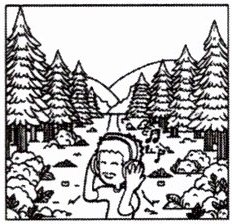
As we often use eyes to touch nature, most of us "lose" the ability to listen to the world.
Peter writes music. He likes sounds and uses natural sounds as part of his music. He often went out to the wild with his microphone and recorded interesting sounds to put in movies or to use in his own songs. Instead of trying to capture just the sound of one animal or bird, he recorded the sound of everything all together—the animals, the trees, the wind and the earth. He called these recordings "soundscapes"—the sound of a certain place. Every soundscape Peter recorded had a lot of information.
Back in his workshop, Peter used a computer to make a picture of all the sounds going on in a place. Each animal, bird and insect had its own place on the picture—its own notes in the music. The busier the picture is, the richer the life in that place is. "While a picture may be worth 1,000 words, a soundscape is worth 1,000 pictures," Peter said. "Our ears tell us the sound of every leaf and animal and speak to the natural sources (来源) of our lives, which may hold the secrets of love for all things, especially our own humanity."
But not everything is satisfying. When Peter began recording over forty years ago, he could record for ten hours and get one hour of usable material good enough for a movie. Now, because of human activities, it can take up to 1,000 hours or more to get the same thing. Some of the places he has recorded over the years have slowly fallen silent. His sound pictures show that although nature might look the same to humans, it has lost part of its orchestra (管弦乐队).
So next time you are in the forests, try another way to look—shut your eyes, and listen.
(
A. To write songs for a music group.
B. To discover rich lives in the forest.
C. To use some of them in his music.
D. To make music about birds singing.
(
A. Shut.
B. Catch.
C. Touch.
D. Check.
(
A. The sound of every leaf and animal in nature.
B. The sound recorded in the natural environment.
C. A picture of music with sounds of 1,000 animals.
D. A picture of music with natural sounds in a place.
(
A. Recording sounds needs less material.
B. Sound pictures are the same as before.
C. Some beautiful sounds in nature are lost.
D. Human activities improve recording results.
(
A. Nature is the source of our future.
B. Nature has wonders to be heard.
C. Making music enriches our lives.
D. Making music needs information.
 ![]()
![]()
As we often use eyes to touch nature, most of us "lose" the ability to listen to the world.
Peter writes music. He likes sounds and uses natural sounds as part of his music. He often went out to the wild with his microphone and recorded interesting sounds to put in movies or to use in his own songs. Instead of trying to capture just the sound of one animal or bird, he recorded the sound of everything all together—the animals, the trees, the wind and the earth. He called these recordings "soundscapes"—the sound of a certain place. Every soundscape Peter recorded had a lot of information.
Back in his workshop, Peter used a computer to make a picture of all the sounds going on in a place. Each animal, bird and insect had its own place on the picture—its own notes in the music. The busier the picture is, the richer the life in that place is. "While a picture may be worth 1,000 words, a soundscape is worth 1,000 pictures," Peter said. "Our ears tell us the sound of every leaf and animal and speak to the natural sources (来源) of our lives, which may hold the secrets of love for all things, especially our own humanity."
But not everything is satisfying. When Peter began recording over forty years ago, he could record for ten hours and get one hour of usable material good enough for a movie. Now, because of human activities, it can take up to 1,000 hours or more to get the same thing. Some of the places he has recorded over the years have slowly fallen silent. His sound pictures show that although nature might look the same to humans, it has lost part of its orchestra (管弦乐队).
So next time you are in the forests, try another way to look—shut your eyes, and listen.
(
C
)1. Why did Peter record natural sounds?A. To write songs for a music group.
B. To discover rich lives in the forest.
C. To use some of them in his music.
D. To make music about birds singing.
(
B
)2. What does the underlined word "capture" in Paragraph 2 mean?A. Shut.
B. Catch.
C. Touch.
D. Check.
(
D
)3. What is a sound picture in the text?A. The sound of every leaf and animal in nature.
B. The sound recorded in the natural environment.
C. A picture of music with sounds of 1,000 animals.
D. A picture of music with natural sounds in a place.
(
C
)4. What can we learn from Paragraph 4?A. Recording sounds needs less material.
B. Sound pictures are the same as before.
C. Some beautiful sounds in nature are lost.
D. Human activities improve recording results.
(
B
)5. What does the writer mainly want to tell us?A. Nature is the source of our future.
B. Nature has wonders to be heard.
C. Making music enriches our lives.
D. Making music needs information.
![]()
答案:
四、1. C 【点拨】根据“He often went out to the wild with his microphone and recorded interesting sounds to put in movies or to use in his own songs.”可知,Peter录制大自然声音是为了在他的音乐中使用这些声音。故选C。
2. B 【点拨】根据“Instead of trying to capture just the sound of one animal or bird, he recorded the sound of everything all together—the animals, the trees, the wind and the earth.”可知他没有试图只捕捉一种动物或鸟类的声音,而是把所有东西的声音都记录下来,故此处画线单词意为“捕捉”,和catch意义相近。故选B。
3. D 【点拨】根据“Peter used a computer to make a picture of all the sounds going on in a place. Each animal, bird and insect had its own place on the picture—its own notes in the music”可知“sound picture”是指用计算机制作的包含某个地方所有声音的图片,即包含自然声音的音乐图片。故选D。
4. C 【点拨】根据“Now, because of human activities, it can take up to 1,000 hours or more to get the same thing. Some of the places he has recorded over the years have slowly fallen silent.”可知由于人类活动的影响,一些大自然声音已经逐渐消失。故选C。
5. B 【点拨】本文主要讲述了Peter通过录制大自然声音来创作音乐,并强调了大自然声音的丰富性和重要性,所以文章主要告诉我们大自然有奇妙的声音。故选B。
2. B 【点拨】根据“Instead of trying to capture just the sound of one animal or bird, he recorded the sound of everything all together—the animals, the trees, the wind and the earth.”可知他没有试图只捕捉一种动物或鸟类的声音,而是把所有东西的声音都记录下来,故此处画线单词意为“捕捉”,和catch意义相近。故选B。
3. D 【点拨】根据“Peter used a computer to make a picture of all the sounds going on in a place. Each animal, bird and insect had its own place on the picture—its own notes in the music”可知“sound picture”是指用计算机制作的包含某个地方所有声音的图片,即包含自然声音的音乐图片。故选D。
4. C 【点拨】根据“Now, because of human activities, it can take up to 1,000 hours or more to get the same thing. Some of the places he has recorded over the years have slowly fallen silent.”可知由于人类活动的影响,一些大自然声音已经逐渐消失。故选C。
5. B 【点拨】本文主要讲述了Peter通过录制大自然声音来创作音乐,并强调了大自然声音的丰富性和重要性,所以文章主要告诉我们大自然有奇妙的声音。故选B。
查看更多完整答案,请扫码查看

