

 搜索
搜索
第67页
- 第1页
- 第2页
- 第3页
- 第4页
- 第5页
- 第6页
- 第7页
- 第8页
- 第9页
- 第10页
- 第11页
- 第12页
- 第13页
- 第14页
- 第15页
- 第16页
- 第17页
- 第18页
- 第19页
- 第20页
- 第21页
- 第22页
- 第23页
- 第24页
- 第25页
- 第26页
- 第27页
- 第28页
- 第29页
- 第30页
- 第31页
- 第32页
- 第33页
- 第34页
- 第35页
- 第36页
- 第37页
- 第38页
- 第39页
- 第40页
- 第41页
- 第42页
- 第43页
- 第44页
- 第45页
- 第46页
- 第47页
- 第48页
- 第49页
- 第50页
- 第51页
- 第52页
- 第53页
- 第54页
- 第55页
- 第56页
- 第57页
- 第58页
- 第59页
- 第60页
- 第61页
- 第62页
- 第63页
- 第64页
- 第65页
- 第66页
- 第67页
- 第68页
- 第69页
- 第70页
- 第71页
- 第72页
- 第73页
- 第74页
- 第75页
- 第76页
- 第77页
- 第78页
- 第79页
- 第80页
- 第81页
- 第82页
- 第83页
- 第84页
- 第85页
- 第86页
- 第87页
- 第88页
- 第89页
- 第90页
- 第91页
- 第92页
- 第93页
- 第94页
- 第95页
- 第96页
- 第97页
- 第98页
- 第99页
- 第100页
- 第101页
- 第102页
- 第103页
- 第104页
- 第105页
- 第106页
- 第107页
- 第108页
- 第109页
- 第110页
- 第111页
- 第112页
- 第113页
- 第114页
- 第115页
- 第116页
- 第117页
- 第118页
- 第119页
- 第120页
- 第121页
- 第122页
- 第123页
- 第124页
- 第125页
- 第126页
- 第127页
- 第128页
- 第129页
- 第130页
- 第131页
- 第132页
- 第133页
- 第134页
- 第135页
- 第136页
- 第137页
- 第138页
- 第139页
- 第140页
- 第141页
- 第142页
- 第143页
- 第144页
- 第145页
- 第146页
- 第147页
- 第148页
- 第149页
- 第150页
- 第151页
- 第152页
- 第153页
- 第154页
- 第155页
- 第156页
- 第157页
- 第158页
- 第159页
- 第160页
- 第161页
- 第162页
1. 你能帮我想一种发明吗?
— Can you help me an invention?
很荣幸!
— !
2. 据说,一个叫神农的中国统治者是第一个发现茶可以饮用的人。
a Chinese ruler called Shen Nong was the first to discover tea as a drink.
3. 虽然现在许多人了解茶文化,但毫无疑问中国人是最懂茶的精髓的人。
many people now know about tea culture, the Chinese are the ones who best understand the nature of tea.
— Can you help me an invention?
很荣幸!
— !
2. 据说,一个叫神农的中国统治者是第一个发现茶可以饮用的人。
a Chinese ruler called Shen Nong was the first to discover tea as a drink.
3. 虽然现在许多人了解茶文化,但毫无疑问中国人是最懂茶的精髓的人。
many people now know about tea culture, the Chinese are the ones who best understand the nature of tea.
答案:
1. think of; My pleasure
2. It is said that
3. Even though; without doubt
2. It is said that
3. Even though; without doubt
探究点二:被动语态
1. 被动语态的定义和用法
被动语态表示主语是动作的承受者。如果不知道谁是动作的执行者或者没有必要说明动作的执行者,只需强调动作的承受者,就要用被动语态。例如:
The blouse is made of silk.
The zipper is often used in our daily lives.
The telephone was invented by Bell in 1876.
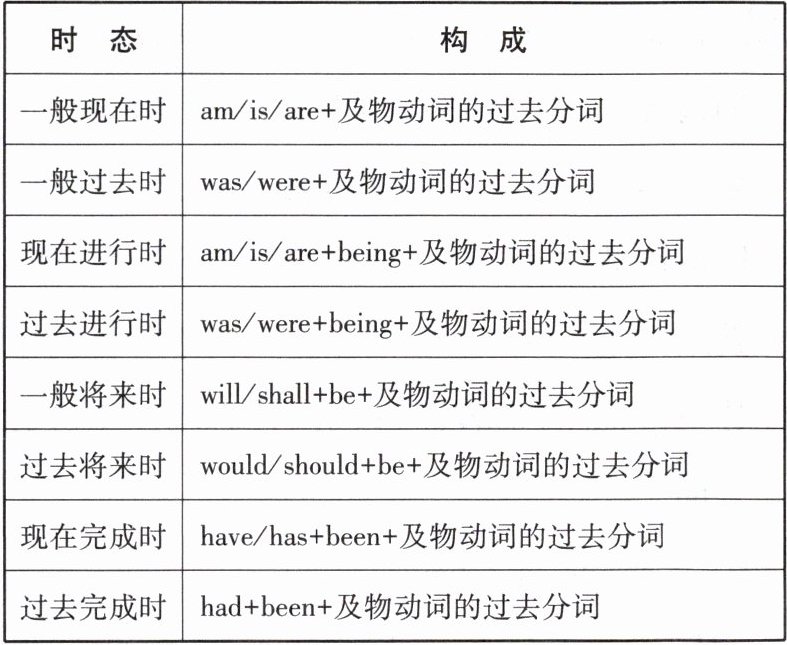
2. 被动语态的构成
被动语态可用于多种时态。现将常用的 8 种时态的被动语态结构列表如下:
【运用】
1. My mother cleans the room every morning.
=The room by my mother every morning.
2. We put off the meeting.
=The meeting by us.
3. Mary made me a new skirt.
= A new skirt me by Mary.
4. The bag was stolen last week. (改为否定句。)
The bag last week.
5. This computer is used (control) all the machines.
1. 被动语态的定义和用法
被动语态表示主语是动作的承受者。如果不知道谁是动作的执行者或者没有必要说明动作的执行者,只需强调动作的承受者,就要用被动语态。例如:
The blouse is made of silk.
The zipper is often used in our daily lives.
The telephone was invented by Bell in 1876.
2. 被动语态的构成
被动语态可用于多种时态。现将常用的 8 种时态的被动语态结构列表如下:
【运用】
1. My mother cleans the room every morning.
=The room by my mother every morning.
2. We put off the meeting.
=The meeting by us.
3. Mary made me a new skirt.
= A new skirt me by Mary.
4. The bag was stolen last week. (改为否定句。)
The bag last week.
5. This computer is used (control) all the machines.
答案:
1. is cleaned
2. was put off
3. was made for
4. wasn't stolen
5. to control
2. was put off
3. was made for
4. wasn't stolen
5. to control
查看更多完整答案,请扫码查看

