

 搜索
搜索
第28页
- 第1页
- 第2页
- 第3页
- 第4页
- 第5页
- 第6页
- 第7页
- 第8页
- 第9页
- 第10页
- 第11页
- 第12页
- 第13页
- 第14页
- 第15页
- 第16页
- 第17页
- 第18页
- 第19页
- 第20页
- 第21页
- 第22页
- 第23页
- 第24页
- 第25页
- 第26页
- 第27页
- 第28页
- 第29页
- 第30页
- 第31页
- 第32页
- 第33页
- 第34页
- 第35页
- 第36页
- 第37页
- 第38页
- 第39页
- 第40页
- 第41页
- 第42页
- 第43页
- 第44页
- 第45页
- 第46页
- 第47页
- 第48页
- 第49页
- 第50页
- 第51页
- 第52页
- 第53页
- 第54页
- 第55页
- 第56页
- 第57页
- 第58页
- 第59页
- 第60页
- 第61页
- 第62页
- 第63页
- 第64页
- 第65页
- 第66页
- 第67页
- 第68页
- 第69页
- 第70页
- 第71页
- 第72页
- 第73页
- 第74页
- 第75页
- 第76页
- 第77页
- 第78页
- 第79页
- 第80页
- 第81页
- 第82页
- 第83页
- 第84页
- 第85页
- 第86页
- 第87页
- 第88页
- 第89页
- 第90页
- 第91页
- 第92页
- 第93页
- 第94页
- 第95页
- 第96页
- 第97页
- 第98页
- 第99页
- 第100页
- 第101页
- 第102页
- 第103页
- 第104页
- 第105页
- 第106页
- 第107页
- 第108页
- 第109页
- 第110页
- 第111页
- 第112页
- 第113页
- 第114页
- 第115页
- 第116页
- 第117页
- 第118页
- 第119页
- 第120页
- 第121页
- 第122页
- 第123页
- 第124页
- 第125页
- 第126页
- 第127页
- 第128页
- 第129页
- 第130页
- 第131页
- 第132页
- 第133页
- 第134页
- 第135页
- 第136页
- 第137页
- 第138页
- 第139页
- 第140页
- 第141页
- 第142页
- 第143页
- 第144页
- 第145页
- 第146页
- 第147页
- 第148页
- 第149页
- 第150页
- 第151页
- 第152页
- 第153页
- 第154页
- 第155页
- 第156页
- 第157页
- 第158页
- 第159页
- 第160页
- 第161页
- 第162页
探究点一:特殊疑问句的宾语从句
当宾语从句是由连接代词who,what,which或连接副词where,when,how,why等引导特殊疑问句时,这时特殊疑问词就是宾语从句的词,从句要用语序。
当宾语从句是特殊疑问句时,我们可以把特殊疑问句充当的宾语从句转换成复合不定式短语。
Could you please tell me how I can get these kinds of books?
= Could you please tell me how to get these kinds of books?
当宾语从句是由连接代词who,what,which或连接副词where,when,how,why等引导特殊疑问句时,这时特殊疑问词就是宾语从句的词,从句要用语序。
当宾语从句是特殊疑问句时,我们可以把特殊疑问句充当的宾语从句转换成复合不定式短语。
Could you please tell me how I can get these kinds of books?
= Could you please tell me how to get these kinds of books?
答案:
连接;陈述
探究点二:deal with的用法
1. deal with 意为“应对;处理;对待”。deal 的过去式和过去分词都是 dealt。
2. deal with 与 do with 都有“处理”的意思。deal with 常与 how 连用,do with 常与 what 连用,分别构成“How... deal with...?”和“What...do with...?”句型。
1. deal with 意为“应对;处理;对待”。deal 的过去式和过去分词都是 dealt。
2. deal with 与 do with 都有“处理”的意思。deal with 常与 how 连用,do with 常与 what 连用,分别构成“How... deal with...?”和“What...do with...?”句型。
答案:
答题卡作答:
1. deal with 的释义为“应对;处理;对待”,其过去式和过去分词形式均为 dealt。
2. deal with 与 do with 均表示“处理”。其中,deal with 常与 how 搭配使用,构成“How...deal with...?”句型;而 do with 常与 what 搭配,构成“What...do with...?”句型。
1. deal with 的释义为“应对;处理;对待”,其过去式和过去分词形式均为 dealt。
2. deal with 与 do with 均表示“处理”。其中,deal with 常与 how 搭配使用,构成“How...deal with...?”句型;而 do with 常与 what 搭配,构成“What...do with...?”句型。
探究点三:问路的常用句型
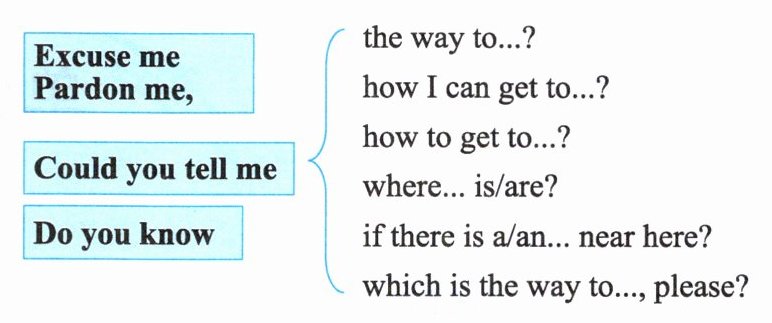
答案:
1. Excuse me/Pardon me, the way to...?
2. Could you tell me how I can get to...?
3. Could you tell me how to get to...?
4. Could you tell me where... is/are?
5. Do you know if there is a/an... near here?
6. Do you know which is the way to..., please?
2. Could you tell me how I can get to...?
3. Could you tell me how to get to...?
4. Could you tell me where... is/are?
5. Do you know if there is a/an... near here?
6. Do you know which is the way to..., please?
1. 拐角;角落
2. 要求;请求(n. & v.)
3. 住址;地址;通讯处(n.)
4. 地下的(adj.) 地铁(n.)
5. 课程;学科(n.)
6. 迷人的(adj.)
7. 谁;什么人(pron.)
8. 讲(某种语言)的人;发言者(n.)
9. 有礼貌的(adj.) →礼貌地(adv.) →没有礼貌的(adj.) →礼貌(n.)
10. 正确的;恰当的(adj.) →正确地;恰当地(adv.)
11. 不昂贵的(adj.) →(反义词) →(同义词)
12. 直接的;直率的(adj.) →直接地(adv.) →间接地(adv.) →方向;方位(n.)
2. 要求;请求(n. & v.)
3. 住址;地址;通讯处(n.)
4. 地下的(adj.) 地铁(n.)
5. 课程;学科(n.)
6. 迷人的(adj.)
7. 谁;什么人(pron.)
8. 讲(某种语言)的人;发言者(n.)
9. 有礼貌的(adj.) →礼貌地(adv.) →没有礼貌的(adj.) →礼貌(n.)
10. 正确的;恰当的(adj.) →正确地;恰当地(adv.)
11. 不昂贵的(adj.) →(反义词) →(同义词)
12. 直接的;直率的(adj.) →直接地(adv.) →间接地(adv.) →方向;方位(n.)
答案:
1.corner
2.request
3.address
4.underground
5.course
6.fascinating
7.whom
8.speaker
9.polite; politely; impolite; politeness
10.correct; correctly
11.inexpensive; expensive; cheap
12.direct; directly; indirectly; direction
2.request
3.address
4.underground
5.course
6.fascinating
7.whom
8.speaker
9.polite; politely; impolite; politeness
10.correct; correctly
11.inexpensive; expensive; cheap
12.direct; directly; indirectly; direction
查看更多完整答案,请扫码查看

