

 搜索
搜索
第142页
- 第1页
- 第2页
- 第3页
- 第4页
- 第5页
- 第6页
- 第7页
- 第8页
- 第9页
- 第10页
- 第11页
- 第12页
- 第13页
- 第14页
- 第15页
- 第16页
- 第17页
- 第18页
- 第19页
- 第20页
- 第21页
- 第22页
- 第23页
- 第24页
- 第25页
- 第26页
- 第27页
- 第28页
- 第29页
- 第30页
- 第31页
- 第32页
- 第33页
- 第34页
- 第35页
- 第36页
- 第37页
- 第38页
- 第39页
- 第40页
- 第41页
- 第42页
- 第43页
- 第44页
- 第45页
- 第46页
- 第47页
- 第48页
- 第49页
- 第50页
- 第51页
- 第52页
- 第53页
- 第54页
- 第55页
- 第56页
- 第57页
- 第58页
- 第59页
- 第60页
- 第61页
- 第62页
- 第63页
- 第64页
- 第65页
- 第66页
- 第67页
- 第68页
- 第69页
- 第70页
- 第71页
- 第72页
- 第73页
- 第74页
- 第75页
- 第76页
- 第77页
- 第78页
- 第79页
- 第80页
- 第81页
- 第82页
- 第83页
- 第84页
- 第85页
- 第86页
- 第87页
- 第88页
- 第89页
- 第90页
- 第91页
- 第92页
- 第93页
- 第94页
- 第95页
- 第96页
- 第97页
- 第98页
- 第99页
- 第100页
- 第101页
- 第102页
- 第103页
- 第104页
- 第105页
- 第106页
- 第107页
- 第108页
- 第109页
- 第110页
- 第111页
- 第112页
- 第113页
- 第114页
- 第115页
- 第116页
- 第117页
- 第118页
- 第119页
- 第120页
- 第121页
- 第122页
- 第123页
- 第124页
- 第125页
- 第126页
- 第127页
- 第128页
- 第129页
- 第130页
- 第131页
- 第132页
- 第133页
- 第134页
- 第135页
- 第136页
- 第137页
- 第138页
- 第139页
- 第140页
- 第141页
- 第142页
- 第143页
- 第144页
- 第145页
- 第146页
- 第147页
- 第148页
- 第149页
- 第150页
- 第151页
- 第152页
- 第153页
- 第154页
- 第155页
- 第156页
- 第157页
- 第158页
- 第159页
- 第160页
- 第161页
- 第162页
探究点一:make 作使役动词时的用法
make 可以作行为动词,意为“做;制造;制作”,它还可以作使役动词,意为“使;使得”。一般用在“make + 宾语 + 宾语补足语”的结构中。
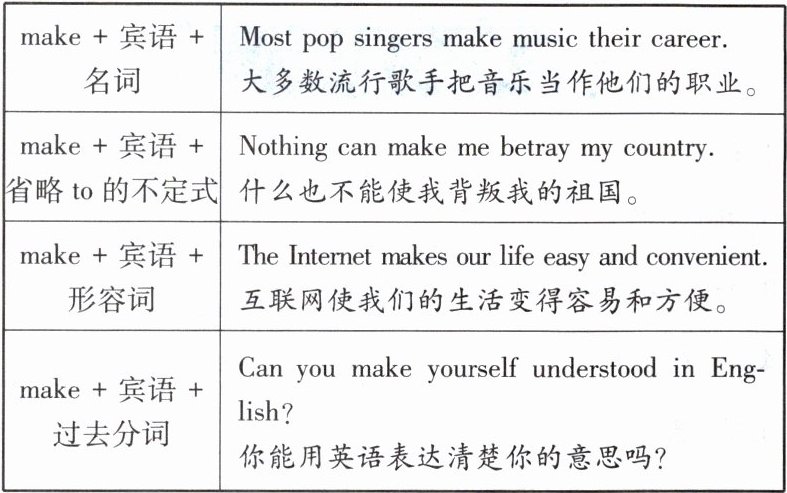
当把含 make sb. do sth. 结构的句子变为被动语态时,原句中省略的不定式符号 to 必须还原。
We are often made to retell the texts by our English teacher.
我们经常被英语老师要求复述课文。
【运用】
1. Sad movies make me (cry).
2. His rude behavior made his teacher (生气).
3. We made him our (司机).
make 可以作行为动词,意为“做;制造;制作”,它还可以作使役动词,意为“使;使得”。一般用在“make + 宾语 + 宾语补足语”的结构中。
当把含 make sb. do sth. 结构的句子变为被动语态时,原句中省略的不定式符号 to 必须还原。
We are often made to retell the texts by our English teacher.
我们经常被英语老师要求复述课文。
【运用】
1. Sad movies make me (cry).
2. His rude behavior made his teacher (生气).
3. We made him our (司机).
答案:
1. cry
2. angry
3. driver
2. angry
3. driver
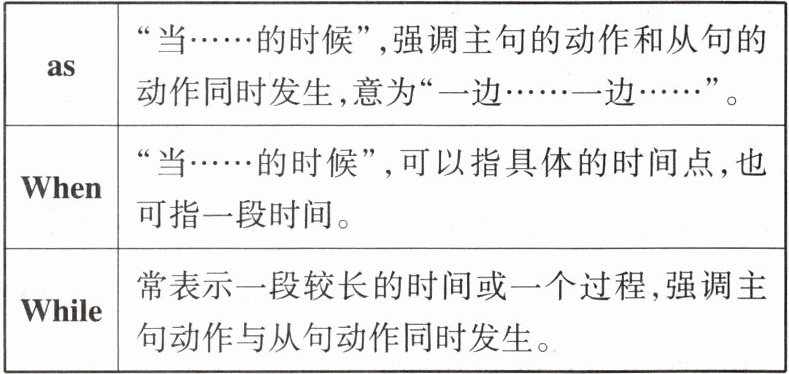
探究点二:as, when 与 while 的用法
【运用】
用 as, when, while 填空。
1. he was reading, the telephone rang.
2. We were talking and laughing the teacher came in.
3. The students often listen to music they do homework.
【运用】
用 as, when, while 填空。
1. he was reading, the telephone rang.
2. We were talking and laughing the teacher came in.
3. The students often listen to music they do homework.
答案:
While; when; as
探究点三:hear sb. doing sth. 与 hear sb. do sth.
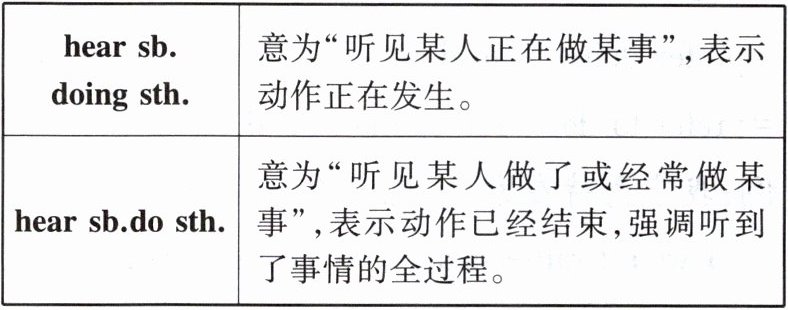
【运用】
1. I hear my sister (play) the piano every evening.
2. I hear someone (play) the piano in the next room.
【拓展】
常见的感官动词如 see, watch, notice, hear, feel 等,其后接不带 to 的不定式作宾语补足语,表示动作已经完成;接动词 -ing 形式作宾语补足语,表示动作正在进行或发生。
【运用】
1. I hear my sister (play) the piano every evening.
2. I hear someone (play) the piano in the next room.
【拓展】
常见的感官动词如 see, watch, notice, hear, feel 等,其后接不带 to 的不定式作宾语补足语,表示动作已经完成;接动词 -ing 形式作宾语补足语,表示动作正在进行或发生。
答案:
1. play 2. playing
探究点四:besides 与 except
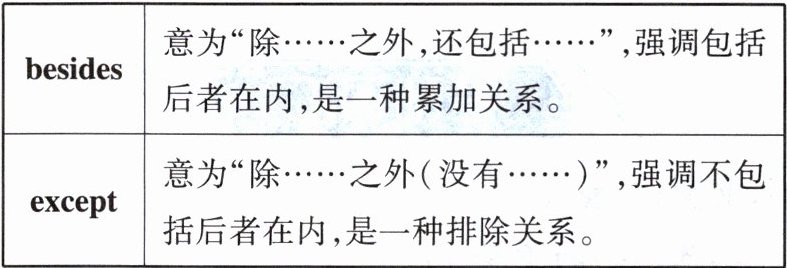
【运用】
1. He gets up early (除了) Sunday.
2. She can speak French and Japanese (除了) English.
【运用】
1. He gets up early (除了) Sunday.
2. She can speak French and Japanese (除了) English.
答案:
1. except 2. besides
查看更多完整答案,请扫码查看

