

 搜索
搜索
第41页
- 第2页
- 第3页
- 第4页
- 第5页
- 第6页
- 第7页
- 第8页
- 第9页
- 第10页
- 第11页
- 第12页
- 第13页
- 第14页
- 第15页
- 第16页
- 第17页
- 第18页
- 第19页
- 第20页
- 第21页
- 第22页
- 第23页
- 第24页
- 第25页
- 第26页
- 第27页
- 第28页
- 第29页
- 第30页
- 第31页
- 第32页
- 第33页
- 第34页
- 第35页
- 第36页
- 第37页
- 第38页
- 第39页
- 第40页
- 第41页
- 第42页
- 第43页
- 第44页
- 第45页
- 第46页
- 第47页
- 第48页
- 第49页
- 第50页
- 第51页
- 第52页
- 第53页
- 第54页
- 第55页
- 第56页
- 第57页
- 第58页
- 第59页
- 第60页
- 第61页
- 第62页
- 第63页
- 第64页
- 第65页
- 第66页
- 第67页
- 第68页
- 第69页
- 第70页
- 第71页
- 第72页
- 第73页
- 第74页
- 第75页
- 第76页
- 第77页
- 第78页
- 第79页
- 第80页
- 第81页
- 第82页
- 第83页
- 第84页
- 第85页
- 第86页
- 第87页
- 第88页
- 第89页
- 第90页
- 第91页
- 第92页
- 第93页
一、根据句意在空白处填入括号内单词的正确形式
1. Cheetahs can run ____ (fast) than most other animals, and they are known for their ____ (amaze) speed.
2. The blue whale is not only ____ (big) animal but also ____ (heavy) creature(生物) on earth.
3. Moss is a very special plant. There are many different kinds of ____ (moss) in the forest.
4. Yaming and Emma ____ (start) a test on animals and plants now.
1. Cheetahs can run ____ (fast) than most other animals, and they are known for their ____ (amaze) speed.
2. The blue whale is not only ____ (big) animal but also ____ (heavy) creature(生物) on earth.
3. Moss is a very special plant. There are many different kinds of ____ (moss) in the forest.
4. Yaming and Emma ____ (start) a test on animals and plants now.
答案:
1. faster;amazing 2. the biggest;the heaviest 3. mosses 4. are starting
二、根据汉语意思完成句子,每空一词
1. 世界上最大的动物是什么?
What's ____ ____ ____ in the world?
2. 她完全赞同本周末去野餐这个主意。
She ____ ____ with the idea of going on a picnic this weekend.
3. 我希望有一天能看到一些红杉树。
I ____ I can see some ____ trees ____.
1. 世界上最大的动物是什么?
What's ____ ____ ____ in the world?
2. 她完全赞同本周末去野餐这个主意。
She ____ ____ with the idea of going on a picnic this weekend.
3. 我希望有一天能看到一些红杉树。
I ____ I can see some ____ trees ____.
答案:
1. the largest animal 2. completely agrees 3. hope;redwood;someday
三、阅读理解
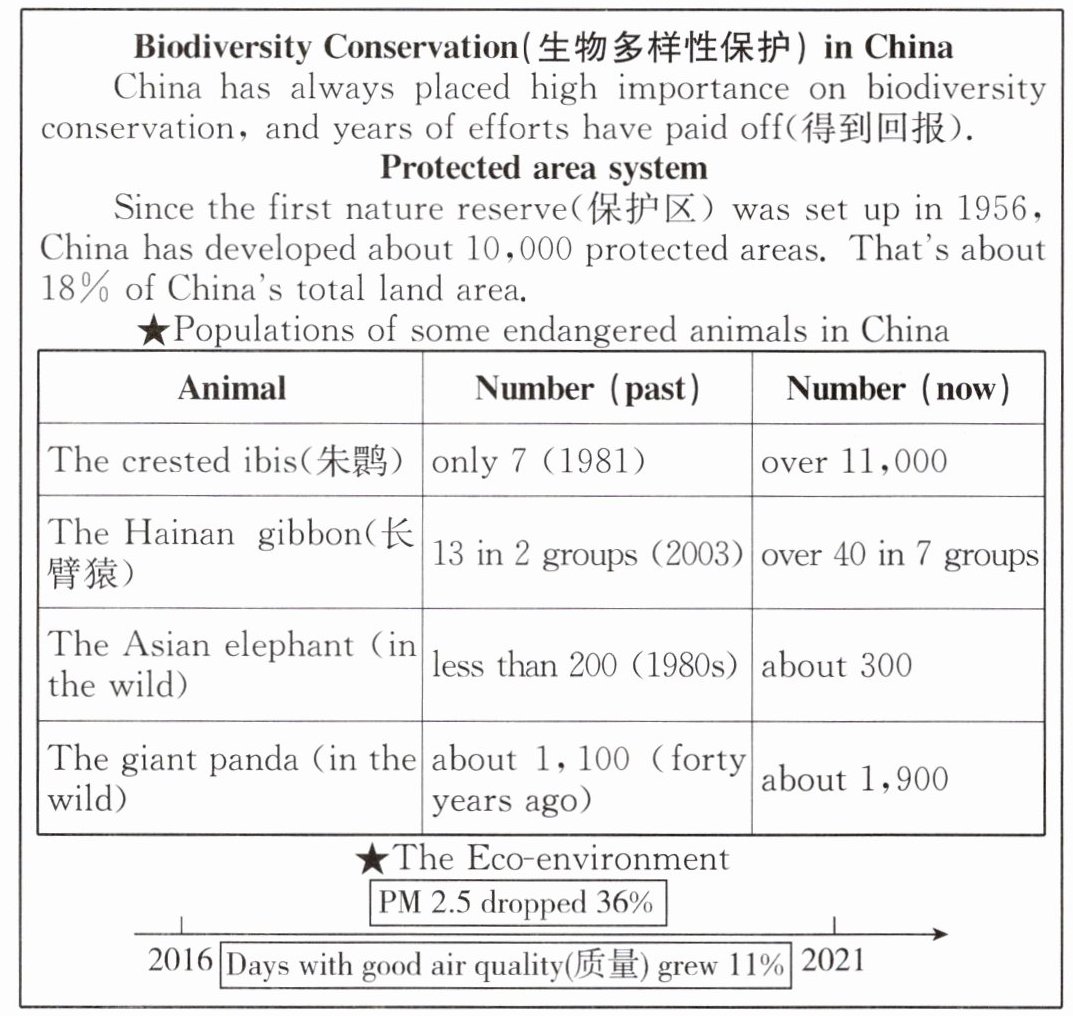
( )1. Which animal sees the largest rise in numbers?
A. The crested ibis.
B. The Hainan gibbon.
C. The Asian elephant.
D. The giant panda.
( )2. Which of the following is TRUE according to the report?
A. The first nature reserve in China was set up 100 years ago.
B. Protected areas take up half of China's land area.
C. The number of the giant panda is about 1,900 in China now.
D. The air is cleaner now than before.
( )3. What is the main idea of the report?
A. It's about different nature reserves in China.
B. It's about the number of some common animals in China.
C. It's about what China has done to protect animals and nature.
D. It's about the improvement of China's eco-environment.
( )1. Which animal sees the largest rise in numbers?
A. The crested ibis.
B. The Hainan gibbon.
C. The Asian elephant.
D. The giant panda.
( )2. Which of the following is TRUE according to the report?
A. The first nature reserve in China was set up 100 years ago.
B. Protected areas take up half of China's land area.
C. The number of the giant panda is about 1,900 in China now.
D. The air is cleaner now than before.
( )3. What is the main idea of the report?
A. It's about different nature reserves in China.
B. It's about the number of some common animals in China.
C. It's about what China has done to protect animals and nature.
D. It's about the improvement of China's eco-environment.
答案:
1.A 2.D 3.C
查看更多完整答案,请扫码查看

