

 搜索
搜索
2025年全效学习阶段发展评价九年级英语全一册外研版
注:目前有些书本章节名称可能整理的还不是很完善,但都是按照顺序排列的,请同学们按照顺序仔细查找。练习册 2025年全效学习阶段发展评价九年级英语全一册外研版 答案主要是用来给同学们做完题方便对答案用的,请勿直接抄袭。
第74页
- 第2页
- 第3页
- 第4页
- 第5页
- 第6页
- 第7页
- 第8页
- 第9页
- 第10页
- 第11页
- 第12页
- 第13页
- 第14页
- 第15页
- 第16页
- 第17页
- 第18页
- 第19页
- 第20页
- 第21页
- 第22页
- 第23页
- 第24页
- 第25页
- 第26页
- 第27页
- 第28页
- 第29页
- 第30页
- 第31页
- 第32页
- 第33页
- 第34页
- 第35页
- 第36页
- 第37页
- 第38页
- 第39页
- 第40页
- 第41页
- 第42页
- 第43页
- 第44页
- 第45页
- 第46页
- 第47页
- 第48页
- 第49页
- 第50页
- 第51页
- 第52页
- 第53页
- 第54页
- 第55页
- 第56页
- 第57页
- 第58页
- 第59页
- 第60页
- 第61页
- 第62页
- 第63页
- 第64页
- 第65页
- 第66页
- 第67页
- 第68页
- 第69页
- 第70页
- 第71页
- 第72页
- 第73页
- 第74页
- 第75页
- 第76页
- 第77页
- 第78页
- 第79页
- 第80页
- 第81页
- 第82页
- 第83页
- 第84页
- 第85页
- 第86页
- 第87页
- 第88页
1. The train was full of people, ……
火车上挤满了人,……
学 be full of 意为“装满……;充满……”。其同义短语为 be filled with。
用 Look! The bottle is filled with sand.
= Look! The bottle sand.
火车上挤满了人,……
学 be full of 意为“装满……;充满……”。其同义短语为 be filled with。
用 Look! The bottle is filled with sand.
= Look! The bottle sand.
答案:
is full of
2. 【辨析】because of 与 because
学 两者都意为“因为”,但用法不同:
(1) because 为从属连词,引导原因状语从句,即其后接句子而非词(组)。
(2) because of 为介词短语,其后通常接名词、代词或动词 - ing。
用 The young man didn't come here (because/because of) his illness.
学 两者都意为“因为”,但用法不同:
(1) because 为从属连词,引导原因状语从句,即其后接句子而非词(组)。
(2) because of 为介词短语,其后通常接名词、代词或动词 - ing。
用 The young man didn't come here (because/because of) his illness.
答案:
because of
3. 【辨析】a little 与 a bit
学 (1) 两者都可意为“有点儿;一点儿”。a bit 相当于 a little bit/a little。
(2) 两者都可作主语、宾语或状语,都可修饰比较级。
(3) 两者前置修饰名词时,a little 后可直接接名词,a bit 必须加 of 后才能接名词。
【注意】① not a little 意为“很;非常”,相当于 very (much)。
② not a bit 意为“毫不;一点也不”,相当于 not … at all。
用 ① The boy over there is a bit ______ (old) than you.
② Mr White has only ______ (一点儿钱) so he can't afford this car.
学 (1) 两者都可意为“有点儿;一点儿”。a bit 相当于 a little bit/a little。
(2) 两者都可作主语、宾语或状语,都可修饰比较级。
(3) 两者前置修饰名词时,a little 后可直接接名词,a bit 必须加 of 后才能接名词。
【注意】① not a little 意为“很;非常”,相当于 very (much)。
② not a bit 意为“毫不;一点也不”,相当于 not … at all。
用 ① The boy over there is a bit ______ (old) than you.
② Mr White has only ______ (一点儿钱) so he can't afford this car.
答案:
① older ② a bit of money/a little money
4. 【辨析】on time 与 in time
学 (1) on time 意为“准时;按时”。指正好在约定的时间发生。
(2) in time 意为“及时”。指在约定的时间之前发生。
用 用 on time 或 in time 填空
① If you want much more information, get in touch with them .
② We should get there to see the exhibition.
学 (1) on time 意为“准时;按时”。指正好在约定的时间发生。
(2) in time 意为“及时”。指在约定的时间之前发生。
用 用 on time 或 in time 填空
① If you want much more information, get in touch with them .
② We should get there to see the exhibition.
答案:
① in time
② on time
② on time
Ⅰ. 根据句意及首字母或汉语注释完成单词
1. I am sure Jackson will
2. —Did you have a good
—Yes, I did. It was relaxing and comfortable.
3. The p
4. The new house is
5. It's said that the next airliner(班机)doesn't go d
1. I am sure Jackson will
succeed
(成功)one day.2. —Did you have a good
flight
(飞行), Mr Smith?—Yes, I did. It was relaxing and comfortable.
3. The p
ilot
managed to land the broken plane safely.4. The new house is
exactly
(确切地)what we've always wanted.5. It's said that the next airliner(班机)doesn't go d
irect
to Rome.
答案:
1. succeed 2. flight 3. pilot 4. exactly 5. direct
Ⅱ. 从括号中选择合适的词语填空
1.
2. Parents won't worry about us
3. Would you please give me
4. Eat more, and you will be
1.
Because of
(Because/Because of)the bad weather, the Greens had to stay at home last weekend.2. Parents won't worry about us
as long as
(as long as/as soon as)we take good care of ourselves.3. Would you please give me
a bit of
(a bit/a bit of)water? I'm really thirsty.4. Eat more, and you will be
full
(full/filled)of energy all over.
答案:
1. Because of 2. as long as 3. a bit of 4. full
Ⅲ. 语法填空
The first time I really heard about the Silk Road was many years ago, in Japan. My wife and I 1.
We had never thought about the Silk Road before, but after seeing 4.
The first time I really heard about the Silk Road was many years ago, in Japan. My wife and I 1.
were walking
(walk)through a park while we saw an exhibition hall full of people. 2. What
a beautiful building! We decided to go in. We discovered a large hall filled 3. with
sand from China's desert, folk dancers and musicians from Central Asia, beautiful silk and wonderful things from all over the world.We had never thought about the Silk Road before, but after seeing 4.
the
exhibition, we became interested in it. This interest led us to China, where we visited one of the 5. biggest
(big)deserts, the Taklamakan Desert. We lived quite near it for two years 6. and
we explored(探索)old Silk Road places in the far west, going as far as Karakul Lake high up in the Pamir Mountains. During 7. our
(we)time in the far west of China, we 8. rode
(ride)camels through the desert and visited ancient markets. Those 9. memories
(memory)we made there would last for the rest of our lives. We expect more people with the more interest 10. to visit
(visit)the Silk Road and learn more. It was our interest in the Silk Road that drove us there and kept us wanting to learn more.
答案:
1. were walking 2. What 3. with 4. the 5. biggest 6. and 7. our 8. rode 9. memories 10. to visit
Ⅳ. 阅读理解
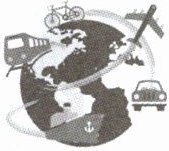
Recently, “cloud tourism” has attracted(吸引)millions of people in China. “Cloud tourism” refers to a new form of travel that depends on high technology such as 5G and virtual reality(虚拟现实).
During the May Day Holiday, about 250 million people took an online tour by live-streaming(直播)on a short video app. Taishan, a popular channel, live-streamed the sunrise at the top of Mount Tai on 1st May and attracted 330,000 views.
China Youth Daily made a survey(调查)of about 2,000 people on “cloud tourism”. According to the survey results, 74.8% of them said they were willing to take an online tour and 59.7% said they had a good online travelling experience.
“I hate large crowds and long queues(队), which make me annoyed when visiting museums in person,” said Wang Bo, a museum lover in Beijing. “What's more, ‘cloud tourism’ helps cut travelling cost and offers more tourist attractions.”
“Cloud tourism” has made huge contributions(贡献)to the local development and a rise in sales of cultural products after live-streaming shows, according to Xinhua News Agency.
(
A. About 500.
B. About 800.
C. About 1,200.
D. About 1,500.
(
A. Angry.
B. Excited.
C. Relaxed.
D. Useless.
(
A. It helps cut travelling cost.
B. It makes tourist attractions more crowded.
C. It offers more tourist attractions.
D. It increases the sales of cultural products.
(
A. In a poster.
B. In a notice.
C. In a novel.
D. In a newspaper.
Recently, “cloud tourism” has attracted(吸引)millions of people in China. “Cloud tourism” refers to a new form of travel that depends on high technology such as 5G and virtual reality(虚拟现实).
During the May Day Holiday, about 250 million people took an online tour by live-streaming(直播)on a short video app. Taishan, a popular channel, live-streamed the sunrise at the top of Mount Tai on 1st May and attracted 330,000 views.
China Youth Daily made a survey(调查)of about 2,000 people on “cloud tourism”. According to the survey results, 74.8% of them said they were willing to take an online tour and 59.7% said they had a good online travelling experience.
“I hate large crowds and long queues(队), which make me annoyed when visiting museums in person,” said Wang Bo, a museum lover in Beijing. “What's more, ‘cloud tourism’ helps cut travelling cost and offers more tourist attractions.”
“Cloud tourism” has made huge contributions(贡献)to the local development and a rise in sales of cultural products after live-streaming shows, according to Xinhua News Agency.
(
C
)1. How many people had a good online travelling experience according to China Youth Daily's survey?A. About 500.
B. About 800.
C. About 1,200.
D. About 1,500.
(
A
)2. What does the underlined word “annoyed” in Paragraph 4 probably mean?A. Angry.
B. Excited.
C. Relaxed.
D. Useless.
(
B
)3. Which of the following about “cloud tourism” is NOT true according to the text?A. It helps cut travelling cost.
B. It makes tourist attractions more crowded.
C. It offers more tourist attractions.
D. It increases the sales of cultural products.
(
D
)4. Where can we read the text?A. In a poster.
B. In a notice.
C. In a novel.
D. In a newspaper.
答案:
1—4 CABD
查看更多完整答案,请扫码查看

