

 搜索
搜索
2025年全效学习阶段发展评价九年级英语全一册外研版
注:目前有些书本章节名称可能整理的还不是很完善,但都是按照顺序排列的,请同学们按照顺序仔细查找。练习册 2025年全效学习阶段发展评价九年级英语全一册外研版 答案主要是用来给同学们做完题方便对答案用的,请勿直接抄袭。
第2页
- 第2页
- 第3页
- 第4页
- 第5页
- 第6页
- 第7页
- 第8页
- 第9页
- 第10页
- 第11页
- 第12页
- 第13页
- 第14页
- 第15页
- 第16页
- 第17页
- 第18页
- 第19页
- 第20页
- 第21页
- 第22页
- 第23页
- 第24页
- 第25页
- 第26页
- 第27页
- 第28页
- 第29页
- 第30页
- 第31页
- 第32页
- 第33页
- 第34页
- 第35页
- 第36页
- 第37页
- 第38页
- 第39页
- 第40页
- 第41页
- 第42页
- 第43页
- 第44页
- 第45页
- 第46页
- 第47页
- 第48页
- 第49页
- 第50页
- 第51页
- 第52页
- 第53页
- 第54页
- 第55页
- 第56页
- 第57页
- 第58页
- 第59页
- 第60页
- 第61页
- 第62页
- 第63页
- 第64页
- 第65页
- 第66页
- 第67页
- 第68页
- 第69页
- 第70页
- 第71页
- 第72页
- 第73页
- 第74页
- 第75页
- 第76页
- 第77页
- 第78页
- 第79页
- 第80页
- 第81页
- 第82页
- 第83页
- 第84页
- 第85页
- 第86页
- 第87页
- 第88页
1. natural 的用法
学 作形容词,意为“大自然的;合理的;合乎常情的;天生的”。其名词形式 nature 意为“大自然;自然界”。
用 It's very good for us to eat some
学 作形容词,意为“大自然的;合理的;合乎常情的;天生的”。其名词形式 nature 意为“大自然;自然界”。
用 It's very good for us to eat some
natural
(nature) food.
答案:
1.natural
2. wonder 的用法
学 (1)作名词,意为“奇观;奇迹”。
(2)作动词,意为“想知道”,其后通常接宾语从句。
【拓展】①It's a wonder that …意为“令人惊奇的是……”。
②It's no wonder that …意为“……不足为奇。”
用 ①长城是世界奇观之一。
The Great Wall is
②我想知道他为何做那件事。
I
学 (1)作名词,意为“奇观;奇迹”。
(2)作动词,意为“想知道”,其后通常接宾语从句。
【拓展】①It's a wonder that …意为“令人惊奇的是……”。
②It's no wonder that …意为“……不足为奇。”
用 ①长城是世界奇观之一。
The Great Wall is
one
of
the
wonders
of the world.②我想知道他为何做那件事。
I
wonder
why he did that.
答案:
2. ①one of the wonders ②wonder
3. 【辨析】join, join in 与 take part in
学 (1)join 意为“加入(某一组织、党派或社会团体)”,从而成为其中一员;join 也可意为“参与;加入到……中去”,其常用结构有 join sb. (for sth. /in doing sth. )。
(2)join in 与 take part in 可互换使用,意为“参加(某项活动或会议)”。
用 用 join, join in 或 take part in 的适当形式填空
①Will you
②May I
③My uncle
学 (1)join 意为“加入(某一组织、党派或社会团体)”,从而成为其中一员;join 也可意为“参与;加入到……中去”,其常用结构有 join sb. (for sth. /in doing sth. )。
(2)join in 与 take part in 可互换使用,意为“参加(某项活动或会议)”。
用 用 join, join in 或 take part in 的适当形式填空
①Will you
join
us in playing the game?②May I
take part in/join in
the competition?③My uncle
joined
the Party in 1989.
答案:
3. ①join ②take part in/join in ③joined
4. discussion 的用法
学 作名词,意为“讨论;商讨”,其后常接介词 about 或 on 短语作定语。
【注意】discuss 作动词,意为“讨论;谈论”。
用 让我和你们一起讨论一下这个计划。
Let me ____ ____ ____ the plan with you.
学 作名词,意为“讨论;商讨”,其后常接介词 about 或 on 短语作定语。
【注意】discuss 作动词,意为“讨论;谈论”。
用 让我和你们一起讨论一下这个计划。
Let me ____ ____ ____ the plan with you.
答案:
4.have a discussion about/on
Ⅰ. 根据句意及首字母或汉语注释完成单词
1. This small island is off the e
2. Peter still works hard, t____ he failed again.
3. In my o____, all of us should protect our environment.
4. There ____ to be no ____ (电) in some areas of this country.
5. This programme can help us learn about the ____ (大自然的) world.
6. Several students are having a
7. Hard seats and
1. This small island is off the e
astern/east
coast.2. Peter still works hard, t____ he failed again.
3. In my o____, all of us should protect our environment.
4. There ____ to be no ____ (电) in some areas of this country.
5. This programme can help us learn about the ____ (大自然的) world.
6. Several students are having a
discussion
(讨论) about the sports meeting.7. Hard seats and
loud
(响亮的) music often make me feel unhappy.
答案:
Ⅰ.1.eastern/east 2.though 3.opinion 4.electricity 5.natural 6.discussion 7.loud
Ⅱ. 用方框中所给单词的适当形式填空
join million wonder noise away
1. The sports club is great. Why not
2. Qomolangma is one of the greatest
3. Every year,
4. Some kids are talking and laughing loudly on the train. It's so
5. The new station is about three kilometres
join million wonder noise away
1. The sports club is great. Why not
join
it?2. Qomolangma is one of the greatest
wonders
in the world.3. Every year,
millions
of people come to visit my home town.4. Some kids are talking and laughing loudly on the train. It's so
noisy
.5. The new station is about three kilometres
away
from the city centre.
答案:
Ⅱ.1.join 2.wonders 3.millions 4.noisy 5.away
Ⅲ. 语法填空
The London Eye is a tourist attraction in London. There you can get into a capsule (密封舱) to experience great sights of the city.
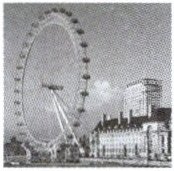
I 1. ____ (visit) the London Eye last summer with a friend. My friend didn't know where we were going. I just told him we would go somewhere very special. As we arrived 2. ____ Waterloo Station, he worked out where we were going. He smiled 3. ____ (happy). When we reached the London Eye, there was 4. ____ very long waiting line. In order to save time, he stayed in the line while I went to buy 5. ____ (ticket).
The capsule didn't completely stop when people got on, 6. ____ we had to get into it quickly. Then the door of the capsule shut. Wow, 7. ____ wonderful the view was! We took many photos of the view and of 8. ____ (we). It took about half an hour for the capsule to go around.
If you are 9. ____ (interest) in going there, I'd like to give you some advice. 10. ____ (enjoy) the view, go in the daytime.
The London Eye is a tourist attraction in London. There you can get into a capsule (密封舱) to experience great sights of the city.
I 1. ____ (visit) the London Eye last summer with a friend. My friend didn't know where we were going. I just told him we would go somewhere very special. As we arrived 2. ____ Waterloo Station, he worked out where we were going. He smiled 3. ____ (happy). When we reached the London Eye, there was 4. ____ very long waiting line. In order to save time, he stayed in the line while I went to buy 5. ____ (ticket).
The capsule didn't completely stop when people got on, 6. ____ we had to get into it quickly. Then the door of the capsule shut. Wow, 7. ____ wonderful the view was! We took many photos of the view and of 8. ____ (we). It took about half an hour for the capsule to go around.
If you are 9. ____ (interest) in going there, I'd like to give you some advice. 10. ____ (enjoy) the view, go in the daytime.
答案:
Ⅲ.1.visited 2.at 3.happily 4.a 5.tickets 6.so 7.how 8.ourselves 9.interested 10.To enjoy
Ⅳ. 阅读理解
When I was in the third grade, I watched a video that showed the discovery of King Tutankhamun's tomb (陵墓). I remember Carter, one of the characters in the video, going through a narrow hole in the tomb with a candle. A workman asked what he could see. “Wonderful things!” Carter said. From that moment, I knew what I wanted to do in my life.
So I decided what I wanted to be at the age of nine, and I made it happen. Seems easy, right? Not quite! The road wasn't easy. I did my studies — university, then a PhD (博士). But along the way I was told many things, “Shawki was too young and she had no experience. She should get married and have kids.” I also needed money, so I applied for grants (申请补助金) from the government. The first five replies I got said no. Six months later the last reply came and I was excited about it. Finally, I could start my own digging.
Today, I'm lucky to work as an archeologist (考古学家). I study the lives of people who lived in Egypt's Nile Delta. It's exciting work. Sometimes you find something that was buried three thousand years ago. Holding a piece of history is an amazing feeling.
For anyone thinking about a job, I would say: Never give up. If you want to do something, keep trying. If people tell you “no”, accept that — it will push you. At the beginning, it hurts. But the next “no” hurts a little less. It makes you stronger and actually helps you.
Focus on your goals. You don't have to follow other people. If they say something has never been done, make it happen. You may be the first to do it! There are always challenges, but you can overcome them in the end.
(
A. To explain the challenges Shawki faced at school.
B. To describe what was found inside the King's tomb.
C. To explain how Shawki became interested in archeology.
D. To show how Carter did a good job in the King's tomb.
(
A. The reply.
B. The digging.
C. The challenge.
D. The university.
(
A. Think about the job.
B. Never give up.
C. Learn to say no.
D. Refuse the hurts.
(
①Shawki decided to be an archeologist.
②Shawki encouraged people to focus on goals.
③Shawki went to a university and got a PhD.
④Shawki applied for money from the government.
A. ①②③④
B. ①③④②
C. ③①④②
D. ③④①②
When I was in the third grade, I watched a video that showed the discovery of King Tutankhamun's tomb (陵墓). I remember Carter, one of the characters in the video, going through a narrow hole in the tomb with a candle. A workman asked what he could see. “Wonderful things!” Carter said. From that moment, I knew what I wanted to do in my life.
So I decided what I wanted to be at the age of nine, and I made it happen. Seems easy, right? Not quite! The road wasn't easy. I did my studies — university, then a PhD (博士). But along the way I was told many things, “Shawki was too young and she had no experience. She should get married and have kids.” I also needed money, so I applied for grants (申请补助金) from the government. The first five replies I got said no. Six months later the last reply came and I was excited about it. Finally, I could start my own digging.
Today, I'm lucky to work as an archeologist (考古学家). I study the lives of people who lived in Egypt's Nile Delta. It's exciting work. Sometimes you find something that was buried three thousand years ago. Holding a piece of history is an amazing feeling.
For anyone thinking about a job, I would say: Never give up. If you want to do something, keep trying. If people tell you “no”, accept that — it will push you. At the beginning, it hurts. But the next “no” hurts a little less. It makes you stronger and actually helps you.
Focus on your goals. You don't have to follow other people. If they say something has never been done, make it happen. You may be the first to do it! There are always challenges, but you can overcome them in the end.
(
C
)1. What's the purpose of writing Paragraph 1?A. To explain the challenges Shawki faced at school.
B. To describe what was found inside the King's tomb.
C. To explain how Shawki became interested in archeology.
D. To show how Carter did a good job in the King's tomb.
(
A
)2. What does the word “it” in Paragraph 2 refer to?A. The reply.
B. The digging.
C. The challenge.
D. The university.
(
B
)3. What's the main idea of Paragraph 4?A. Think about the job.
B. Never give up.
C. Learn to say no.
D. Refuse the hurts.
(
B
)4. Which is the right order of the following events?①Shawki decided to be an archeologist.
②Shawki encouraged people to focus on goals.
③Shawki went to a university and got a PhD.
④Shawki applied for money from the government.
A. ①②③④
B. ①③④②
C. ③①④②
D. ③④①②
答案:
Ⅳ.1—4 CABB
查看更多完整答案,请扫码查看

