

 搜索
搜索
第40页
- 第1页
- 第2页
- 第3页
- 第4页
- 第5页
- 第6页
- 第7页
- 第8页
- 第9页
- 第10页
- 第11页
- 第12页
- 第13页
- 第14页
- 第15页
- 第16页
- 第17页
- 第18页
- 第19页
- 第20页
- 第21页
- 第22页
- 第23页
- 第24页
- 第25页
- 第26页
- 第27页
- 第28页
- 第29页
- 第30页
- 第31页
- 第32页
- 第33页
- 第34页
- 第35页
- 第36页
- 第37页
- 第38页
- 第39页
- 第40页
- 第41页
- 第42页
- 第43页
- 第44页
- 第45页
- 第46页
- 第47页
- 第48页
- 第49页
- 第50页
- 第51页
- 第52页
- 第53页
- 第54页
- 第55页
- 第56页
- 第57页
- 第58页
- 第59页
- 第60页
- 第61页
- 第62页
- 第63页
- 第64页
- 第65页
- 第66页
- 第67页
- 第68页
- 第69页
- 第70页
- 第71页
- 第72页
- 第73页
- 第74页
- 第75页
- 第76页
- 第77页
- 第78页
- 第79页
- 第80页
- 第81页
- 第82页
- 第83页
- 第84页
- 第85页
- 第86页
- 第87页
Ⅰ. 根据句意及中文提示填写单词
1. Try to
2. Bees make
3. Fifty
4. You can
5. The computer can
6. We can
7. We should
8.
9. The process of
10. Jupiter (木星) is a huge
1. Try to
imagine
(想象) a world without colours. How boring it would be!2. Bees make
honey
(蜂蜜) from the flowers.3. Fifty
per cent
(百分之……) of the apples in the basket are red.4. You can
connect
(连接) the lines to draw a picture.5. The computer can
store
(存储) a lot of information.6. We can
communicate
(交流) with each other by sending messages.7. We should
protect
(保护) our eyes by doing eye exercises.8.
Humans
(人类) need air, water and food to survive.9. The process of
pollination
(授粉) is really interesting.10. Jupiter (木星) is a huge
planet
(行星) but we can’t live on it.
答案:
1.imagine 2.honey 3.per cent 4.connect 5.store 6.communicate 7.protect 8.Humans 9.pollination 10.planet
Ⅱ. 根据句意,用所给单词的适当形式填空
1. My father went to work
2. I expected he got good grades, but at last he
3. Nowadays, people started to realise the
4. Our government is trying to help save the pandas. Let’s take
5. Our health is closely
1. My father went to work
without
(with) breakfast. He must be hungry now.2. I expected he got good grades, but at last he
disappointed
(disappoint) me.3. Nowadays, people started to realise the
importance
(important) of AI.4. Our government is trying to help save the pandas. Let’s take
action
(act) to join in.5. Our health is closely
connected
(connect) with what we eat and how we live.
答案:
1.without 2.disappointed 3.importance 4.action 5.connected
Ⅲ. 根据中文意思,补全英语译文
1. 为了保持健康,我爷爷经常花费很多时间运动。
My grandfather often spends much time exercising
2. 事实上,日常生活中的小欢喜无处不在。
3. 鲸鱼正处于危险中——它们的数量越来越少了。
Whales are in danger—
4. 我对运动感兴趣,例如篮球和网球。
I’m interested in sports,
5. 他上班经常迟到。因此,他丢了工作。
He was often late for work.
6. 我们都应该为清扫运动场出一份力。
We all should
7. 亚马孙雨林是数百万不同物种的家园。
The Amazon Rainforest
8. 村民们齐心协力修建一条新路。
The villagers
1. 为了保持健康,我爷爷经常花费很多时间运动。
My grandfather often spends much time exercising
in
order
to
keep healthy.2. 事实上,日常生活中的小欢喜无处不在。
In
fact
, little happiness is everywhere in our daily life.3. 鲸鱼正处于危险中——它们的数量越来越少了。
Whales are in danger—
the
number
of
them becomes smaller and smaller.4. 我对运动感兴趣,例如篮球和网球。
I’m interested in sports,
such
as
basketball and tennis.5. 他上班经常迟到。因此,他丢了工作。
He was often late for work.
For
this
reason
, he lost his job.6. 我们都应该为清扫运动场出一份力。
We all should
play
a
part
in cleaning up the sports field.7. 亚马孙雨林是数百万不同物种的家园。
The Amazon Rainforest
is
home
to
millions of different species.8. 村民们齐心协力修建一条新路。
The villagers
work
hard
together
to build a new road.
答案:
1.in order to 2.In fact 3.the number of 4.such as 5.For this reason 6.play a part 7.is home to 8.work hard together
Ⅰ. 阅读理解
Can you say the meaning of “zero”? Can you do addition and subtraction (加减法)? Most people can. But did you know bees can do these things too? A study shows that bees even have greater maths abilities. After some training, they can tell the difference between even numbers (ending in 0,2,4,6 and 8) and odd numbers (ending in 1,3,5,7 and 9).
Some Australian scientists put up different cards with an odd or even number of triangles (三角形). They used the numbers 1 to 10. Then they trained the first group of bees to choose odd numbers and the second group to choose even numbers. If a bee flew to the correct card, it would get sugar water. If it chose the wrong card, it got bitter (苦的) water.
In a short time, all the bees knew which numbers were odd or even. They could fly to the correct numbers 80% of the time. After that, the scientists added new cards with the numbers 11 and 12. The bees had never seen the numbers in their training before, but they could choose correctly 70% of the time. Surprisingly, the bees even learned odd numbers more quickly than humans.
How did the bees learn the numbers so fast? Scientists don’t have a clear idea, but they believe finding the answer could help them build better and faster computers. After all, a bee’s brain is about 86,000 times smaller than ours!
(
A. By listing facts.
B. By giving examples.
C. By asking questions.
(
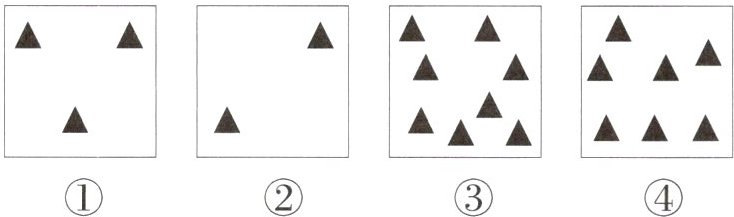
A. ①④ B. ②③ C. ①②
(
A. Our brains are 8,600 times bigger than bees.
B. Bees like bitter water rather than sugar water.
C. After training, bees can tell the difference between even numbers and odd numbers.
(
A. Animal World. B. Sports Life.
C. Festival Week.
Can you say the meaning of “zero”? Can you do addition and subtraction (加减法)? Most people can. But did you know bees can do these things too? A study shows that bees even have greater maths abilities. After some training, they can tell the difference between even numbers (ending in 0,2,4,6 and 8) and odd numbers (ending in 1,3,5,7 and 9).
Some Australian scientists put up different cards with an odd or even number of triangles (三角形). They used the numbers 1 to 10. Then they trained the first group of bees to choose odd numbers and the second group to choose even numbers. If a bee flew to the correct card, it would get sugar water. If it chose the wrong card, it got bitter (苦的) water.
In a short time, all the bees knew which numbers were odd or even. They could fly to the correct numbers 80% of the time. After that, the scientists added new cards with the numbers 11 and 12. The bees had never seen the numbers in their training before, but they could choose correctly 70% of the time. Surprisingly, the bees even learned odd numbers more quickly than humans.
How did the bees learn the numbers so fast? Scientists don’t have a clear idea, but they believe finding the answer could help them build better and faster computers. After all, a bee’s brain is about 86,000 times smaller than ours!
(
C
)1. 新考法——写作手法题 How does the passage start?A. By listing facts.
B. By giving examples.
C. By asking questions.
(
B
)2. 新考法——图片理解题 Which of the following cards should the second group of bees fly to?A. ①④ B. ②③ C. ①②
(
C
)3. Which of the following statements is TRUE according to the passage?A. Our brains are 8,600 times bigger than bees.
B. Bees like bitter water rather than sugar water.
C. After training, bees can tell the difference between even numbers and odd numbers.
(
A
)4. In which part of the newspaper can we read this passage?A. Animal World. B. Sports Life.
C. Festival Week.
答案:
1.C 根据第一段中“Can you say the meaning of ‘zero’? Can you do addition and subtraction? Most people can. But did you know bees can do these things too?”可知,文章是以提问开头。故选C。 2.B 根据第二段中“the second group to choose even numbers”可知,第二组选择偶数,题干中图②数字2为偶数,图③数字8为偶数,所以②③符合原文。故选B。 3.C 根据第一段中“After some training, they can tell the difference between even numbers (ending in 0,2,4,6 and 8) and odd numbers (ending in 1,3,5,7 and 9).”可知,经过训练蜜蜂可以知道偶数和奇数之间的区别。故选C。 4.A 本文讲蜜蜂经过训练后可以区分奇数和偶数,有很强的数学能力。我们可以在报纸的动物世界版块读到这篇文章。故选A。
查看更多完整答案,请扫码查看

