

 搜索
搜索
第42页
- 第1页
- 第2页
- 第3页
- 第4页
- 第5页
- 第6页
- 第7页
- 第8页
- 第9页
- 第10页
- 第11页
- 第12页
- 第13页
- 第14页
- 第15页
- 第16页
- 第17页
- 第18页
- 第19页
- 第20页
- 第21页
- 第22页
- 第23页
- 第24页
- 第25页
- 第26页
- 第27页
- 第28页
- 第29页
- 第30页
- 第31页
- 第32页
- 第33页
- 第34页
- 第35页
- 第36页
- 第37页
- 第38页
- 第39页
- 第40页
- 第41页
- 第42页
- 第43页
- 第44页
- 第45页
- 第46页
- 第47页
- 第48页
- 第49页
- 第50页
- 第51页
- 第52页
- 第53页
- 第54页
- 第55页
- 第56页
- 第57页
- 第58页
- 第59页
- 第60页
- 第61页
- 第62页
- 第63页
- 第64页
- 第65页
- 第66页
- 第67页
- 第68页
- 第69页
- 第70页
- 第71页
- 第72页
- 第73页
- 第74页
- 第75页
- 第76页
- 第77页
- 第78页
- 第79页
- 第80页
- 第81页
- 第82页
- 第83页
- 第84页
- 第85页
- 第86页
- 第87页
- 第88页
- 第89页
- 第90页
- 第91页
- 第92页
- 第93页
- 第94页
- 第95页
- 第96页
- 第97页
- 第98页
- 第99页
- 第100页
- 第101页
- 第102页
- 第103页
- 第104页
- 第105页
- 第106页
- 第107页
- 第108页
- 第109页
- 第110页
- 第111页
- 第112页
1miss 的用法
教材 P26 So am I, but I can’t miss two weeks of school. 我也是(很遗憾),但是我不能两周不上课。
归纳 miss 的不同含义
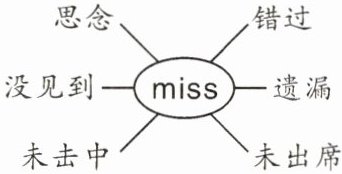
运用 写出 miss 在下列句子中的中文含义。
(1)I never missed attending the lectures.
(2)What did you miss most when you were abroad?
(3)He regretted having missed that good chance.
教材 P26 So am I, but I can’t miss two weeks of school. 我也是(很遗憾),但是我不能两周不上课。
归纳 miss 的不同含义
运用 写出 miss 在下列句子中的中文含义。
(1)I never missed attending the lectures.
错过
(2)What did you miss most when you were abroad?
怀念
(3)He regretted having missed that good chance.
错失
答案:
(1)错过
(2)怀念
(3)错失
(1)错过
(2)怀念
(3)错失
(1)—Tom will have a birthday party next Sunday. Do you want to go? —If you go, ____.(2024 年齐齐哈尔市) A. so I will B. so will I C. neither will I
so will I
答案:
B
(2)— Li Ping, I didn’t go summer camping last year. —
B
A. So did I. B. Neither did I. C. Neither I did. D. So I did.
答案:
B
3be about to 的用法
教材 P26 Your train is about to leave. 您的火车要开。
归纳 be about to do sth. 意为“即将做某事;刚要做某事”,表示即将发生的动作,在时间上指最近的将来,相当于 be going to do sth. 。
注意 be about to 不能与 immediately、tomorrow 等词连用,但可与 when 构成 be about to do...when... 句型,此时 when 意为“这时”。
运用 完成句子,每空一词。
你问的时候我正要告诉你呢。 I
教材 P26 Your train is about to leave. 您的火车要开。
归纳 be about to do sth. 意为“即将做某事;刚要做某事”,表示即将发生的动作,在时间上指最近的将来,相当于 be going to do sth. 。
注意 be about to 不能与 immediately、tomorrow 等词连用,但可与 when 构成 be about to do...when... 句型,此时 when 意为“这时”。
运用 完成句子,每空一词。
你问的时候我正要告诉你呢。 I
was
about
to
tell you when you asked.
答案:
was about to
一、选出连读标注正确的一项。
(
(
(
A
)1. A. shut it B. come with C. be careful(
B
)2. A. every day B. look after C. wake you up
答案:
(1)A
(2)B
(1)A
(2)B
查看更多完整答案,请扫码查看

