

 搜索
搜索
第22页
- 第1页
- 第2页
- 第3页
- 第4页
- 第5页
- 第6页
- 第7页
- 第8页
- 第9页
- 第10页
- 第11页
- 第12页
- 第13页
- 第14页
- 第15页
- 第16页
- 第17页
- 第18页
- 第19页
- 第20页
- 第21页
- 第22页
- 第23页
- 第24页
- 第25页
- 第26页
- 第27页
- 第28页
- 第29页
- 第30页
- 第31页
- 第32页
- 第33页
- 第34页
- 第35页
- 第36页
- 第37页
- 第38页
- 第39页
- 第40页
- 第41页
- 第42页
- 第43页
- 第44页
- 第45页
- 第46页
- 第47页
- 第48页
- 第49页
- 第50页
- 第51页
- 第52页
- 第53页
- 第54页
- 第55页
- 第56页
- 第57页
- 第58页
- 第59页
- 第60页
- 第61页
- 第62页
- 第63页
- 第64页
- 第65页
- 第66页
- 第67页
- 第68页
- 第69页
- 第70页
- 第71页
- 第72页
- 第73页
- 第74页
- 第75页
- 第76页
- 第77页
- 第78页
- 第79页
- 第80页
- 第81页
- 第82页
- 第83页
- 第84页
- 第85页
- 第86页
- 第87页
- 第88页
- 第89页
- 第90页
- 第91页
- 第92页
- 第93页
- 第94页
- 第95页
- 第96页
- 第97页
- 第98页
- 第99页
- 第100页
- 第101页
- 第102页
- 第103页
- 第104页
- 第105页
- 第106页
- 第107页
- 第108页
- 第109页
- 第110页
- 第111页
- 第112页
2疑问词 + to do
教材 P12 The local people, the Native Americans, taught the pioneers how to grow corn. 当地人,也就是美洲印第安人,教这些拓荒者如何种植玉米。
归纳 “疑问词 + to do”的作用相当于一个名词性从句,通常用在 tell、know、learn、decide、consider、understand 等动词后作宾语,有时也用作主语、表语、同位语等。
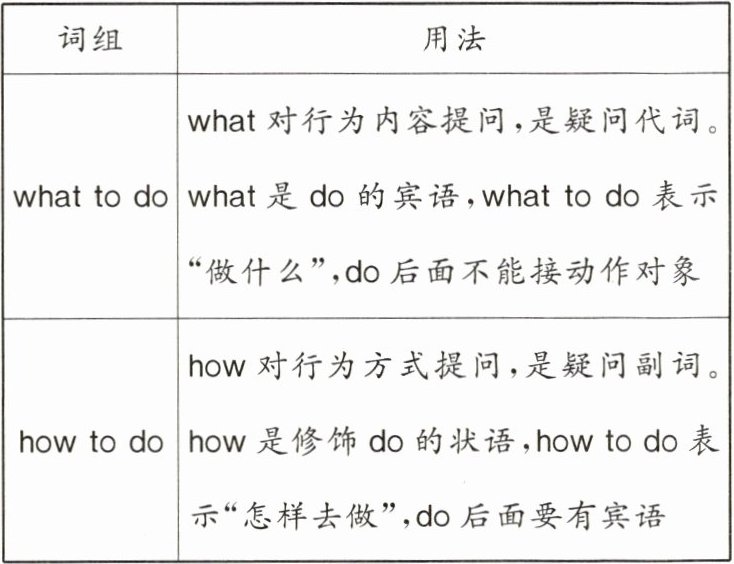
拓展 what to do 与 how to do 的用法区别
|词组|用法|
|what to do|what 对行为内容提问,是疑问代词。what 是 do 的宾语,what to do 表示“做什么”,do 后面不能接动作对象|
|how to do|how 对行为方式提问,是疑问副词。how 是修饰 do 的状语,how to do 表示“怎样去做”,do 后面要有宾语|
运用 完成句子,每空一词。
(1)体育老师鼓励他们,并教他们如何能提高合作跑步的技巧。(2024 年广州市)
Their PE teacher encouraged them and taught them
(2)我们还没有决定什么时候去探望爷爷奶奶。
We haven't decided
教材 P12 The local people, the Native Americans, taught the pioneers how to grow corn. 当地人,也就是美洲印第安人,教这些拓荒者如何种植玉米。
归纳 “疑问词 + to do”的作用相当于一个名词性从句,通常用在 tell、know、learn、decide、consider、understand 等动词后作宾语,有时也用作主语、表语、同位语等。
拓展 what to do 与 how to do 的用法区别
|词组|用法|
|what to do|what 对行为内容提问,是疑问代词。what 是 do 的宾语,what to do 表示“做什么”,do 后面不能接动作对象|
|how to do|how 对行为方式提问,是疑问副词。how 是修饰 do 的状语,how to do 表示“怎样去做”,do 后面要有宾语|
运用 完成句子,每空一词。
(1)体育老师鼓励他们,并教他们如何能提高合作跑步的技巧。(2024 年广州市)
Their PE teacher encouraged them and taught them
how
to
improve their skills of running together.(2)我们还没有决定什么时候去探望爷爷奶奶。
We haven't decided
when
to
visit
our grandparents.
答案:
(1)how to
(2)when to visit
(1)how to
(2)when to visit
3lay 的用法
教材 P12 We lay the table, and then before we begin dinner, my father gives thanks for the food, so we remember why we celebrate the festival. 我们摆好桌子,然后在我们开始晚餐之前,我的父亲会感谢食物,所以我们记得为什么要庆祝这个节日。
归纳 lay 意为“摆放(餐桌);下蛋”。
注意 辨析 lay 与 lie
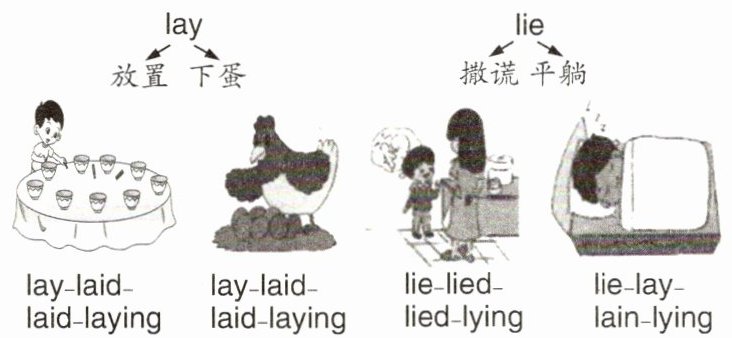
lay - laid - laid - laying(放置、下蛋);lie - lied - lied - lying(撒谎);lie - lay - lain - lying(平躺)
一语辨异 The man who lay(躺,lie 的过去式)there lied(撒谎,lie 的过去式)that he had dreamt that a rooster laid(下蛋,lay 的过去式)an egg. 躺在那里的人谎称他梦见一只公鸡下蛋了。
运用 微语篇填空。
Yesterday when my little brother Tom arrived home, my mum asked him to
教材 P12 We lay the table, and then before we begin dinner, my father gives thanks for the food, so we remember why we celebrate the festival. 我们摆好桌子,然后在我们开始晚餐之前,我的父亲会感谢食物,所以我们记得为什么要庆祝这个节日。
归纳 lay 意为“摆放(餐桌);下蛋”。
注意 辨析 lay 与 lie
lay - laid - laid - laying(放置、下蛋);lie - lied - lied - lying(撒谎);lie - lay - lain - lying(平躺)
一语辨异 The man who lay(躺,lie 的过去式)there lied(撒谎,lie 的过去式)that he had dreamt that a rooster laid(下蛋,lay 的过去式)an egg. 躺在那里的人谎称他梦见一只公鸡下蛋了。
运用 微语篇填空。
Yesterday when my little brother Tom arrived home, my mum asked him to
lay
the table for dinner. However, Tom wanted to go upstairs to have a look at his little parrot. He didn't want to lie
to Mum so he told her about it. When my father and I got into Tom's room later, we found him lying
on the sofa, watching the parrot!
答案:
lay;lie;lying
查看更多完整答案,请扫码查看

