

 搜索
搜索
第137页
- 第1页
- 第2页
- 第3页
- 第4页
- 第5页
- 第6页
- 第7页
- 第8页
- 第9页
- 第10页
- 第11页
- 第12页
- 第13页
- 第14页
- 第15页
- 第16页
- 第17页
- 第18页
- 第19页
- 第20页
- 第21页
- 第22页
- 第23页
- 第24页
- 第25页
- 第26页
- 第27页
- 第28页
- 第29页
- 第30页
- 第31页
- 第32页
- 第33页
- 第34页
- 第35页
- 第36页
- 第37页
- 第38页
- 第39页
- 第40页
- 第41页
- 第42页
- 第43页
- 第44页
- 第45页
- 第46页
- 第47页
- 第48页
- 第49页
- 第50页
- 第51页
- 第52页
- 第53页
- 第54页
- 第55页
- 第56页
- 第57页
- 第58页
- 第59页
- 第60页
- 第61页
- 第62页
- 第63页
- 第64页
- 第65页
- 第66页
- 第67页
- 第68页
- 第69页
- 第70页
- 第71页
- 第72页
- 第73页
- 第74页
- 第75页
- 第76页
- 第77页
- 第78页
- 第79页
- 第80页
- 第81页
- 第82页
- 第83页
- 第84页
- 第85页
- 第86页
- 第87页
- 第88页
- 第89页
- 第90页
- 第91页
- 第92页
- 第93页
- 第94页
- 第95页
- 第96页
- 第97页
- 第98页
- 第99页
- 第100页
- 第101页
- 第102页
- 第103页
- 第104页
- 第105页
- 第106页
- 第107页
- 第108页
- 第109页
- 第110页
- 第111页
- 第112页
- 第113页
- 第114页
- 第115页
- 第116页
- 第117页
- 第118页
- 第119页
- 第120页
- 第121页
- 第122页
- 第123页
- 第124页
- 第125页
- 第126页
- 第127页
- 第128页
- 第129页
- 第130页
- 第131页
- 第132页
- 第133页
- 第134页
- 第135页
- 第136页
- 第137页
- 第138页
- 第139页
- 第140页
- 第141页
- 第142页
- 第143页
- 第144页
- 第145页
- 第146页
- 第147页
- 第148页
Ⅴ. 阅读理解
In a high mountain area in central Utah stands the world’s oldest,heaviest and largest tree,Pando. And it’s dying!
Pando means “I spread” in Latin and it’s a name that makes sense. Pando is a big group of trees that all grow from the same roots. They look separate but are all connected underground by their roots. With all these roots connected,the whole group of trees can share water and food.
▲ In summer,animals(mule deer and cattle)feed on the new leaves,making it difficult for the trees to grow. The number of mule deer has even increased because their natural enemies(mountain lions,bears)have disappeared. The second problem is from people. Hikers and campers like this area because of the colourful leaves in autumn. But getting too close and stepping on the new growth has made Pando smaller and thinner over the last 50 years.
Protecting Pando is challenging. Putting fences(栅栏)around it to keep animals away has helped new growth. But deer are smart,and they’ve found ways to get through the fences. Other efforts have included cutting or burning part of Pando to encourage new growth. Pando grows back very quickly after a forest fire,and these fires do not reach temperatures that would kill its root system.
Michael Grant,one of the scientists who helped name Pando,warns if the trees are in trouble,the whole ecosystem will be in danger too. We need to make people understand the long - term effects of our action.
1. Which picture is Pando?
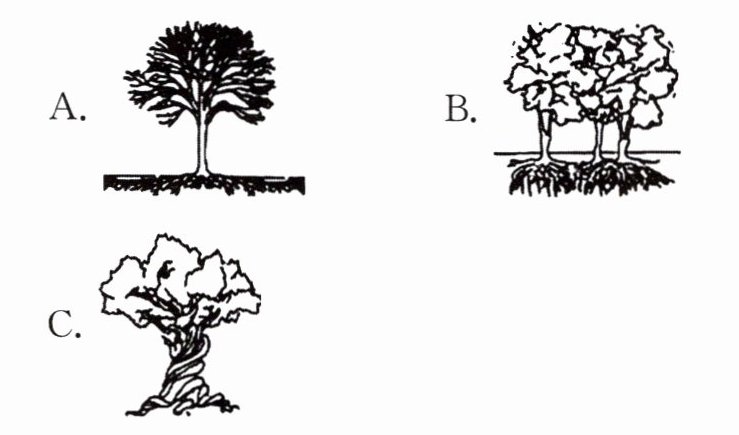
A.
B.
C.
2. Which of the following can be put in the blank ▲ in paragraph 3?
A. It’s in trouble for two reasons.
B. We should do something to save it.
C. Nobody knows why it is dying.
3. What does the underlined word “it” in paragraph 4 refer to?
A. The root.
B. Pando.
C. The forest fire.
4. What’s the purpose of this passage?
A. To introduce Pando in Utah.
B. To show the trouble Pando has.
C. To ask people to protect Pando.
In a high mountain area in central Utah stands the world’s oldest,heaviest and largest tree,Pando. And it’s dying!
Pando means “I spread” in Latin and it’s a name that makes sense. Pando is a big group of trees that all grow from the same roots. They look separate but are all connected underground by their roots. With all these roots connected,the whole group of trees can share water and food.
▲ In summer,animals(mule deer and cattle)feed on the new leaves,making it difficult for the trees to grow. The number of mule deer has even increased because their natural enemies(mountain lions,bears)have disappeared. The second problem is from people. Hikers and campers like this area because of the colourful leaves in autumn. But getting too close and stepping on the new growth has made Pando smaller and thinner over the last 50 years.
Protecting Pando is challenging. Putting fences(栅栏)around it to keep animals away has helped new growth. But deer are smart,and they’ve found ways to get through the fences. Other efforts have included cutting or burning part of Pando to encourage new growth. Pando grows back very quickly after a forest fire,and these fires do not reach temperatures that would kill its root system.
Michael Grant,one of the scientists who helped name Pando,warns if the trees are in trouble,the whole ecosystem will be in danger too. We need to make people understand the long - term effects of our action.
1. Which picture is Pando?
B
A.
B.
C.
2. Which of the following can be put in the blank ▲ in paragraph 3?
A
A. It’s in trouble for two reasons.
B. We should do something to save it.
C. Nobody knows why it is dying.
3. What does the underlined word “it” in paragraph 4 refer to?
B
A. The root.
B. Pando.
C. The forest fire.
4. What’s the purpose of this passage?
C
A. To introduce Pando in Utah.
B. To show the trouble Pando has.
C. To ask people to protect Pando.
答案:
Ⅴ.1.B 解析:细节理解题。根据“Pando is a big group of trees that all grow from the same roots. They look separate but are all connected underground by their roots.”可知,Pando是一大群树,它们都生长在同一根上,看起来是分开的,但在地下通过它们的根相连。观察图片,B选项与描述相符。故选B。2.A 解析:推理判断题。根据空处位于第三段的开头可知,应填一个句子总起下文。第三段主要讲了两个威胁树木生长的原因,一个是动物的行为,另一个是人的行为。选项A“它陷入困境有两个原因”符合语境。故选A。3.B 解析:代词指代题。根据“Protecting Pando is challenging. Putting fences(栅栏) around it to keep animals away has helped new growth.”可知,为了保护Pando,在它的周围围上栅栏,故it代指Pando。故选B。4.C 解析:主旨大意题。本文通过介绍树木Pando现在面临的危机,以及人们的应对之策,又通过科学家Michael Grant讲述了保护树木Pando的重要性,目的是号召人们保护树木Pando。故选C。
查看更多完整答案,请扫码查看

