

 搜索
搜索
第9页
- 第1页
- 第2页
- 第3页
- 第4页
- 第5页
- 第6页
- 第7页
- 第8页
- 第9页
- 第10页
- 第11页
- 第12页
- 第13页
- 第14页
- 第15页
- 第16页
- 第17页
- 第18页
- 第19页
- 第20页
- 第21页
- 第22页
- 第23页
- 第24页
- 第25页
- 第26页
- 第27页
- 第28页
- 第29页
- 第30页
- 第31页
- 第32页
- 第33页
- 第34页
- 第35页
- 第36页
- 第37页
- 第38页
- 第39页
- 第40页
- 第41页
- 第42页
- 第43页
- 第44页
- 第45页
- 第46页
- 第47页
- 第48页
- 第49页
- 第50页
- 第51页
- 第52页
- 第53页
- 第54页
- 第55页
- 第56页
- 第57页
- 第58页
- 第59页
- 第60页
- 第61页
- 第62页
- 第63页
- 第64页
- 第65页
- 第66页
- 第67页
- 第68页
- 第69页
- 第70页
- 第71页
Ⅰ. 听力测试。(共 35 分)
答案:
因缺少具体题目内容,无法给出答案。
听一遍。根据你所听到的句子,从 A、B、C 三个选项中选出最恰当的答语。
( A )1. A. Thanks a lot. B. Just so so. C. Don’t say so.
( B )2. A. My pleasure. B. Wonderful. C. Good luck.
( A )3. A. You are welcome. B. Don’t worry. C. All right.
( C )4. A. Yes,I like it a lot. B. I like the lanterns. C. I like the dragon boat races.
( B )5. A. It was great fun. B. Me,too. C. That’s bad.
( B )6. A. You’re kidding. B. I agree. C. Sounds good.
( A )1. A. Thanks a lot. B. Just so so. C. Don’t say so.
( B )2. A. My pleasure. B. Wonderful. C. Good luck.
( A )3. A. You are welcome. B. Don’t worry. C. All right.
( C )4. A. Yes,I like it a lot. B. I like the lanterns. C. I like the dragon boat races.
( B )5. A. It was great fun. B. Me,too. C. That’s bad.
( B )6. A. You’re kidding. B. I agree. C. Sounds good.
答案:
1. A 2. B 3. A 4. C 5. B 6. B
听一遍。根据你所听到的对话和问题,从 A、B、C 三个选项中选出正确答案。
( C )7. A. /strɔ:ŋ/. B. /'stʌdi/. C. /'streɪndʒər/.
( B )8. A. To England. B. To China. C. To America.
( B )9. A. Glad. B. Bored. C. Interested.
( C )10. A. A book. B. A hat. C. A sweater.
( B )11. A. This morning. B. Yesterday evening. C. This afternoon.
( A )12.
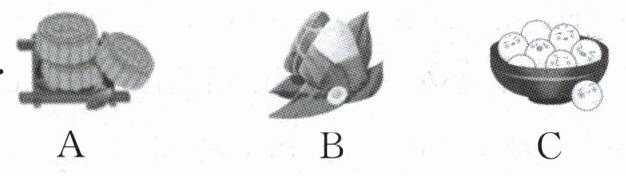
( C )7. A. /strɔ:ŋ/. B. /'stʌdi/. C. /'streɪndʒər/.
( B )8. A. To England. B. To China. C. To America.
( B )9. A. Glad. B. Bored. C. Interested.
( C )10. A. A book. B. A hat. C. A sweater.
( B )11. A. This morning. B. Yesterday evening. C. This afternoon.
( A )12.
答案:
7. C
8. B
9. B
10. C
11. B
12. B
8. B
9. B
10. C
11. B
12. B
听两遍。根据你所听到的长对话,从 A、B、C 三个选项中选出正确答案。
听第一段材料,回答第 13 和 14 小题。
( A )13. When will the girl go to see the boy? A. Next month. B. Next week. C. Next Monday.
( B )14. Why hasn’t Peter bought his plane ticket? A. Because he hasn’t made a decision yet. B. Because he hasn’t saved enough money. C. Because he has no time.
听第二段材料,回答第 15 和 16 小题。
( C )15. What did Tom do on the Lantern Festival? A. He went shopping. B. He went to the movies. C. He made lanterns with his family.
( A )16. Where did Tom guess the riddles? A. At the park. B. At home. C. At school.
听第一段材料,回答第 13 和 14 小题。
( A )13. When will the girl go to see the boy? A. Next month. B. Next week. C. Next Monday.
( B )14. Why hasn’t Peter bought his plane ticket? A. Because he hasn’t made a decision yet. B. Because he hasn’t saved enough money. C. Because he has no time.
听第二段材料,回答第 15 和 16 小题。
( C )15. What did Tom do on the Lantern Festival? A. He went shopping. B. He went to the movies. C. He made lanterns with his family.
( A )16. Where did Tom guess the riddles? A. At the park. B. At home. C. At school.
答案:
13.A 14.B 15.C 16.A
听两遍。根据你所听到的短文内容,从 A、B、C 三个选项中选出正确答案。
( B )17. Who gets help from Liang Hua and his group? A. The poor. B. The children. C. The old.
( A )18. What is the date when people learn from Lei Feng? A. March 5th. B. March 15th. C. April 5th.
( B )19. What did Lei Feng give to the parents of another solider? A. Presents. B. Money. C. Flowers.
( A )20. What does the writer want to tell us? A. We must be ready to help others. B. Children at the primary school are poor. C. Lei Feng brings happiness to Liang Hua.
( B )17. Who gets help from Liang Hua and his group? A. The poor. B. The children. C. The old.
( A )18. What is the date when people learn from Lei Feng? A. March 5th. B. March 15th. C. April 5th.
( B )19. What did Lei Feng give to the parents of another solider? A. Presents. B. Money. C. Flowers.
( A )20. What does the writer want to tell us? A. We must be ready to help others. B. Children at the primary school are poor. C. Lei Feng brings happiness to Liang Hua.
答案:
17. B 18. A 19. B 20. A
查看更多完整答案,请扫码查看

