

 搜索
搜索
第61页
- 第1页
- 第2页
- 第3页
- 第4页
- 第5页
- 第6页
- 第7页
- 第8页
- 第9页
- 第10页
- 第11页
- 第12页
- 第13页
- 第14页
- 第15页
- 第16页
- 第17页
- 第18页
- 第19页
- 第20页
- 第21页
- 第22页
- 第23页
- 第24页
- 第25页
- 第26页
- 第27页
- 第28页
- 第29页
- 第30页
- 第31页
- 第32页
- 第33页
- 第34页
- 第35页
- 第36页
- 第37页
- 第38页
- 第39页
- 第40页
- 第41页
- 第42页
- 第43页
- 第44页
- 第45页
- 第46页
- 第47页
- 第48页
- 第49页
- 第50页
- 第51页
- 第52页
- 第53页
- 第54页
- 第55页
- 第56页
- 第57页
- 第58页
- 第59页
- 第60页
- 第61页
- 第62页
- 第63页
- 第64页
- 第65页
- 第66页
- 第67页
- 第68页
- 第69页
- 第70页
- 第71页
(D)
①If you dig in a garden, you may discover much more than just soil. Take a closer look, and you might find ants, plant roots and many tiny living things. Even though they are hard to see, a world of life does live in the soil.
②In fact, healthy soil is “alive” because it's home to worms, insects, and tiny living things. Soil is an ecosystem(生态系统) where earthworms(蚯蚓) play a very important part.
③Earthworms like soil for several reasons. One is that it has their food. Earthworms eat decaying(腐烂的) plant matter such as fallen leaves, fruits, and vegetables, as well as dead roots and the remains of dead animals.
④Another reason earthworms like soil is that it protects them. Soil serves as a natural hiding place for earthworms, protecting them from being caught by bigger animals like birds. Also, soil protects earthworms' soft bodies. By staying underground, earthworms avoid being dried out by the sun, which helps them keep wet and a lower body temperature.
⑤Not only is soil good for earthworms, but earthworms are also good for soil. They play an important role as decomposers in it. Earthworms eat some pieces of soil along with plant and animal matter. They break these things down into smaller and simpler pieces and then make them out of the body as excreta(排泄物). The excreta is full of nutrients(营养物) that are good for plants and can be taken by them more easily.
⑥Besides making soil richer with their excreta, earthworms also improve soil structure. They move and dig tunnels(通道) in soil. This allows oxygen(氧气) to enter and helps water go into soil better. Tunnels also create space for plant roots, so that they can grow more easily and deeper into the ground.
⑦Earthworms are necessary members living in soil. The relationship between earthworms and soil is mutually(相互地) beneficial. They depend on each other and work together to keep the balance and maintain(维持) the health of the garden ecosystem.
( )56. How does the writer develop his idea that earthworms like soil? A. By raising questions. B. By listing numbers. C. By giving reasons. D. By comparing differences.
( )57. What does the underlined word “decomposers” in Paragraph 5 mean? A. 生产者 B. 消费者 C. 分解者 D. 调节者
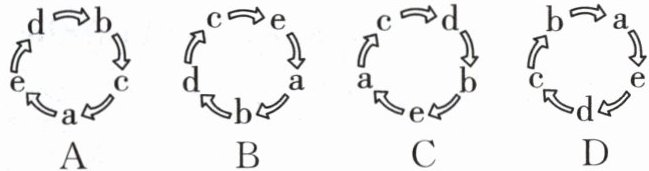
( )58. Which is the right order to show the cycle in a soil ecosystem? a. Plants grow. b. Earthworms produce excreta and dig tunnels. c. Nutrients, oxygen, water and space are offered to soil. d. Earthworms eat dead plants and soil pieces. e. Plants die and fall into soil.
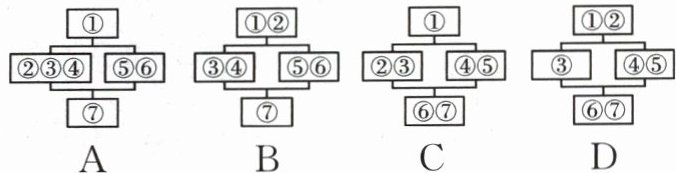
( )59. Which of the following shows the structure of this passage?
①If you dig in a garden, you may discover much more than just soil. Take a closer look, and you might find ants, plant roots and many tiny living things. Even though they are hard to see, a world of life does live in the soil.
②In fact, healthy soil is “alive” because it's home to worms, insects, and tiny living things. Soil is an ecosystem(生态系统) where earthworms(蚯蚓) play a very important part.
③Earthworms like soil for several reasons. One is that it has their food. Earthworms eat decaying(腐烂的) plant matter such as fallen leaves, fruits, and vegetables, as well as dead roots and the remains of dead animals.
④Another reason earthworms like soil is that it protects them. Soil serves as a natural hiding place for earthworms, protecting them from being caught by bigger animals like birds. Also, soil protects earthworms' soft bodies. By staying underground, earthworms avoid being dried out by the sun, which helps them keep wet and a lower body temperature.
⑤Not only is soil good for earthworms, but earthworms are also good for soil. They play an important role as decomposers in it. Earthworms eat some pieces of soil along with plant and animal matter. They break these things down into smaller and simpler pieces and then make them out of the body as excreta(排泄物). The excreta is full of nutrients(营养物) that are good for plants and can be taken by them more easily.
⑥Besides making soil richer with their excreta, earthworms also improve soil structure. They move and dig tunnels(通道) in soil. This allows oxygen(氧气) to enter and helps water go into soil better. Tunnels also create space for plant roots, so that they can grow more easily and deeper into the ground.
⑦Earthworms are necessary members living in soil. The relationship between earthworms and soil is mutually(相互地) beneficial. They depend on each other and work together to keep the balance and maintain(维持) the health of the garden ecosystem.
( )56. How does the writer develop his idea that earthworms like soil? A. By raising questions. B. By listing numbers. C. By giving reasons. D. By comparing differences.
( )57. What does the underlined word “decomposers” in Paragraph 5 mean? A. 生产者 B. 消费者 C. 分解者 D. 调节者
( )58. Which is the right order to show the cycle in a soil ecosystem? a. Plants grow. b. Earthworms produce excreta and dig tunnels. c. Nutrients, oxygen, water and space are offered to soil. d. Earthworms eat dead plants and soil pieces. e. Plants die and fall into soil.
( )59. Which of the following shows the structure of this passage?
答案:
56. C
57. C
58. A
59. B
57. C
58. A
59. B
查看更多完整答案,请扫码查看

