

 搜索
搜索
第17页
- 第1页
- 第2页
- 第3页
- 第4页
- 第5页
- 第6页
- 第7页
- 第8页
- 第9页
- 第10页
- 第11页
- 第12页
- 第13页
- 第14页
- 第15页
- 第16页
- 第17页
- 第18页
- 第19页
- 第20页
- 第21页
- 第22页
- 第23页
- 第24页
- 第25页
- 第26页
- 第27页
- 第28页
- 第29页
- 第30页
- 第31页
- 第32页
- 第33页
- 第34页
- 第35页
- 第36页
- 第37页
- 第38页
- 第39页
- 第40页
- 第41页
- 第42页
- 第43页
- 第44页
- 第45页
- 第46页
- 第47页
- 第48页
- 第49页
- 第50页
- 第51页
- 第52页
- 第53页
- 第54页
- 第55页
- 第56页
- 第57页
- 第58页
- 第59页
- 第60页
- 第61页
- 第62页
- 第63页
- 第64页
- 第65页
- 第66页
- 第67页
- 第68页
- 第69页
- 第70页
- 第71页
听一遍。根据你所听到的句子,从A、B、C三个选项中选出最恰当的答语。
(B)1.A.How are you? B.I'm fine.
C.Nice to meet you,too.
(A)2.A.It's not a big deal.
B.Yes,you're right!
C.You're welcome.
(B)3.A.Just be yourself.
B.That's a good idea!
C.Take it easy.
(C)4.A.I know it. B.OK,I could.
C.Sure,just go straight.
(B)5.A.I'm Mary. B.Hold on,please.
C.Who's Mary?
(C)6.A.OK,I will. B.Thanks a lot.
C.Sorry,I won't.
(B)1.A.How are you? B.I'm fine.
C.Nice to meet you,too.
(A)2.A.It's not a big deal.
B.Yes,you're right!
C.You're welcome.
(B)3.A.Just be yourself.
B.That's a good idea!
C.Take it easy.
(C)4.A.I know it. B.OK,I could.
C.Sure,just go straight.
(B)5.A.I'm Mary. B.Hold on,please.
C.Who's Mary?
(C)6.A.OK,I will. B.Thanks a lot.
C.Sorry,I won't.
答案:
1.B 2.A 3.B 4.C 5.B 6.C
听一遍。根据你所听到的对话和问题,从A、B、C三个选项中选出正确答案。
(A)7.A./rɪ'kwest/. B./rest/. C./rɪ'pi:t/.
(C)8.A.May Day. B.National Day.
C.Dragon Boat Festival.
(B)9.A.In a restaurant. B.In a school.
C.At home.
(C)10.A.By air. B.By car. C.By train.
(C)11.A.On Monday. B.On Wednesday.
C.On Thursday.
(B)12.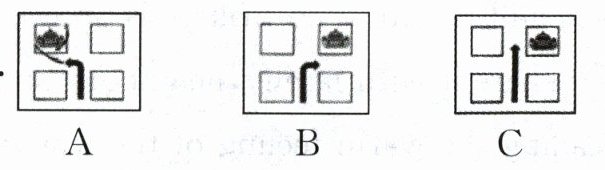
(A)7.A./rɪ'kwest/. B./rest/. C./rɪ'pi:t/.
(C)8.A.May Day. B.National Day.
C.Dragon Boat Festival.
(B)9.A.In a restaurant. B.In a school.
C.At home.
(C)10.A.By air. B.By car. C.By train.
(C)11.A.On Monday. B.On Wednesday.
C.On Thursday.
(B)12.
答案:
7. C
8. C
9. B
10. C
11. C
12. B
8. C
9. B
10. C
11. C
12. B
听两遍。根据你所听到的长对话,从A、B、C三个选项中选出正确答案。
听第一段材料,回答第13和14小题。
(A)13.What's Bob's problem?
A.He can't get the pronunciation right.
B.He makes mistakes in grammar.
C.He can't spell some new words.
(B)14.What's Mary's advice on English learning?
A.Making flashcards.
B.Listening to tapes.
C.Joining a club.
听第一段材料,回答第13和14小题。
(A)13.What's Bob's problem?
A.He can't get the pronunciation right.
B.He makes mistakes in grammar.
C.He can't spell some new words.
(B)14.What's Mary's advice on English learning?
A.Making flashcards.
B.Listening to tapes.
C.Joining a club.
答案:
13.A 14.B
听第二段材料,回答第15和16小题。
(A)15.How long is Susan probably online every week?
A.For about 1 or 2 hours.
B.For about 2 or 3 hours.
C.For about 3 or 4 hours.
(C)16.What do we know about Susan's work?
A.She works in the library.
B.She's too busy with her work.
C.She sometimes goes online for her work.
(A)15.How long is Susan probably online every week?
A.For about 1 or 2 hours.
B.For about 2 or 3 hours.
C.For about 3 or 4 hours.
(C)16.What do we know about Susan's work?
A.She works in the library.
B.She's too busy with her work.
C.She sometimes goes online for her work.
答案:
15.A 16.C
听两遍。根据你所听到的短文内容,从A、B、C三个选项中选出正确答案。
(B)17.How old was Molly when she first met Lisa?
A.4. B.5. C.6.
(C)18.Which subject does Lisa always help Molly with?
A.English. B.History. C.Math.
(C)19.Why did Molly feel bad after reading the report?
A.Because Lisa did better than her.
B.Because she didn't read it aloud.
C.Because her classmates laughed at her.
(B)20.What is Lisa like?
A.Shy and friendly.
B.Popular and smart.
C.Popular and brave.
(B)17.How old was Molly when she first met Lisa?
A.4. B.5. C.6.
(C)18.Which subject does Lisa always help Molly with?
A.English. B.History. C.Math.
(C)19.Why did Molly feel bad after reading the report?
A.Because Lisa did better than her.
B.Because she didn't read it aloud.
C.Because her classmates laughed at her.
(B)20.What is Lisa like?
A.Shy and friendly.
B.Popular and smart.
C.Popular and brave.
答案:
17.B 18.C 19.C 20.B
查看更多完整答案,请扫码查看

